AI Image
All the ways a cell can die - and why the variety matters
Nature • • science
Key Points:
- Researchers led by Daolin Tang discovered a new form of cell death called alkaliptosis, where cells die due to an unusually high internal pH, offering a novel way to kill cancer cells.
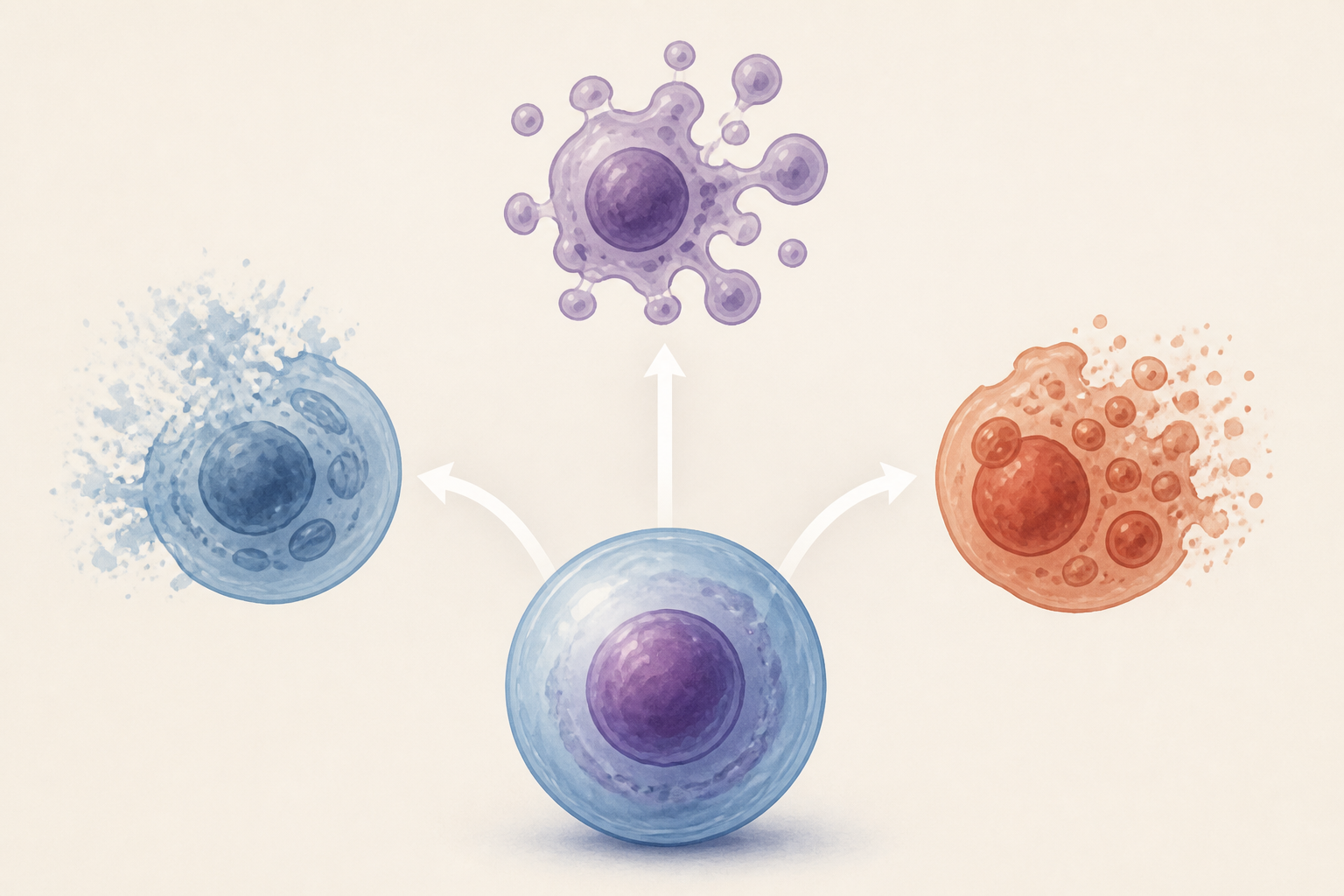
- Since 1999, scientists have identified around 20 new types of cell death beyond the classical necrosis and apoptosis, including pyroptosis, necroptosis, ferroptosis, and ruptosis, revealing the complexity of cellular demise.
- Different modes of cell death play crucial roles in development, immunity, and disease, with dying cells influencing neighboring cells and immune responses, highlighting the biological importance of how cells perish.
- Cells can delay death or even reverse it through processes like anastasis, challenging the previous belief that apoptosis and other death pathways are irreversible once initiated.
- Understanding diverse cell death mechanisms has significant medical implications, such as developing new cancer therapies, controlling inflammation, and protecting vital tissues like the heart and brain.


