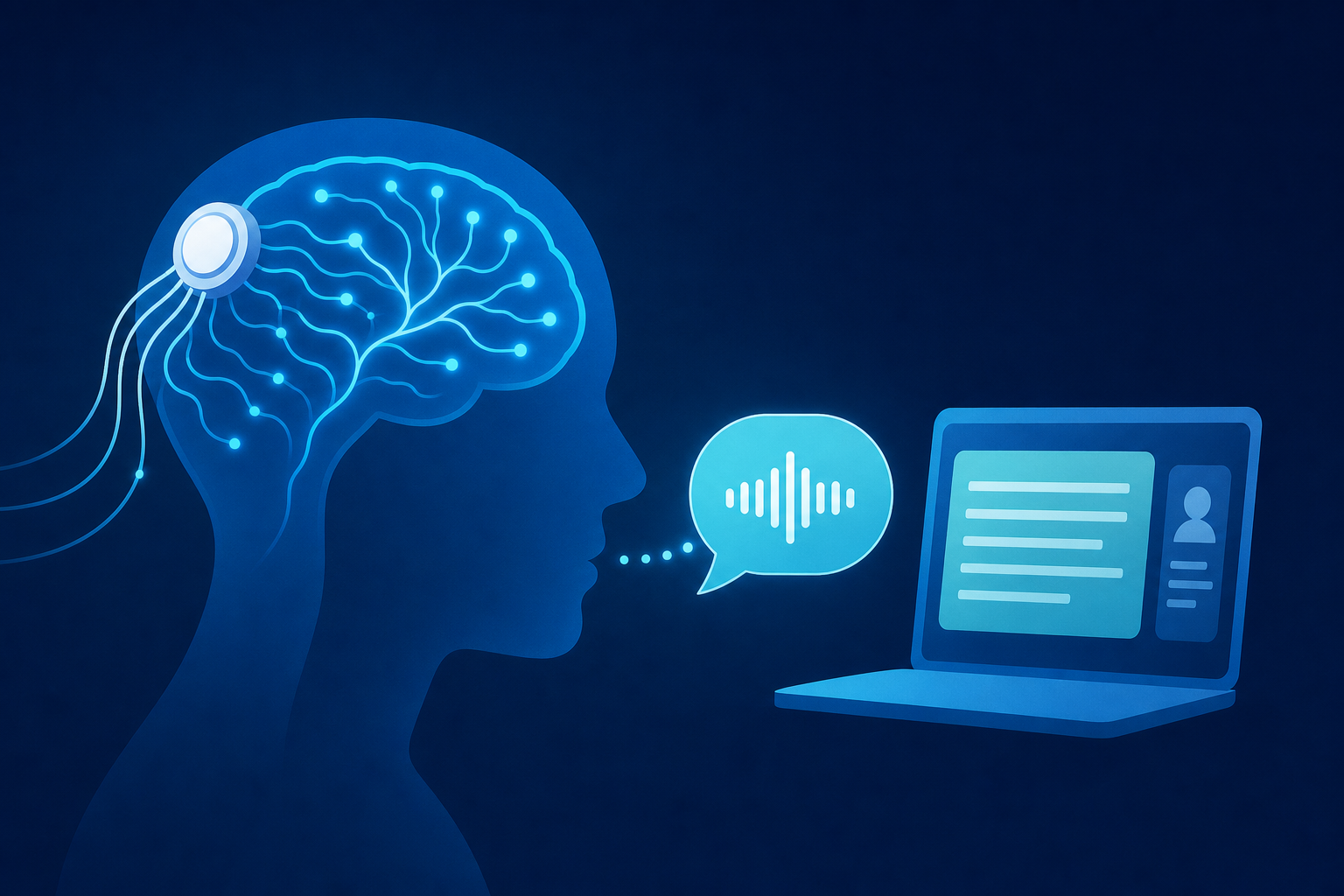
AI Generated Image
ALS Patient, 47, Gains Ability to Speak and Sustain Full-Time Job Using Experimental Brain-Computer Interface
Yahoo • • technology
Key Points:
- Researchers at UC Davis have developed an advanced brain-computer interface (BCI) designed to help individuals with severe paralysis communicate and interact with digital devices.
- The BCI uses sophisticated decoding algorithms to translate neural signals into text and enable cursor control.
- This technology allows users to operate a personal computer independently, without requiring assistance from researchers.
- The findings were published in the journal Nature Medicine, highlighting the success of a years-long study.


