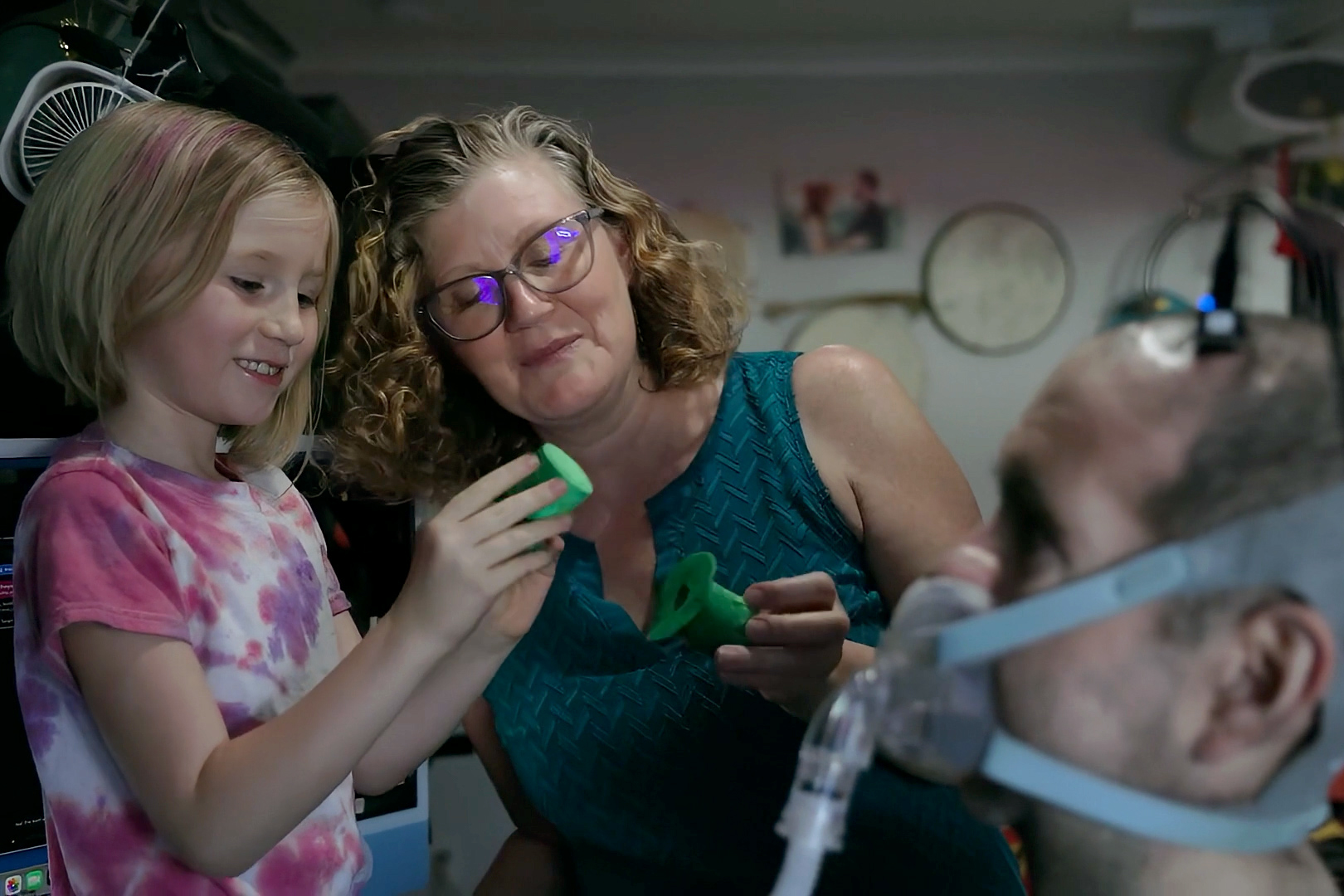
ALS took his voice. A brain implant helped him speak to his girl again
San Francisco Chronicle • • health
Key Points:
- Casey Harrell, a 45-year-old ALS patient, participated in a UC Davis clinical trial using a brain-computer interface to restore his speech by translating brain signals into computer-generated voice, allowing him to communicate despite his physical decline.
- The technology involves implanting 256 electrodes in Harrell’s speech-related brain region, which transmit neural activity to AI software that decodes intended speech into text, enabling Harrell to "speak" through a synthesized voice.
- Harrell’s involvement has contributed significantly to research on neuroprosthetics, making him a key figure in advancing brain-computer interfaces aimed at helping people with paralysis or speech impairments.
- While optimistic about the medical benefits, Harrell and researchers express concerns about potential misuse of brain-computer technologies for commercial exploitation, privacy violations, and surveillance.
- Despite the progress, Harrell faces ongoing health challenges, including pneumonia and respiratory issues, with his family managing intensive care and financial burdens, highlighting the personal toll of ALS and experimental treatments.


