AI Image
An ancient human face emerges from pieced together Moroccan fossil remains
Phys.org • • general
Key Points:
- In the 1960s, humanlike skull fragments were found in Jebel Irhoud, Morocco, initially dated to 40,000 years old and thought to be African Neanderthals, but later re-dated to about 315,000 years and identified as Homo sapiens fossils.
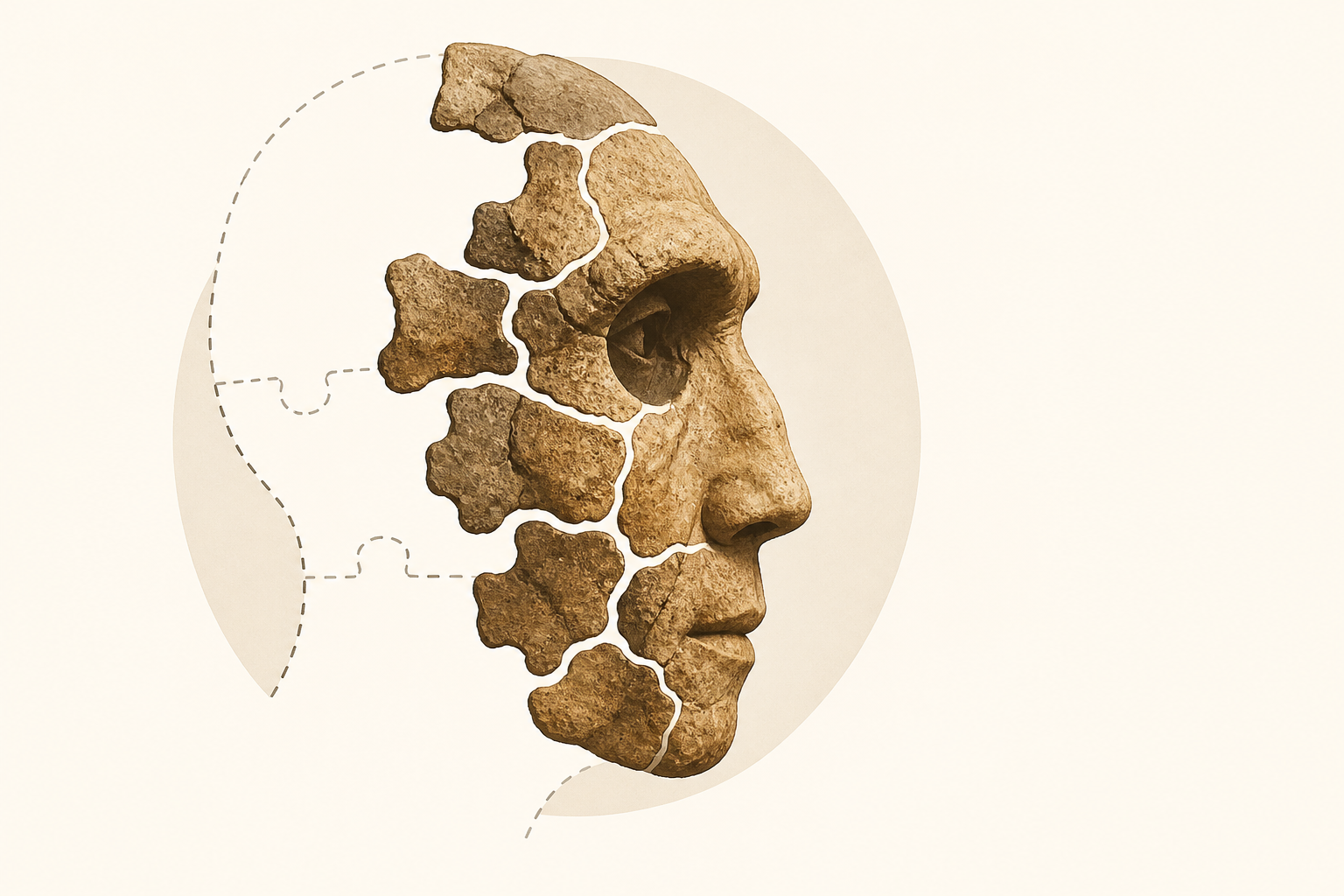
- Researchers recently created a composite 3D digital reconstruction of the main skull fragment, Irhoud 1, combining it with other jaw and tooth fossils to digitally recreate the face of one of the oldest known Homo sapiens.
- Using open-source technology and anatomical deformation techniques, the team matched a modern human skull model to the ancient fossil shape, estimated brain volume, and projected soft tissue features based on African ancestry data.
- Two versions of the reconstructed face were produced: a grayscale anatomical model for scientific accuracy and a full-color, lifelike digital face with hair and skin tones for public visualization, with the latter including artistic interpretations.
- The study, published in Heritage, highlights how open-access digital methods can help scientists reconstruct incomplete ancient fossils and bring early human ancestors to life virtually.


