AI Image
An Ancient Virus Silenced a Brain Gene in Chimpanzees. Humans Kept It.
Gadget Review • • health
Key Points:
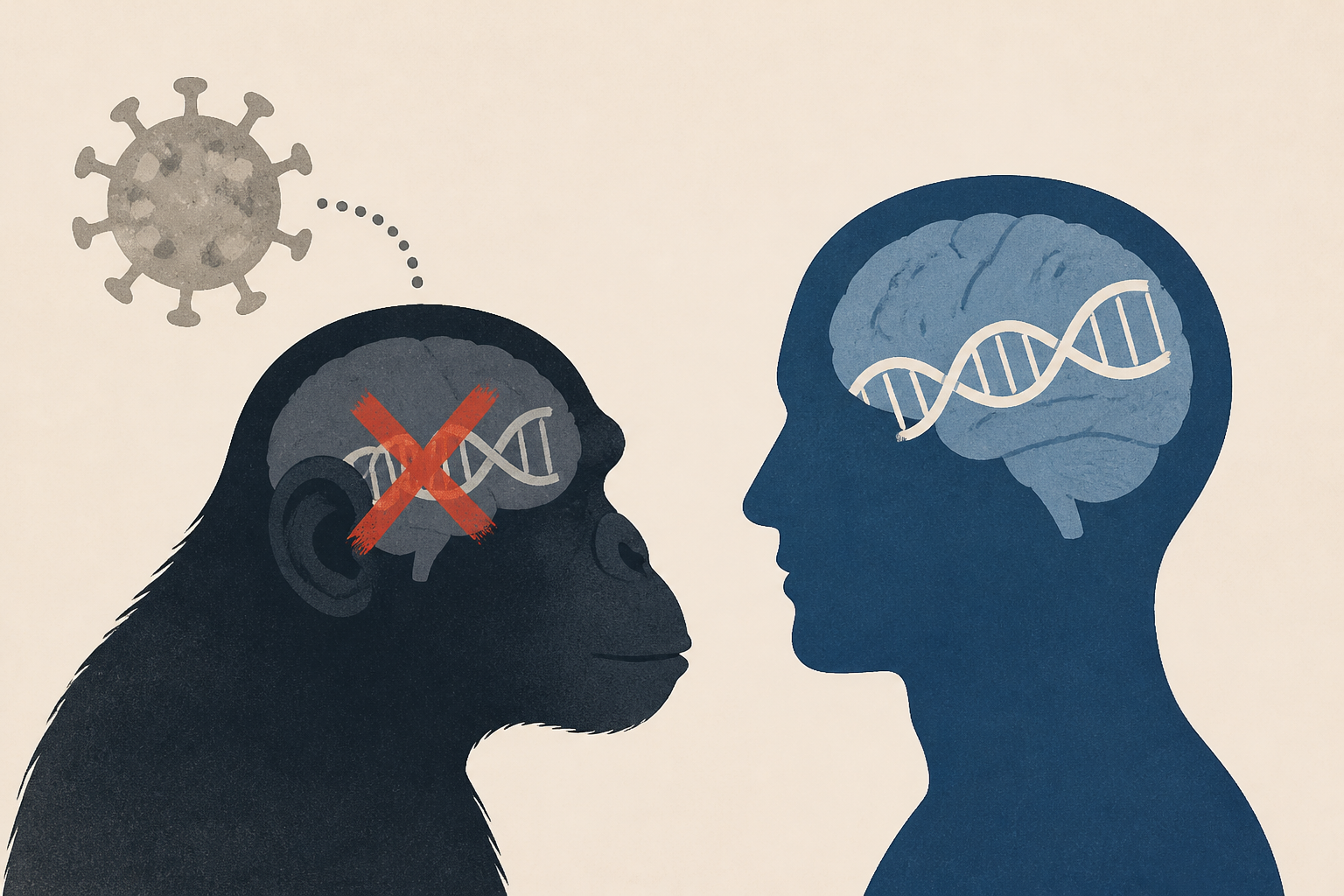
- Researchers at Lund University discovered that an ancient retroviral DNA insertion, PTERV1, in chimpanzee genomes silences the gene LINC00662, a long noncoding RNA active in early human brain development but inactive in chimpanzees.
- The viral insertion triggers DNA methylation that spreads to a regulatory region, suppressing LINC00662 expression in chimpanzee brain organoids, whereas the gene is robustly expressed in human brain organoids.
- CRISPR-Cas9 removal of the PTERV1 insertion in chimpanzee cells restored LINC00662 expression, providing strong evidence that the viral DNA causes gene silencing.
- Disabling LINC00662 in human brain organoids reduced genes linked to neuronal maturation and neural connectivity, suggesting the gene’s role in early brain development.
- While the study highlights a regulatory mechanism contributing to species differences, it does not demonstrate effects on cognition or brain anatomy in living organisms and encourages further research on viral DNA’s role in primate genome regulation.


