AI Image
An Ancient Virus Silenced a Brain Gene in Chimpanzees. Humans Kept It.
Yahoo • • health
Key Points:
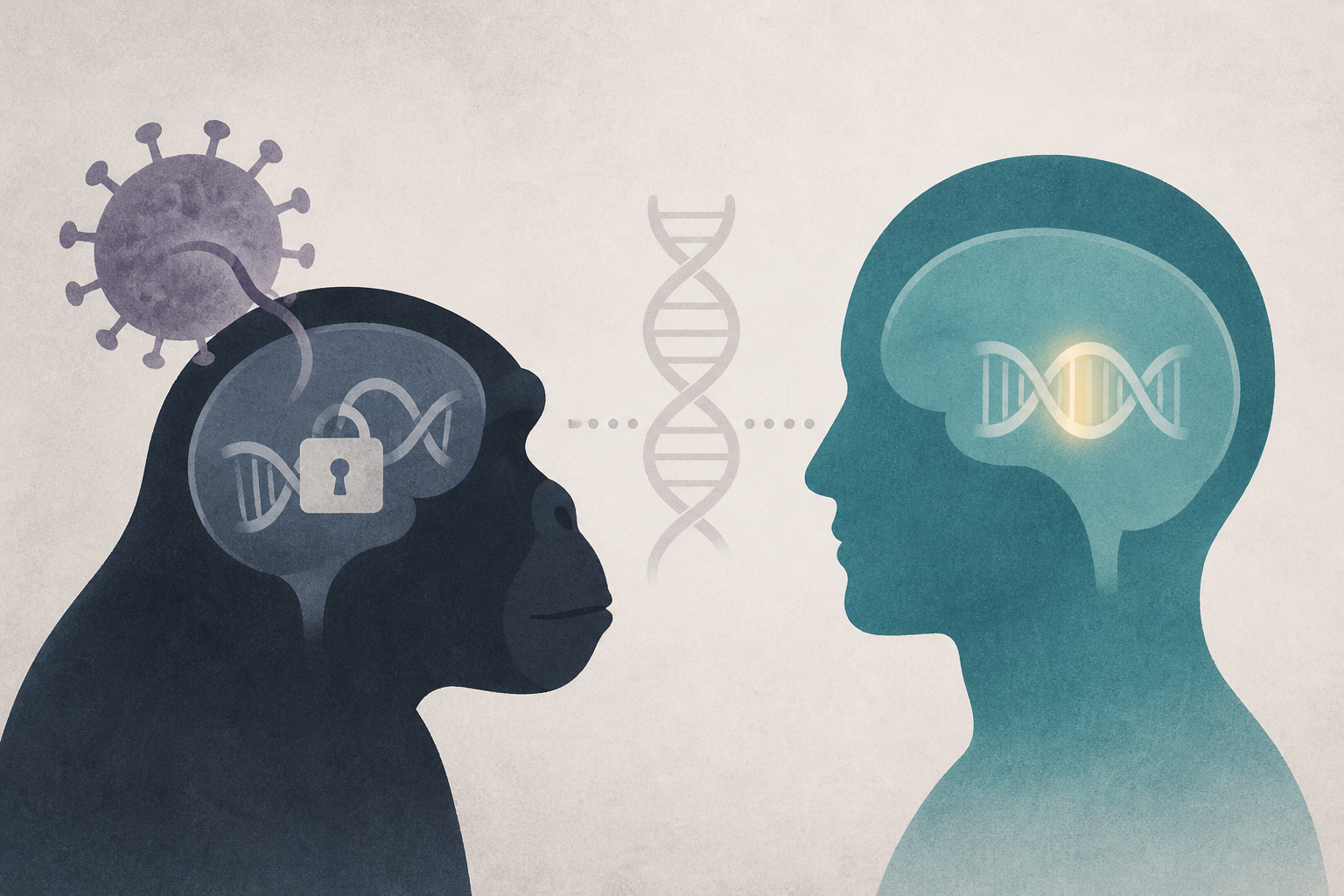
- Researchers at Lund University discovered that an ancient retroviral DNA insertion, PTERV1, silences the LINC00662 gene in chimpanzee brain models, while the gene remains active in human brain models, suggesting a role in species-specific brain development.
- The PTERV1 insertion causes heavy DNA methylation in chimpanzees, which spreads to regulatory regions and switches off LINC00662, a long noncoding RNA involved in early brain development; removing this insertion via CRISPR restored gene activity.
- Disabling LINC00662 in human brain organoids reduced expression of genes linked to neuronal maturation and neural connection growth, indicating the gene’s functional importance in early human brain development.
- This study supports the idea that differences in gene regulation, rather than protein-coding changes, contribute significantly to human-chimpanzee divergence, highlighting viral DNA as a regulatory factor rather than a source of new genes.
- While providing strong molecular evidence, the research does not demonstrate effects on cognition, behavior, or brain anatomy in living organisms and emphasizes that brain organoids are simplified models; further studies are needed to explore other viral sequences’ regulatory impacts across primates.


