AI Image
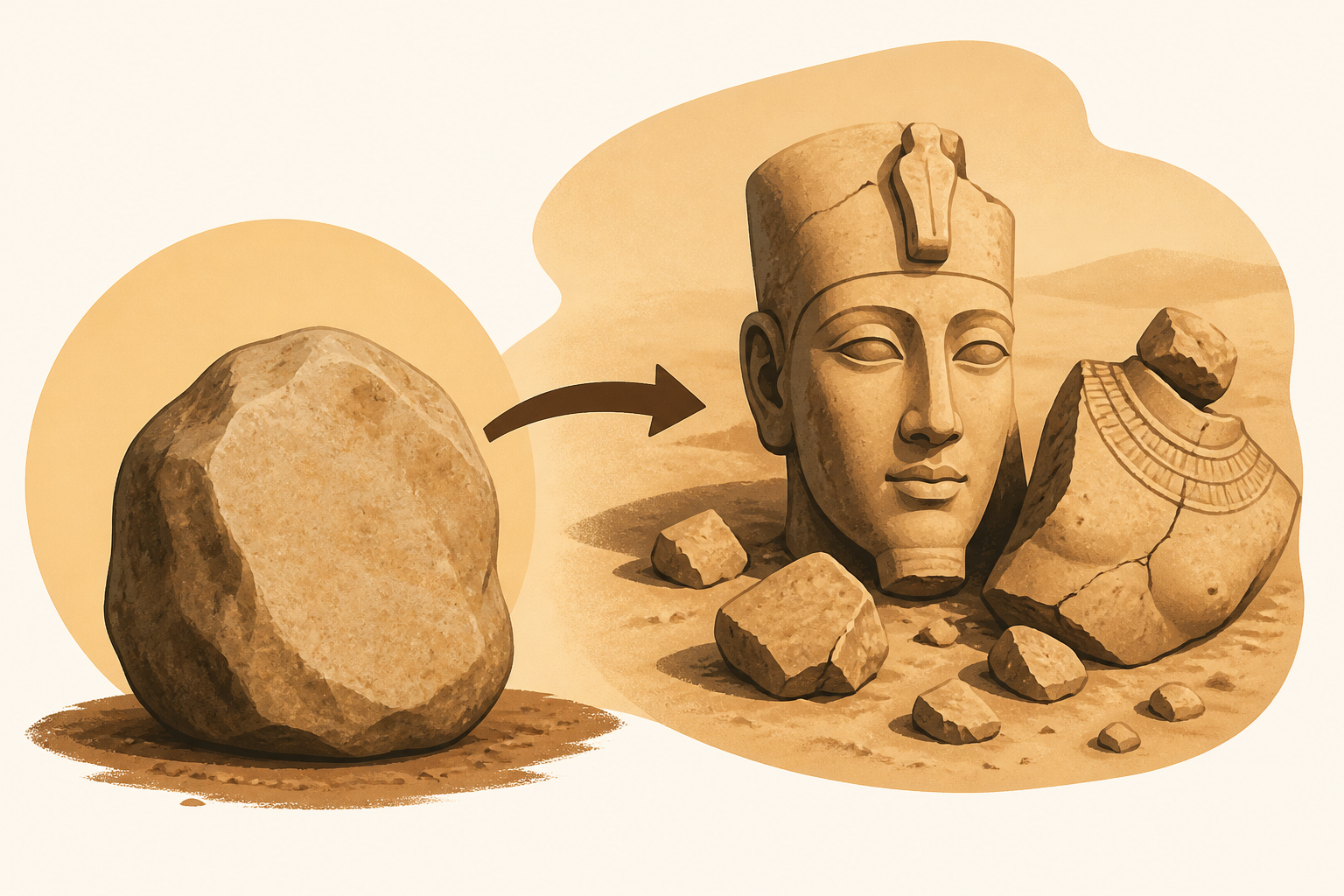
An Egyptian farmer found "an unusual stone." It led archaeologists to pieces of statues for an ancient king.
CBS News • • general
Key Points:
- Egyptian farmer Khaled al-Shahat discovered an unusual pink granite block on his land, leading archaeologists to uncover colossal statues of King Ramses II, who ruled Egypt from 1279 B.C. to 1213 B.C.
- The granite block bore royal titles of Ramses II, and nearby archaeologists found a 1.6-meter-high statue head depicting the king wearing the double crown, symbolizing the unification of Upper and Lower Egypt.
- Minister of Tourism and Antiquities Sherif Fathy honored al-Shahat with certificates and a pilgrimage trip for his honesty in reporting the discovery.
- Excavations revealed parts of a second royal statue and the statue’s back pillar with Ramses II’s formal royal title, suggesting the complete statue was about 28 feet tall.
- Archaeological studies are ongoing to further explore the statues and the historical significance of the site in the Nile Delta’s Al Gharbia Governorate.


