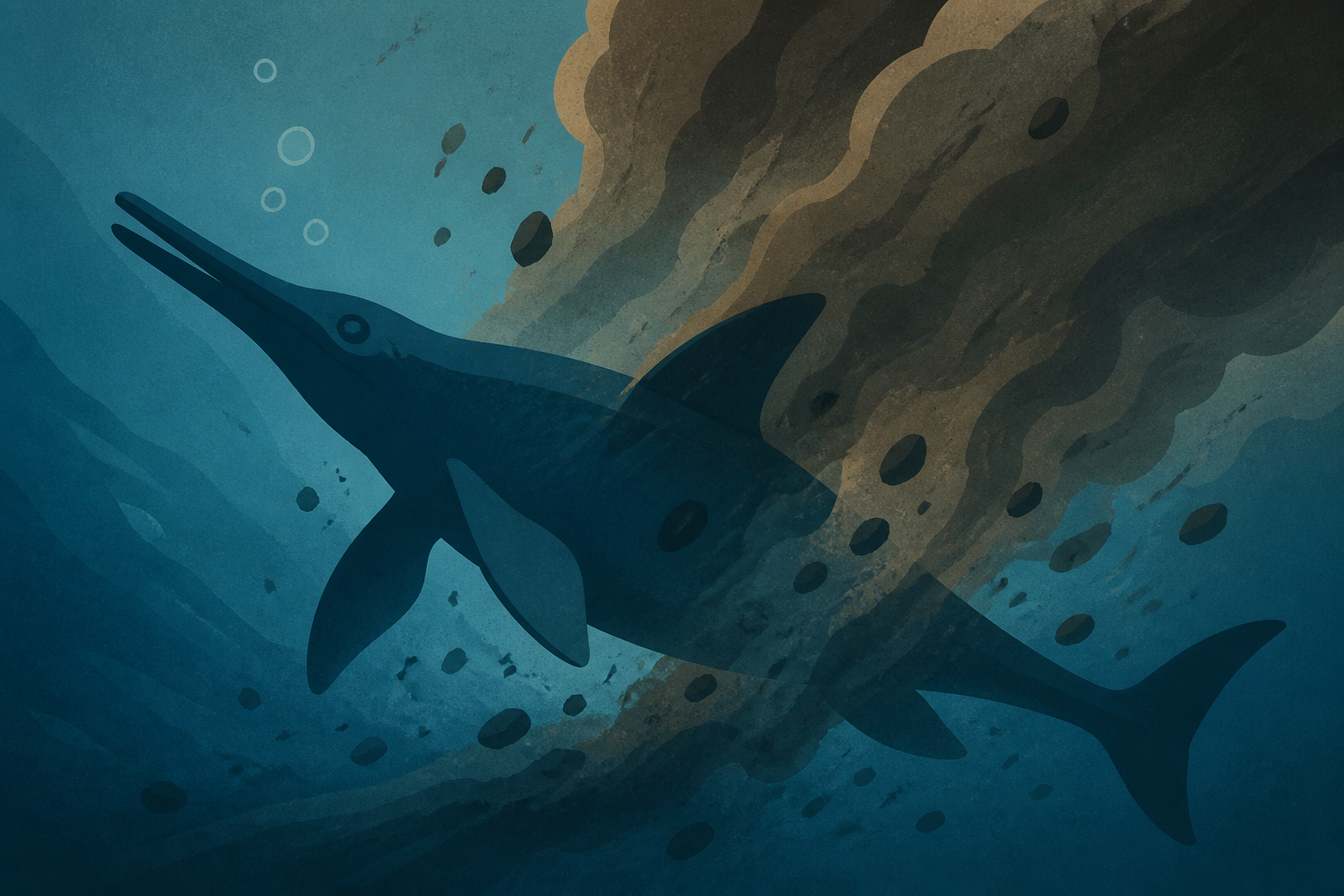
AI Generated Image
An Ichthyosaur’s terrible, horrible, no good, very bad day 160 million years ago
Yahoo • • science
Key Points:
- A fossilized ichthyosaur vertebra with a broken pliosaurid tooth embedded in it provides rare physical evidence of predation between ancient marine reptiles during the Upper Jurassic epoch (163-145 million years ago) off the coast of what is now Peterborough, England.
- The pliosaurid, a giant marine reptile three times the size of the ichthyosaur and with a massive head, likely delivered a fatal bite that damaged the ichthyosaur's spine, supporting the view that pliosaurids were apex predators feeding on large prey like ichthyosaurs.
- Researchers used CT scans and high-magnification imaging to confirm the tooth's identity and analyzed fossil preservation to conclude the tooth was broken off during an attack rather than from scavenging after digestion.
- The specimen was rediscovered in a museum drawer and its provenance was traced through Victorian fossil collectors' correspondence and museum records, highlighting the value of old collections for new scientific insights.
- Experts caution that behavior inference from fossils is challenging but agree the evidence strongly suggests a violent predatory encounter, illustrating the brutal nature of prehistoric marine ecosystems.


