AI Image
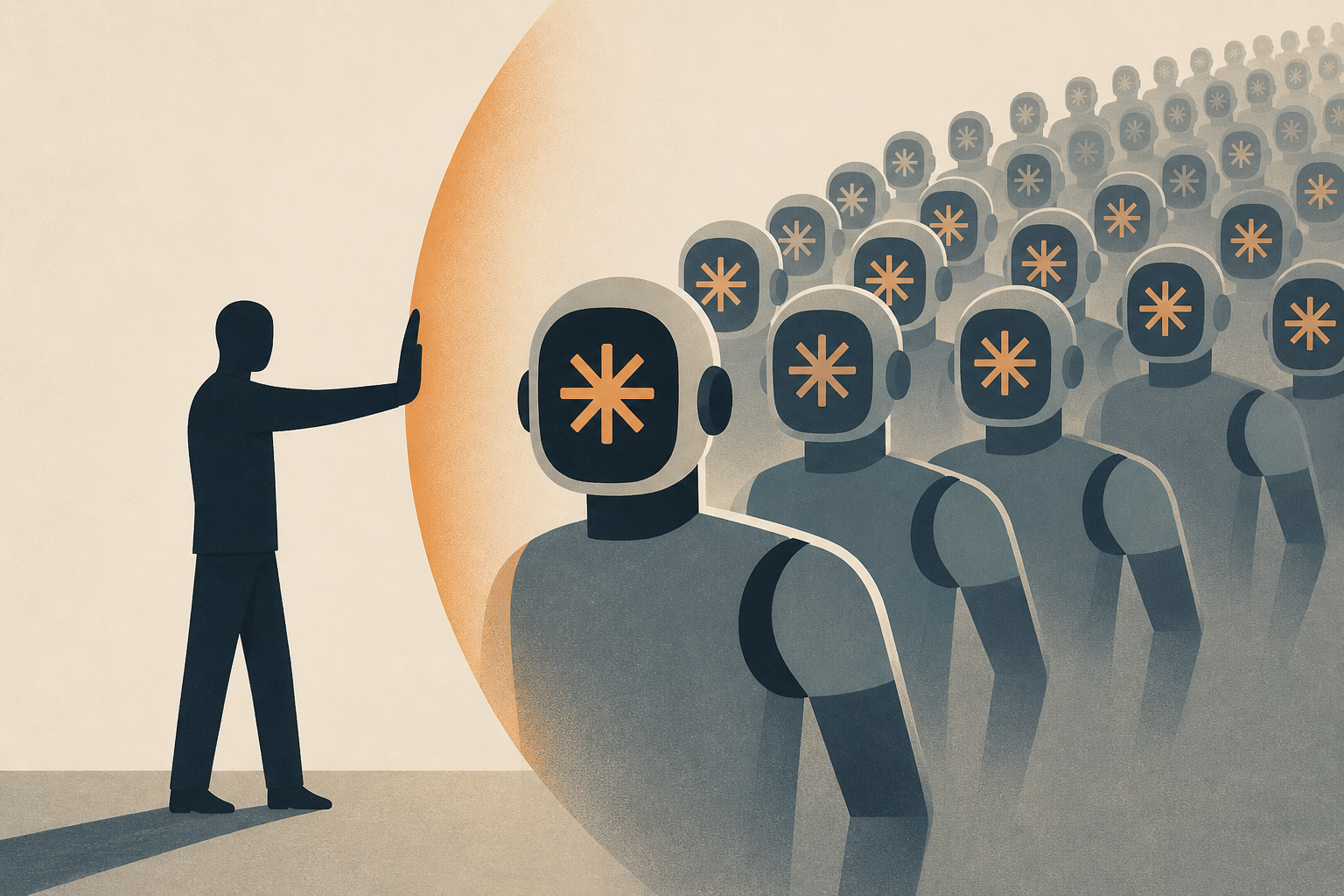
Anthropic offers a glimpse of an AI-first workplace where humans hold back an ‘army of Claudes’
Fortune • • business
Key Points:
- Anthropic's report reveals that 80% of the elapsed time in AI agent (Claude) sessions is spent waiting for human input, making human attention the main bottleneck in agent productivity.
- AI agents have surpassed human working hours at Anthropic, with AI working six times more hours than humans by August, leading to a fivefold increase in software engineers’ code commits and widespread use of personal AI assistants among nontechnical staff.
- Managing AI agents is becoming a significant part of employees' work, with "meta-work" rising from 10% to 22% of interactive sessions, and employees spending more time in meetings and coordination as AI handles repetitive tasks.
- Job roles are evolving as AI takes over routine duties; employees are shifting toward tasks like agent prompting and model evaluation, while junior-level technical hiring has declined sharply, raising concerns about AI-driven job displacement, especially among younger workers.
- Anthropic employees expect AI to handle 75% of their work by 2030, highlighting a transformative shift toward strategic and decision-making roles as AI automates routine tasks, though the company's experience may not fully represent broader workplace trends.


