AI Image
Antiviral immunity via telomerase-like reverse transcription in bacteria
Nature • • health
Key Points:
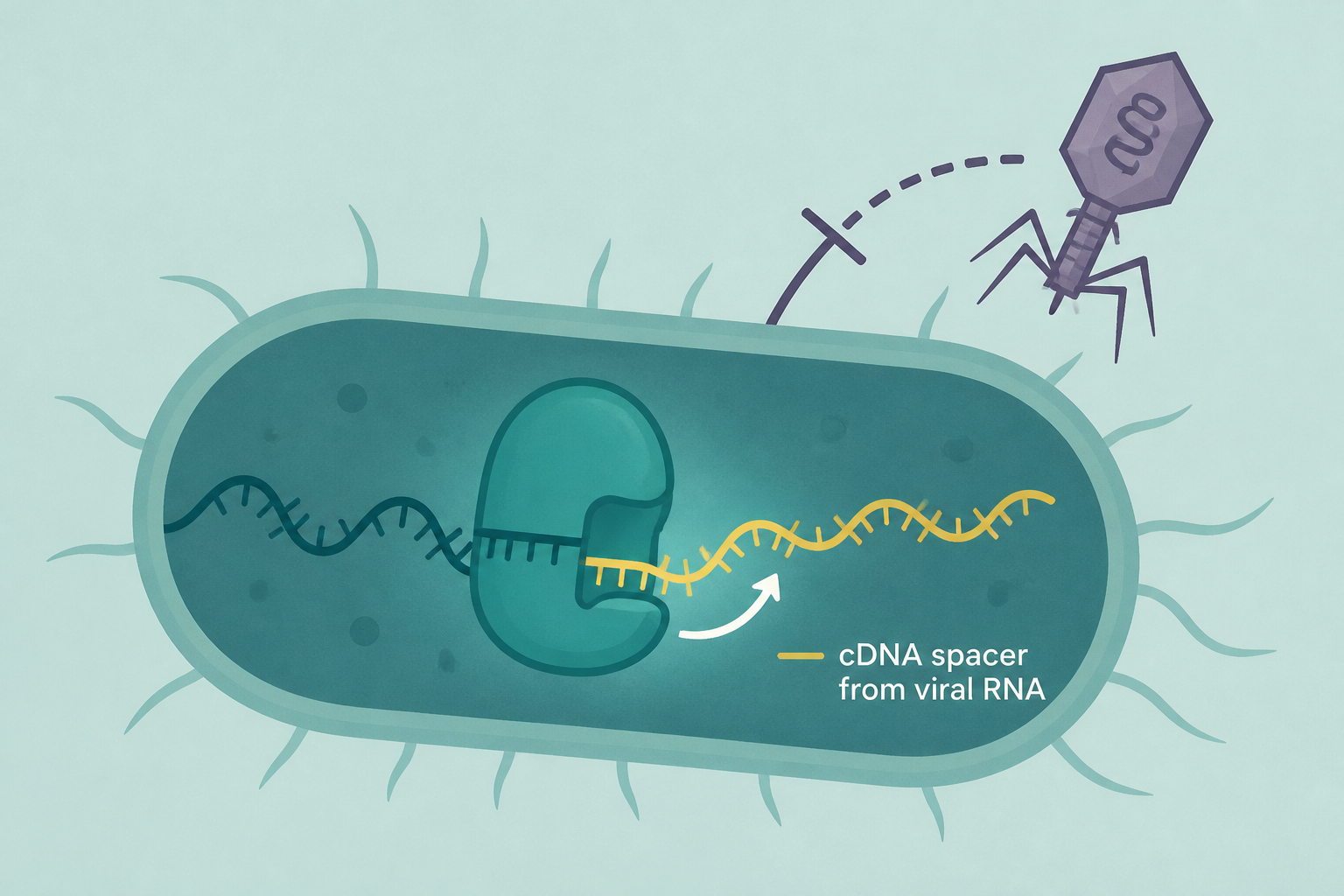
- Researchers have identified a new bacterial antiviral defense system, DRT10, which uses a noncoding RNA (ncRNA) to catalyze processive, protein-primed synthesis of tandem-repeat DNA to protect against viral infection.
- Cryo-EM studies revealed a unique 2:1 architecture where two reverse transcriptase (RT) monomers bind opposite sides of a pseudo-symmetric ncRNA, with only one monomer producing the long repetitive DNA product.
- The DNA synthesis mechanism of DRT10 closely parallels the telomeric repeat addition by eukaryotic telomerase, and phylogenetic analysis suggests a common evolutionary origin between telomerase and DRT family RTs.
- This discovery expands the understanding of RNA-templated DNA repeat addition mechanisms across diverse bacterial DRT systems, highlighting conserved strategies for antiviral immunity despite differing structural architectures.


