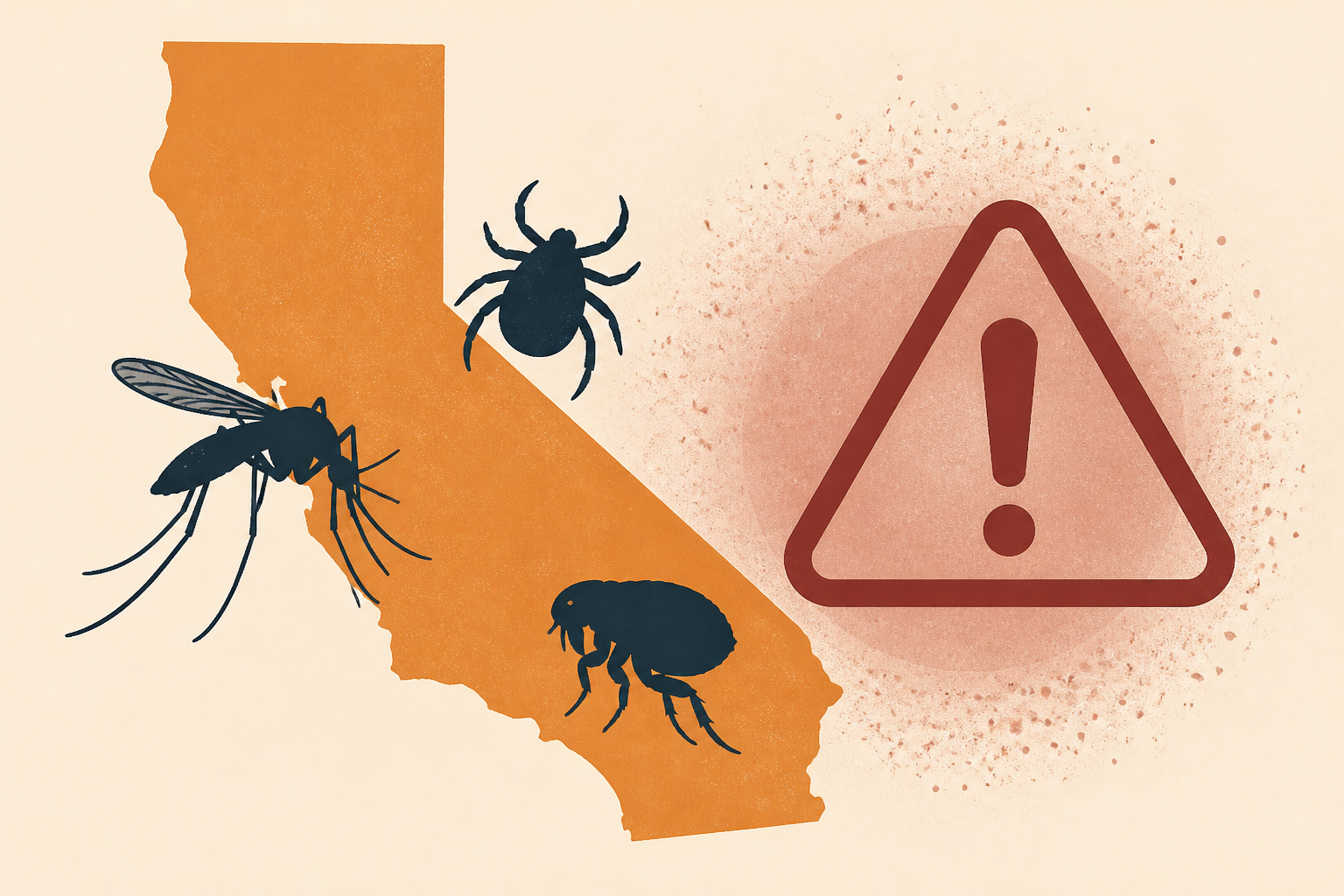
AI Generated Image
Are mosquitoes, ticks and fleas turning California into a disease hotspot?
Yahoo • • health
Key Points:
- California is experiencing a rise in vector-borne diseases such as tularemia, flea infestations, Rickettsia, Lyme disease, dengue, and typhus, with some diseases expanding their geographic range and others increasing in incidence.
- Climate change, including record heat waves, is contributing to the surge in mosquito populations and the spread of diseases like West Nile virus and dengue, with hotter temperatures enabling vectors and pathogens to migrate northward.
- Local transmission of dengue has increased in California, particularly in urban areas, with the invasive Aedes aegypti mosquito spreading diseases like dengue, Zika, and Chikungunya; the number of locally acquired dengue cases rose significantly from 2023 to 2024.
- Flea-borne typhus cases are rising in Southern California, partly due to warmer climates extending flea seasons and human encroachment into wildlife habitats, while bans on certain rodenticides may inadvertently be allowing rodent populations to grow and increase disease transmission.
- Experts emphasize the complexity of factors driving disease emergence, including ecological disruption and human expansion into previously undisturbed ecosystems, which heightens the risk of encountering new pathogens and vector-borne diseases.


