AI Generated Image
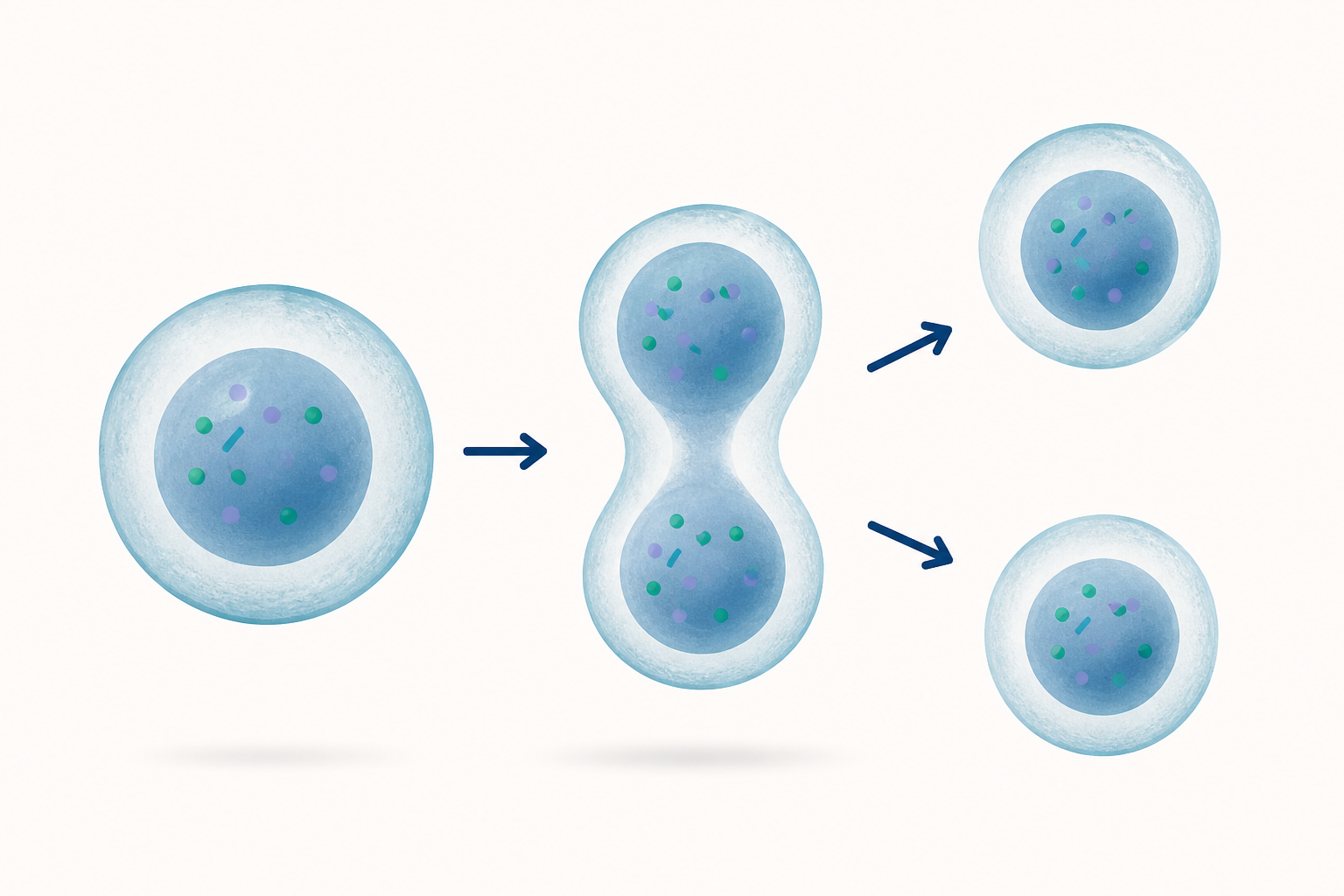
Artificial cell manages a few rounds of cell division
Ars Technica • • general
Key Points:
- Researchers at the University of Minnesota developed a simplified artificial cell system called "SpudCells," which can enclose genetic material within membranes, import materials from the environment, grow, and divide for a few generations.
- The SpudCell genome consists of seven circular DNA molecules encoding proteins derived from viruses, including Phi29 for DNA replication and T7 for RNA transcription, with protein translation machinery supplied externally.
- Feeding SpudCells involves a pore protein that allows small molecules to diffuse in, while larger protein complexes are delivered via membrane fusion with specially tagged "food" vesicles, enabling continued growth and protein production.
- Although SpudCells can grow and divide, genome distribution during division is random and incomplete, leading to loss of genetic material after about five generations, limiting their longevity and fidelity.
- While highly engineered and artificial, SpudCells provide a useful model to explore fundamental questions about early cellular life, such as genetic material inheritance, membrane function, and natural selection in minimal cell systems.


