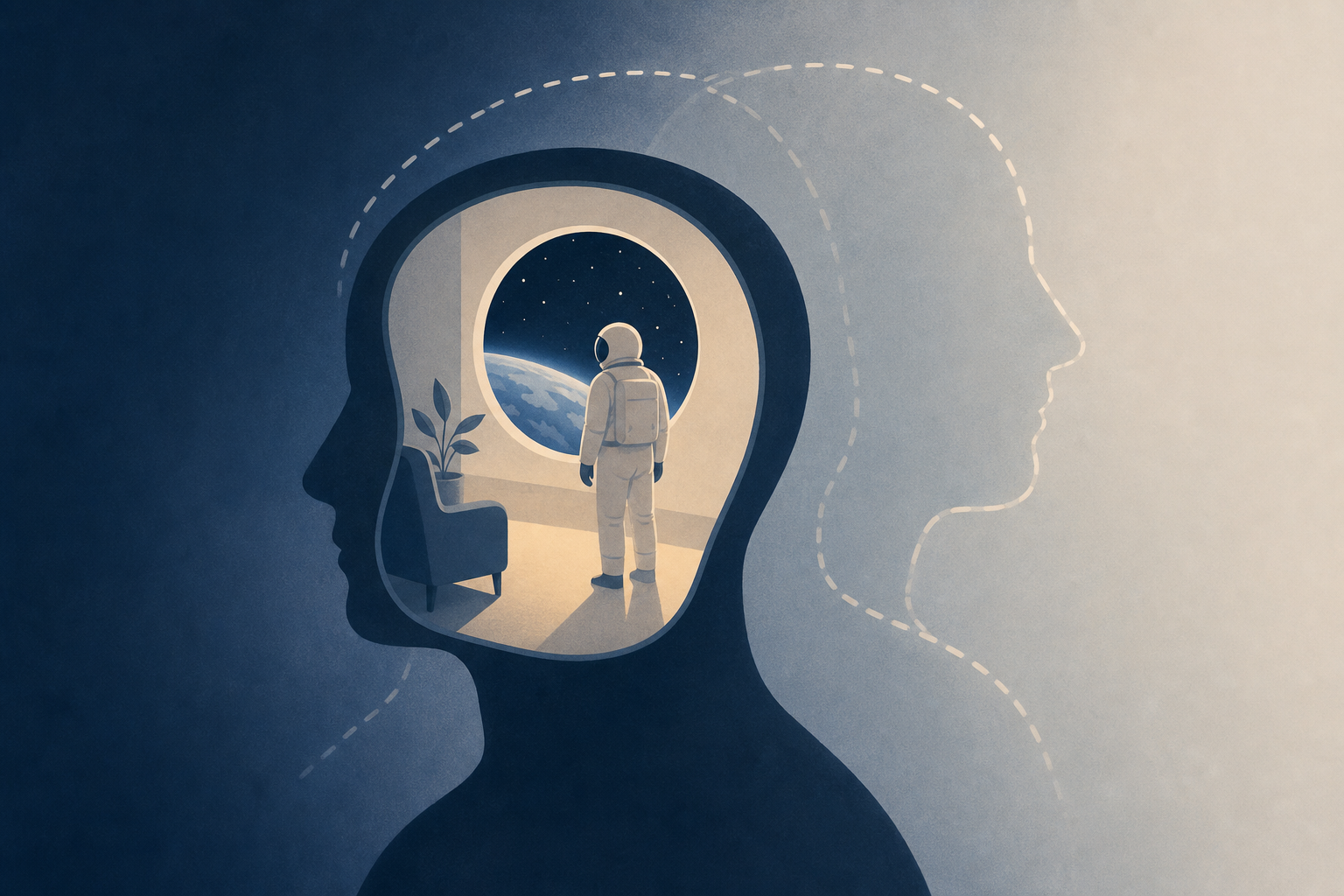
AI Generated Image
Astronauts returning from six-month missions describe a persistent 'observer' sensation — the feeling of watching their own lives from a half-step outside the frame, weeks after they're back on the gr
spacewar.com • • science
Key Points:
- Astronauts returning from six-month space missions often face a challenging re-adaptation period marked by physical symptoms like fatigue and dizziness, as their bodies relearn basic functions such as walking and balance after prolonged microgravity exposure.
- Beyond physical effects, returning astronauts experience a psychological distance from everyday life, feeling like observers rather than participants, due to a mismatch between their recalibrated perspectives and the unchanged world around them.
- This "observer" sensation arises because the brain must rebuild fundamental models of reality after spaceflight, causing a conscious self-monitoring state where presence feels disrupted until the brain readjusts.
- Although this psychological distance typically fades with time and support, many astronauts value the clarity it provides and sometimes try to maintain a degree of this perspective to better appreciate their lives.
- Similar, though milder, experiences occur in people returning from extended absences or intense situations on Earth, illustrating that presence in one’s life is a fragile mental construction revealed most starkly by extreme dislocation.


