AI Image
Astronomers Find Signs of a SECOND Earth-Like World in The Space Beyond Neptune
ScienceAlert • • science
Key Points:
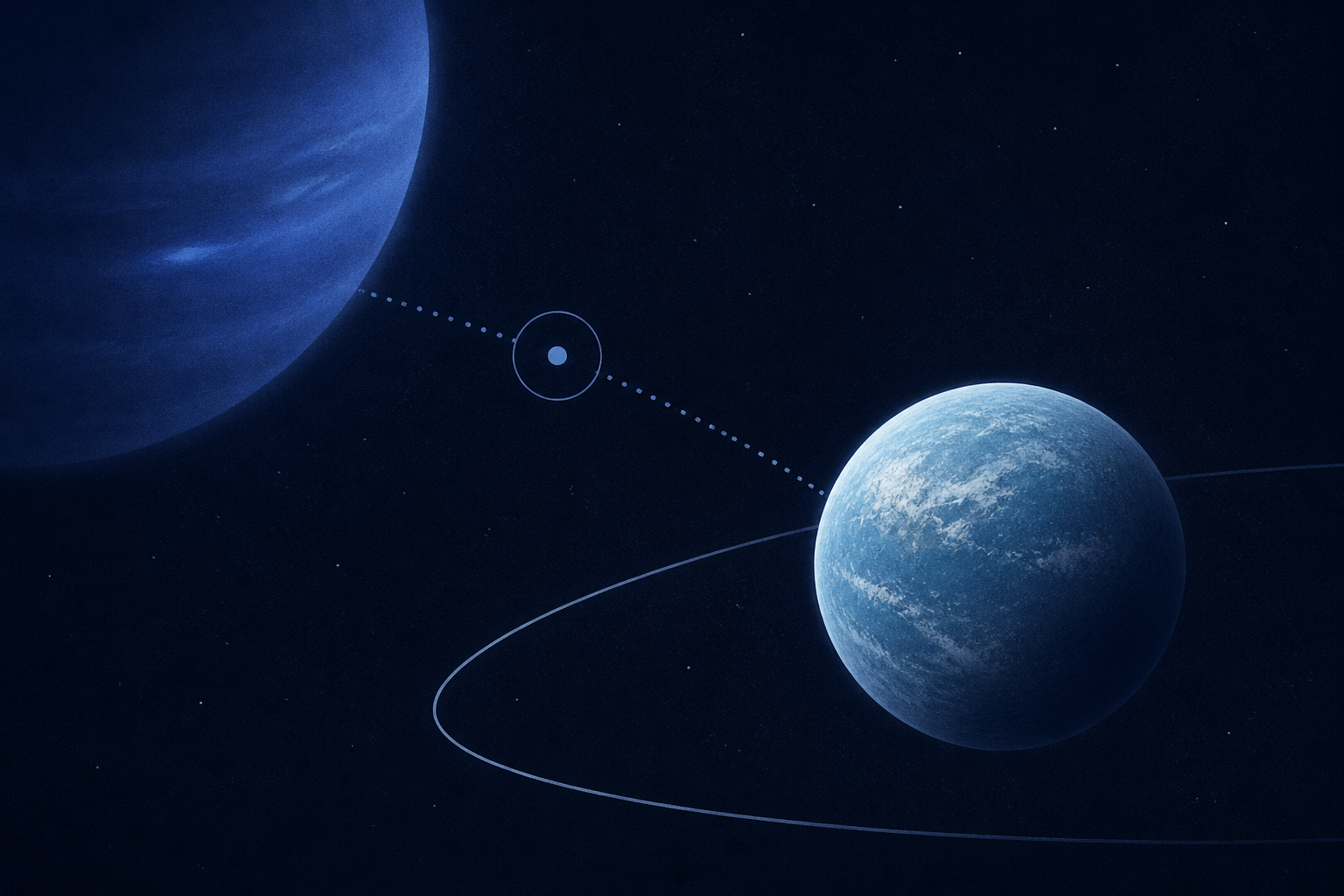
- Astronomers have proposed the existence of a second hidden super-Earth, dubbed Planet X2, beyond the Kuiper Belt to explain unusual orbits of distant trans-Neptunian objects that cannot be accounted for by known planets.
- Computer simulations including this hypothetical planet, estimated to be 1-2 times Earth's mass and orbiting 350-500 astronomical units from the Sun, better replicate the observed populations of icy objects with highly tilted and detached orbits.
- Unlike the previously hypothesized Planet Nine, which is larger and closer, Planet X2 would never approach closer than 200 astronomical units, and both planets could potentially coexist to explain different orbital anomalies.
- Planet X2 may have formed closer to the Sun and been scattered outward by gravitational interactions with giant planets, consistent with evidence of planetary migration and reshuffling in the Solar System's early history.
- Upcoming observations from the Vera C. Rubin Observatory are expected to discover many new distant objects, providing critical data to test the Planet X2 hypothesis and possibly even directly detect the planet, although its great distance and faintness pose challenges.


