AI Generated Image
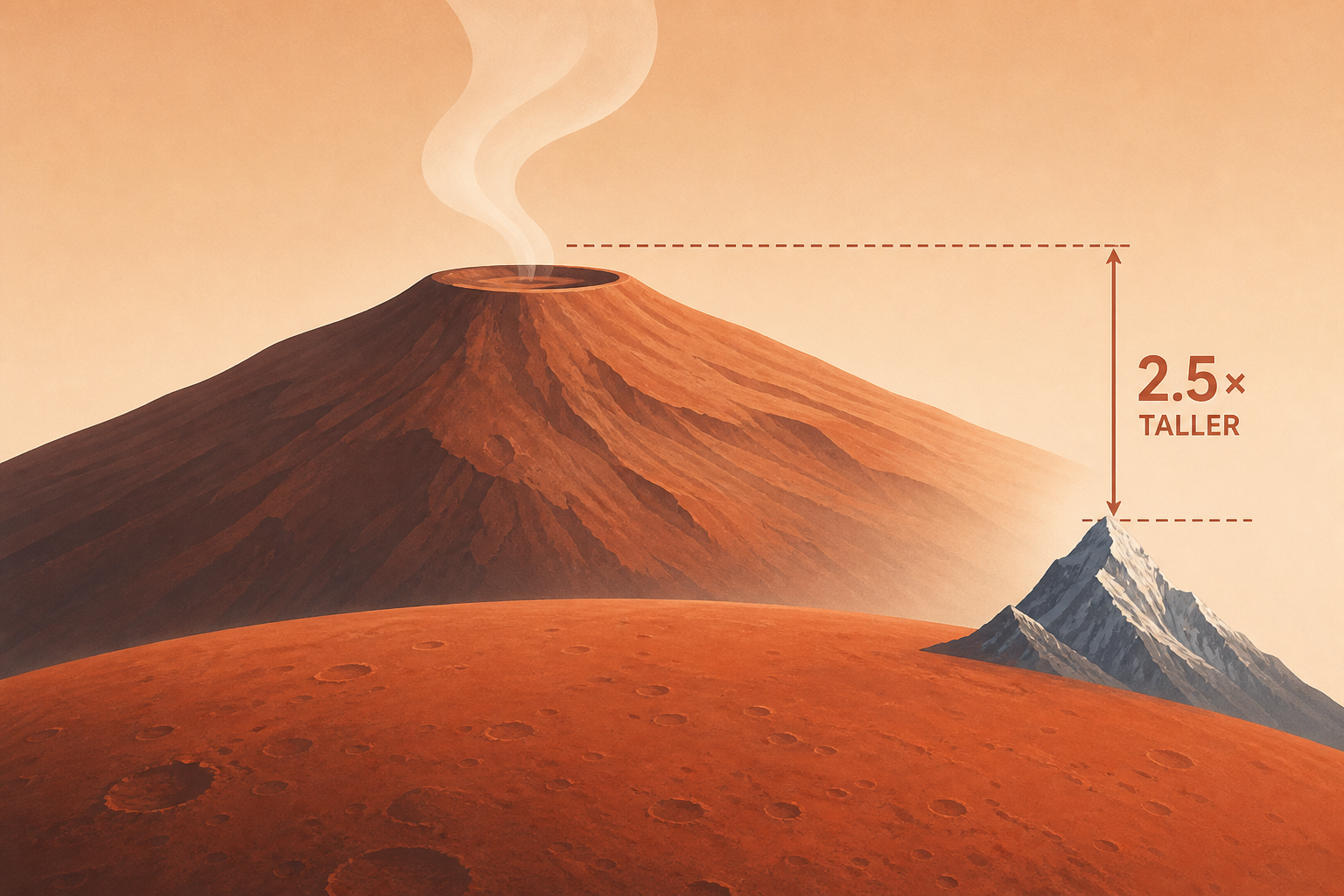
At 70,000 Feet, Olympus Mons on Mars Stands Two and a Half Times Taller Than Mount Everest. It Is the Largest Volcano in the Solar System, and It May Not Be Extinct
19FortyFive • • science
Key Points:
- Olympus Mons on Mars is the largest volcano in the solar system, rising about 70,000 feet (21.3 km) above the Martian datum and spanning roughly 370 miles (600 km) across, making it about two and a half times taller than Mount Everest.
- The volcano’s broad, gently sloped shield structure has an average flank slope of only about 5%, so standing on it would feel like being on a plain rather than a mountain peak.
- Mars’s lower gravity, lack of plate tectonics, and the volcano’s long growth period allowed Olympus Mons to reach such an enormous size, with lava flows dated as recently as 2 million years ago suggesting it is dormant but not extinct.
- The massive weight of Olympus Mons and nearby volcanoes caused a significant crustal shift on Mars about 3 billion years ago, altering the planet's climate and geography.
- Scientists debate the origin of the towering cliffs at the volcano’s base, with hypotheses ranging from landslides to ancient shorelines formed by interactions with a possible Martian ocean, linking the volcano to broader questions about Mars’s watery past.


