Atmospheric warming contributions from airborne microplastics and nanoplastics
Nature • • world
Key Points:
- Thompson et al. (2024) provide a comprehensive review of two decades of microplastic pollution research, highlighting advances in understanding sources, transport, environmental fate, and impacts of microplastics globally.
- Multiple studies (Allen et al. 2019, Brahney et al. 2020, Evangeliou et al. 2020) demonstrate that atmospheric transport is a significant pathway for microplastic pollution, enabling deposition in remote and protected areas far from emission sources.
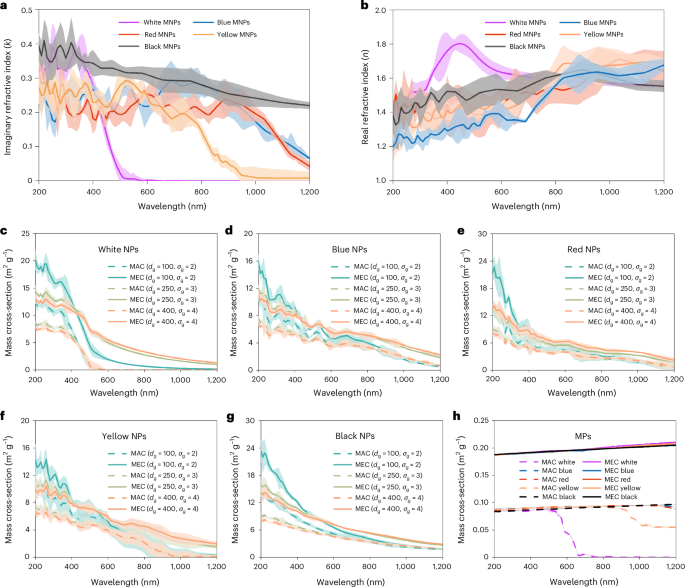
- Research on airborne microplastics (Revell et al. 2021; Aeschlimann et al. 2022) reveals their potential to affect atmospheric processes, including direct radiative effects and cloud formation, indicating implications for climate and weather systems.
- Investigations into microplastic characteristics (Xiao et al. 2023; Tatsii et al. 2023) show that particle shape and size influence long-range atmospheric transport dynamics, affecting deposition patterns and environmental distribution.
- Studies also document microplastic presence in diverse environments—from urban areas like Greater Paris and Shanghai (Dris et al. 2015; Yuan et al. 2024) to extreme locations such as Mount Everest and polar ice (Napper et al. 2020; Materic et al. 2022)—underscoring the pervasive nature of microplastic pollution.


