AI Image
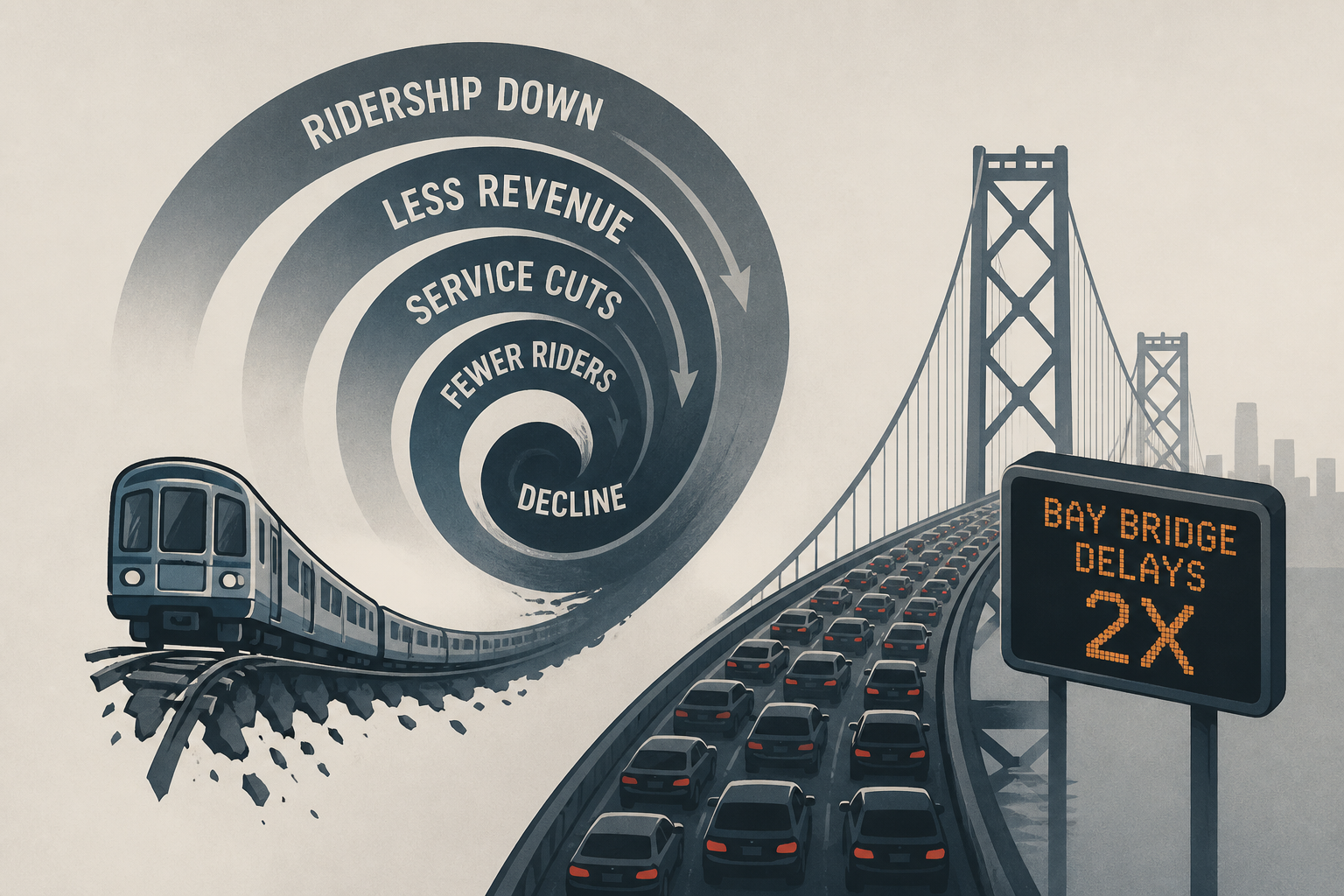
Bay Area transit ‘death spiral’ could double Bay Bridge delays
San Francisco Chronicle • • business
Key Points:
- A SPUR report warns that rejecting two transit tax measures on the November ballot could more than double rush hour delays on the Bay Bridge, with travel times potentially increasing from 30 minutes to over an hour during peak commutes.
- The report predicts severe service cuts by BART, Muni, and Caltrain due to deep financial deficits, leading to station closures, reduced routes, and a significant shift of former transit riders to driving, exacerbating traffic congestion across critical Bay Area choke points.
- Opponents of the tax measures dispute the severity of the predicted impacts, suggesting alternative funding solutions and operational efficiencies instead of new taxes, but transit agencies maintain that austerity plans are necessary to avoid collapse.
- The report highlights broader consequences including increased parking demand, higher commuting costs averaging $3,300 annually per displaced rider, and a substantial environmental impact with an estimated 184,000 metric tons of additional CO2 emissions per year.
- SPUR describes a potential "death spiral" where service cuts lead to ridership loss, reduced fare revenue, and further cuts, creating a difficult-to-reverse cycle threatening the viability of Bay Area public transit.


