AI Image
Biology Might Not Be Quantum, but Its Math Is Quantumlike
Quanta Magazine • • general
Key Points:
- Quantum biology explores whether living organisms exploit quantum phenomena, such as coherence and entanglement, to enhance biological functions like photosynthesis, despite the warm, noisy cellular environment typically causing rapid quantum decoherence.
- Early enthusiasm, exemplified by studies in 2007 suggesting quantum coherence aids photosynthetic efficiency, has given way to skepticism; researchers like Gregory Scholes now propose that biological systems may mimic quantum effects through classical complex networks rather than utilizing true quantum states.
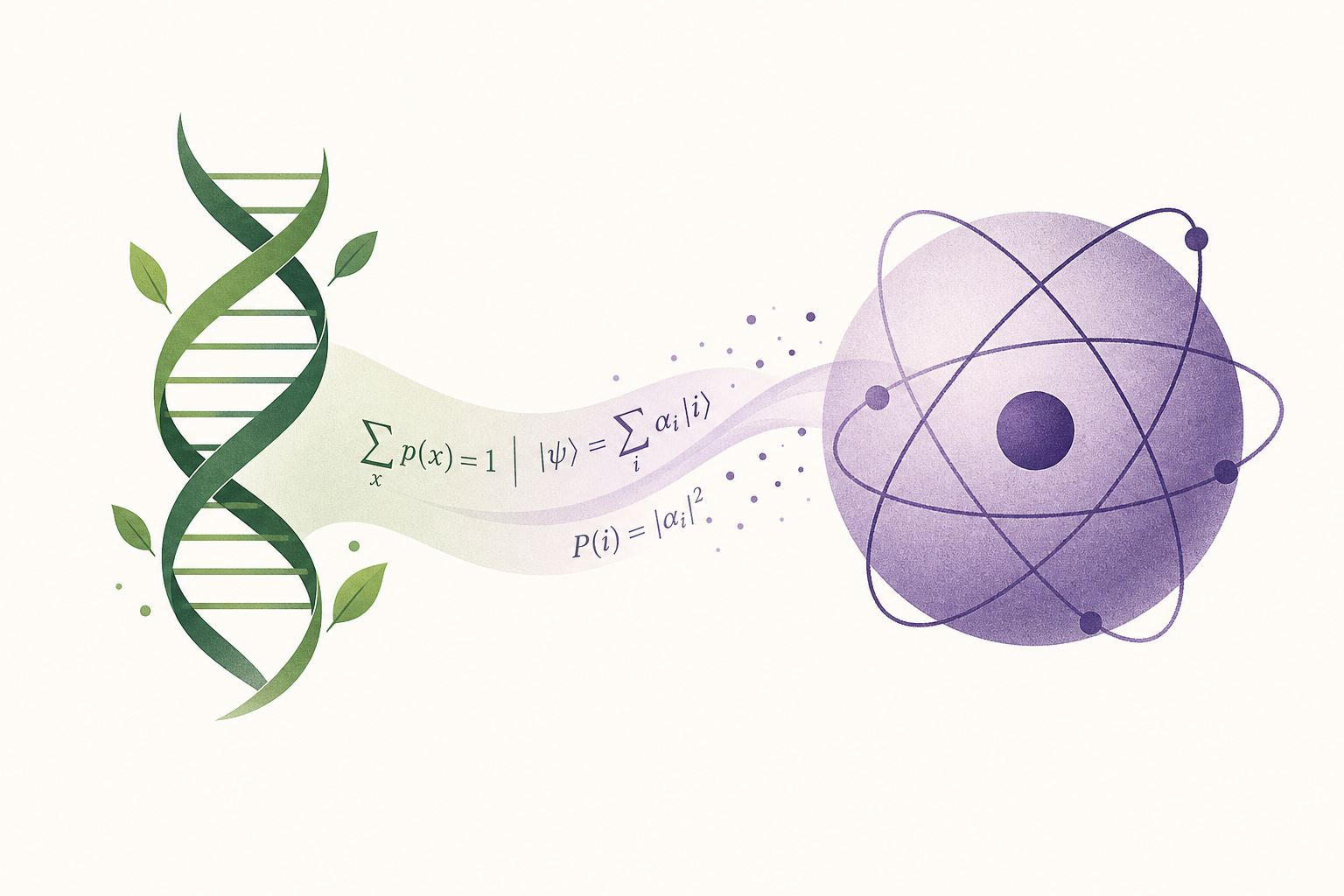
- These classical networks can produce "quantumlike" behaviors mathematically similar to quantum phenomena, indicating that life may have evolved to replicate quantum advantages without relying on fragile quantum coherence.
- While quantum tunneling occurs in biological enzymes and can influence reaction rates, this effect is brief and does not involve long-lived quantum coherence, which remains elusive in biological contexts.
- The historical quest to link quantum mechanics with life dates back to pioneers like Niels Bohr and Pascual Jordan, but the idea that life fundamentally depends on persistent quantum states remains controversial and unproven.


