Brain Overdrive Linked to Falling Risk
Neuroscience News • • health
Key Points:
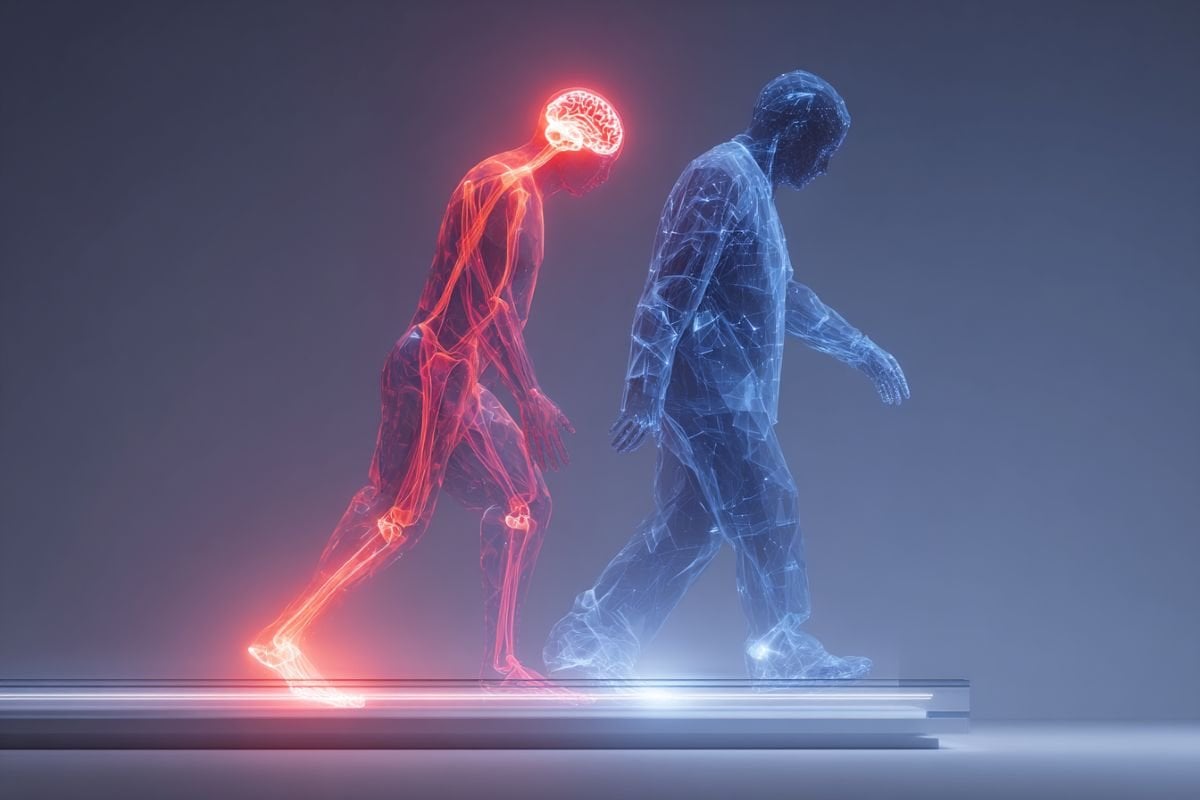
- Aging and Parkinson’s disease cause the brain to engage in heightened neural activity during balance recovery, yet this increased effort results in less effective physical responses and a higher risk of falls.
- Older adults and Parkinson’s patients show larger brain and muscle responses to minor balance disturbances compared to young adults’ responses to major disturbances, indicating neural inefficiency.
- A common compensatory strategy in these populations—simultaneous activation of opposing muscles causing joint stiffness—correlates with poorer balance performance and hinders recovery.
- Researchers propose that monitoring muscle activity during a “rug-pull” test could serve as a non-invasive clinical tool to assess brain engagement and predict fall risk, potentially guiding preventive interventions.
- The study’s neuromechanical model decomposes muscle responses into subcortical and cortical feedback components, revealing increased cortical involvement in balance control with aging and Parkinson’s disease.


