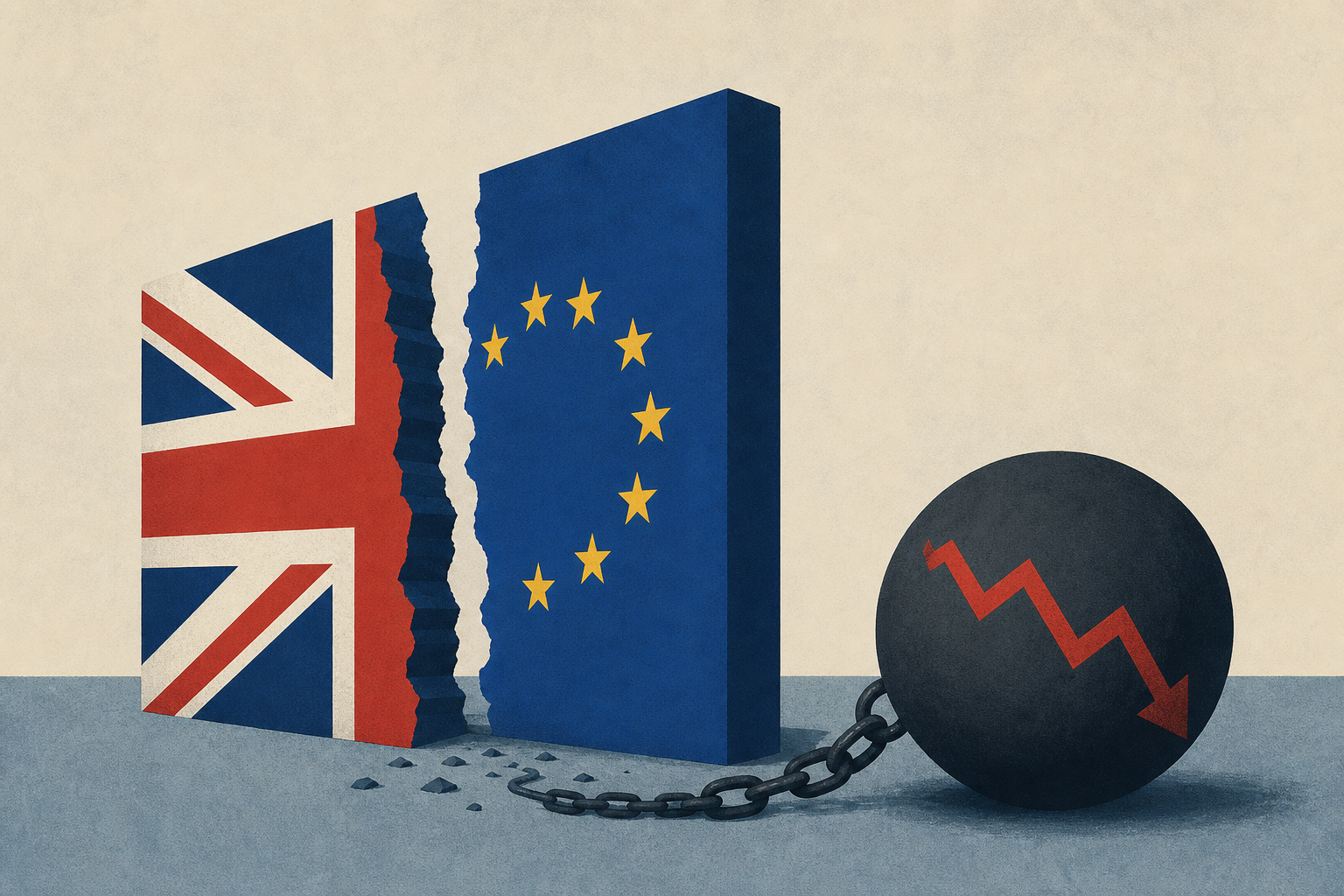
AI Generated Image
Britain’s economic woes fuel discontent with Brexit a decade after historic vote to leave EU
AP News • • world
Key Points:
- Ten years after Brexit, British business leaders express frustration as the promised economic boom and regained control have not materialized, with growth sluggish and public services strained.
- Studies indicate Brexit has reduced the UK’s GDP by 6-8%, investment by 12-13%, and productivity by 3-4%, reflecting long-term economic setbacks from leaving the EU single market.
- The UK automotive industry faced increased costs and reduced investment due to Brexit-related trade barriers, while new trade deals have yet to compensate for lost EU market access.
- Labour shortages, especially in sectors like the restaurant industry reliant on Eastern European workers, have worsened due to the end of free movement, leading to feelings of betrayal among some Brexit supporters.
- Amid growing public dissatisfaction with Brexit outcomes, Prime Minister Keir Starmer is seeking closer ties with the EU to revive the economy, though some remain committed to the original 2016 vote and skeptical of rejoining the bloc.


