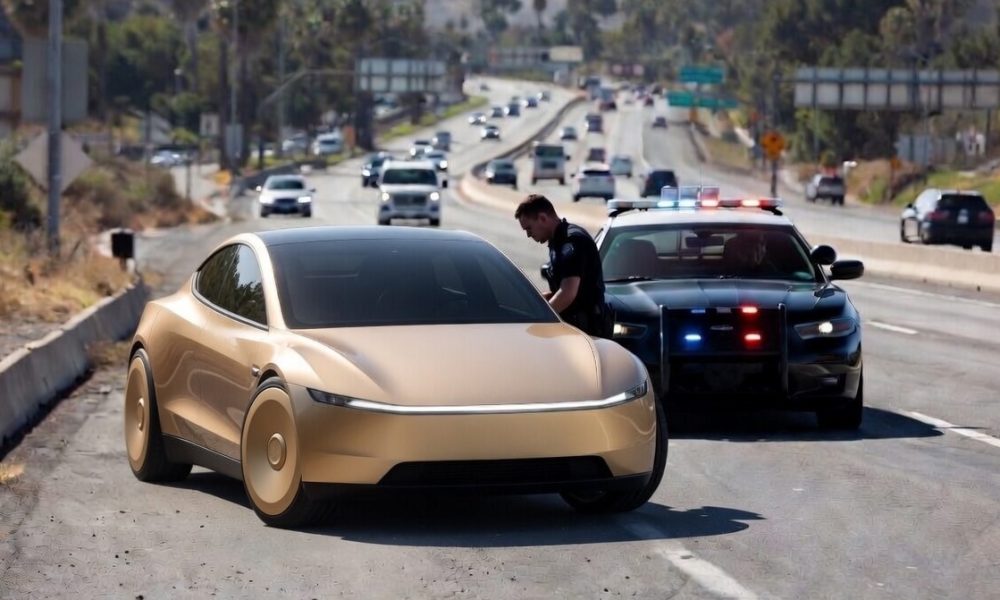
California hits Tesla Cybercab and Robotaxi driverless cars with new law
Teslarati • • business
Key Points:
- California DMV adopted new rules effective July 1, 2026, allowing law enforcement to issue tickets to autonomous vehicle companies for moving violations, treating companies as the "driver" responsible for infractions and enabling penalties like fleet restrictions or permit revocation.
- Tesla is accelerating production of its Cybercab robotaxi at Giga Texas, aiming for mass deployment across multiple U.S. cities by the end of 2026, coinciding with the new California rules that assign legal accountability to autonomous fleets without human drivers.
- The FCC rejected SpaceX's petition to access additional satellite spectrum for direct-to-device connectivity, maintaining protections for existing spectrum holders, but SpaceX continues to expand Starlink Mobile service in partnership with T-Mobile, targeting improved speeds and broader coverage.
- Elon Musk announced that Tesla’s upcoming Roadster will be the company’s last manually driven car, emphasizing its appeal to driving enthusiasts, with production targeted for 2027 or 2028 and featuring advanced specs including potential rocket thruster technology.
- Tesla’s Q1 2026 update confirmed ongoing production line development for the Optimus humanoid robot at Fremont and major expansion plans at Giga Texas, aiming for up to 10 million units annually, supported by significant infrastructure investment and integration with Tesla’s AI and chip development efforts.


