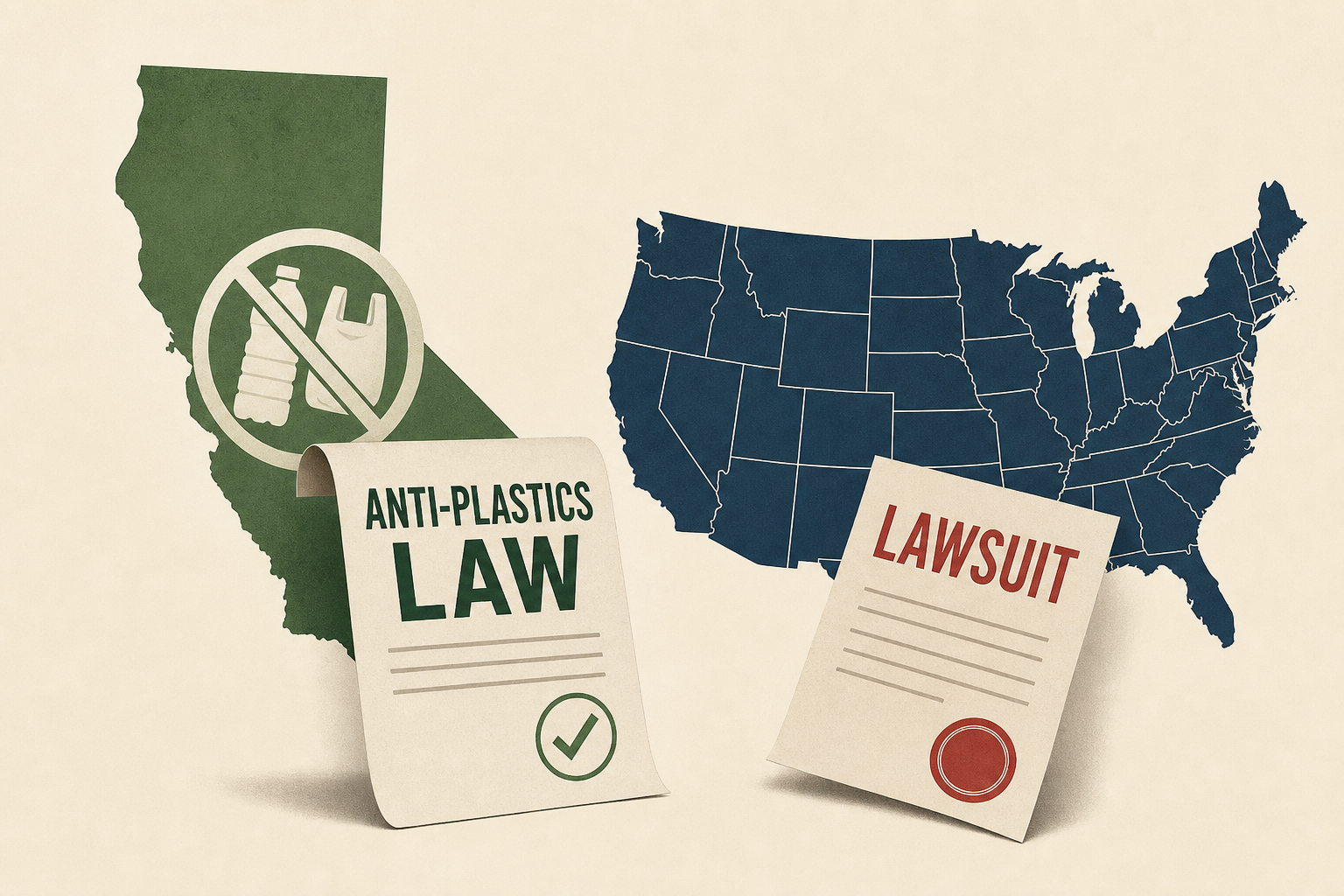
AI Generated Image
California’s landmark anti-plastics law sparks anger as 17 states moves to sue
The Guardian • • nation
Key Points:
- California's new law, effective May 2024, mandates plastic and packaging producers to phase out single-use plastics and ensure all packaging is recyclable or compostable by 2032, including a $5 billion fund to address plastic pollution harms.
- The chemicals industry and a coalition of 17 states have sued to block the law, arguing it imposes undue financial burdens on out-of-state manufacturers and involves fees collected by a private entity, raising concerns about interstate commerce and taxation.
- Environmental groups also challenge the law, claiming state regulations allow toxic recycling practices and loopholes that undermine the law's effectiveness, seeking stricter enforcement to ensure genuine recycling and comprehensive coverage.
- Supporters argue the law shifts waste management costs from local governments and taxpayers to producers, incentivizing smarter packaging design and fostering a circular economy, with similar producer responsibility laws succeeding globally.
- Experts believe the industry lawsuit is unlikely to succeed, viewing it as a delay tactic, while public concern grows over plastic pollution and microplastics' health impacts, highlighting the urgency for effective plastic waste reforms.


