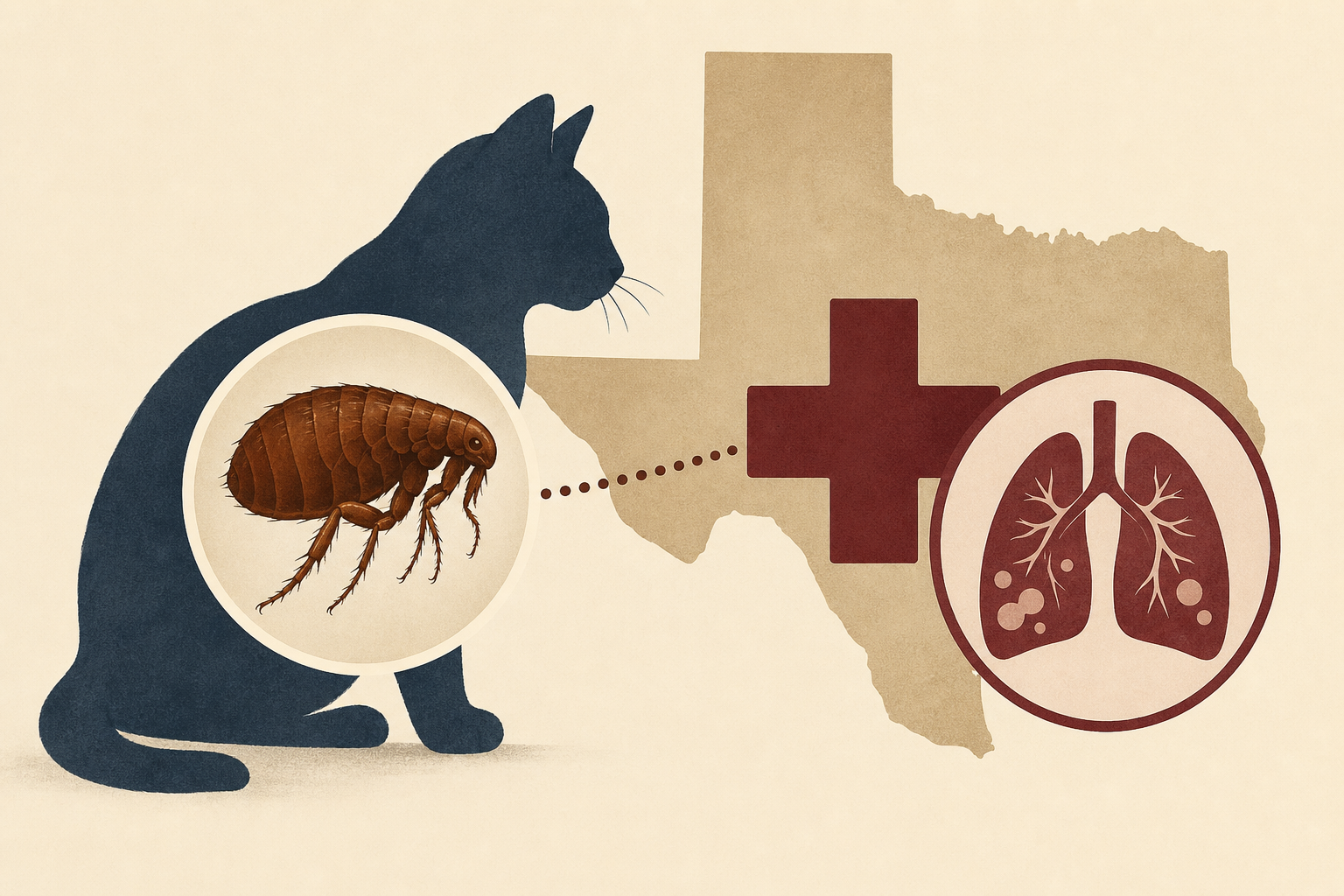
AI Generated Image
Cat Fleas Linked to Fatal Human Disease in Texas
Newsweek • • health
Key Points:
- Researchers from Texas A&M have linked domestic cat fleas in South Texas to the resurgence of murine typhus, a flea-borne disease caused by the bacterium Rickettsia typhi, which had been nearly eradicated in the U.S. but is now hospitalizing many, especially in Galveston.
- Murine typhus is transmitted to humans indirectly through infected flea feces entering the skin or mucous membranes, not person to person, with symptoms ranging from fever and rash to severe complications requiring hospitalization and sometimes causing death.
- A study found R. typhi DNA in fleas from domestic cats in the Rio Grande Valley, highlighting pets as a vector for the disease and underscoring the importance of flea control on animals to protect human health.
- Data from Galveston show a significant increase in murine typhus cases and hospitalizations from 2019 to 2023, with older adults and those with underlying health conditions at higher risk for severe illness and intensive care.
- Experts attribute the disease's resurgence to factors including increased numbers of pet and feral cats, socioeconomic barriers to flea prevention, and warming temperatures, with public health officials urging flea control and rodent management to reduce transmission.


