AI Image
Cavemen Used Mammoth Tusk Patterns to Create Unique Art, Reveals New Research
Good News Network • • science
Key Points:
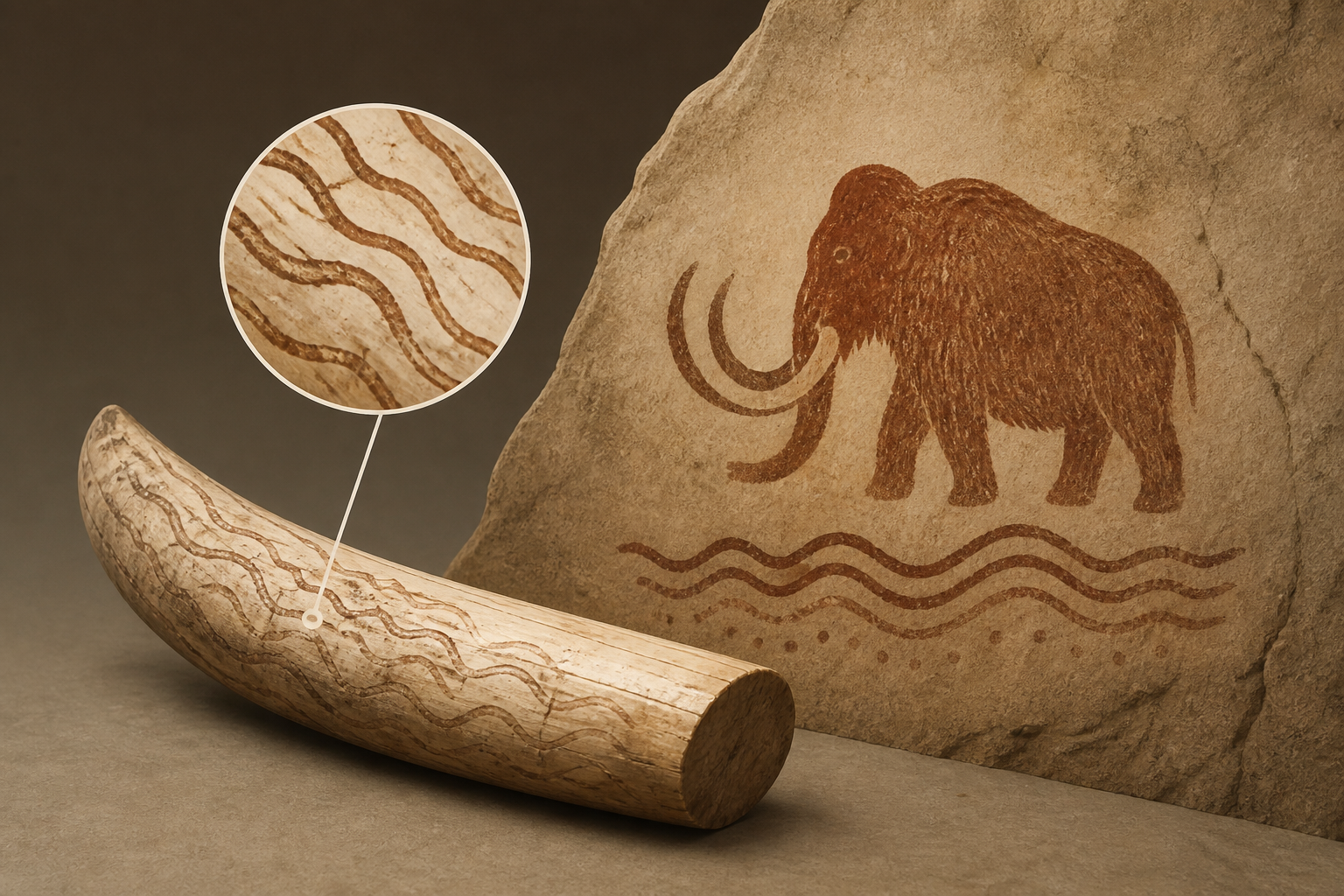
- Scientists discovered that intricate designs on 18,000-year-old female figurines carved from mammoth ivory were inspired by natural growth patterns in the tusks, specifically Schreger and Owen lines.
- High-resolution microscopic analysis and 3D digital modeling revealed that Ice Age artists in Eastern Europe deliberately incorporated these natural ivory patterns into their engravings, indicating a unique artistic tradition distinct from Western Europe.
- The findings, published in Heritage Science, challenge traditional views on the linear evolution of Stone Age art and suggest that artistic expression re-emerged earlier in Eastern Europe following a 1,000 to 3,000-year gap during the Last Glacial Maximum.
- Due to limited access to the physical artifacts amid the ongoing Russian-Ukrainian war, digital scanning has been essential for preserving and studying these figurines housed at the National Museum of History of Ukraine in Kyiv.
- Researchers hope future digital studies will further illuminate the complex development of prehistoric art and the cultural significance of mammoth ivory in Paleolithic societies.


