AI Generated Image
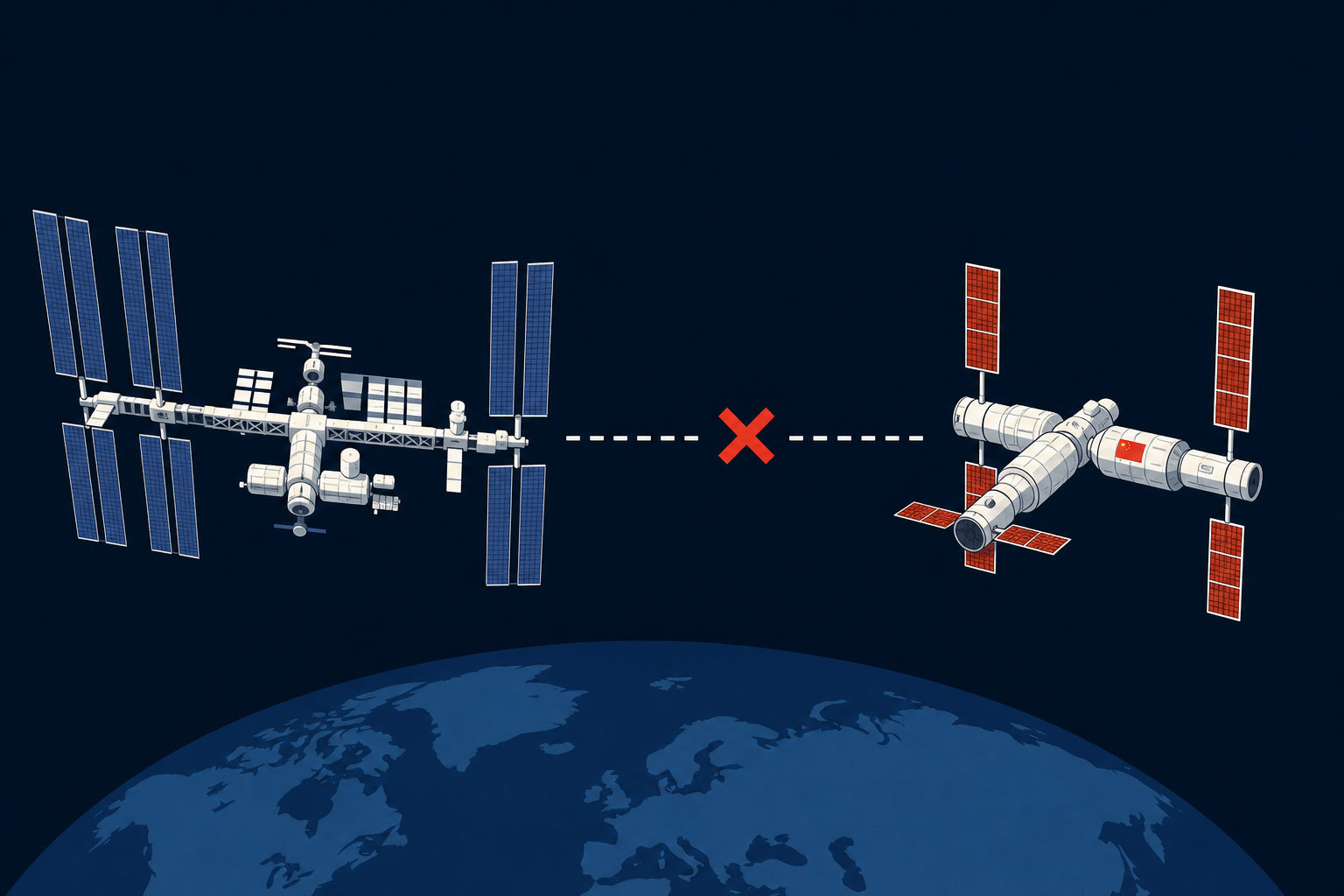
China was effectively shut out of the International Space Station after the United States passed the Wolf Amendment in 2011, so it built its own. If the ISS retires on schedule around 2030 and no comm
Space Daily • • general
Key Points:
- The International Space Station (ISS) is planned to retire around 2030, and if no commercial successor is ready by then, China’s Tiangong station could become the only permanently crewed orbital outpost, shifting the political landscape of space presence.
- The Wolf Amendment, passed in 2011, legally restricted NASA's cooperation with China, preventing China’s integration into the ISS program and prompting China to develop its own Tiangong space station independently.
- Tiangong, launched starting in 2021, operates as a continuously crewed station with regular crew rotations and cargo support, demonstrating resilience through mission contingencies and establishing itself as operational infrastructure rather than a temporary project.
- NASA aims to transition to commercially owned and operated space stations post-ISS, but as of mid-2026, no commercial crewed stations are fully operational, creating a potential gap in US-led human spaceflight presence that could elevate Tiangong’s strategic importance.
- If Tiangong becomes the sole permanently crewed station after ISS retirement, it would alter the symbolic, diplomatic, and practical dynamics of low Earth orbit research and collaboration, as Tiangong operates under Chinese governance with limited international access compared to the ISS’s multinational framework.


