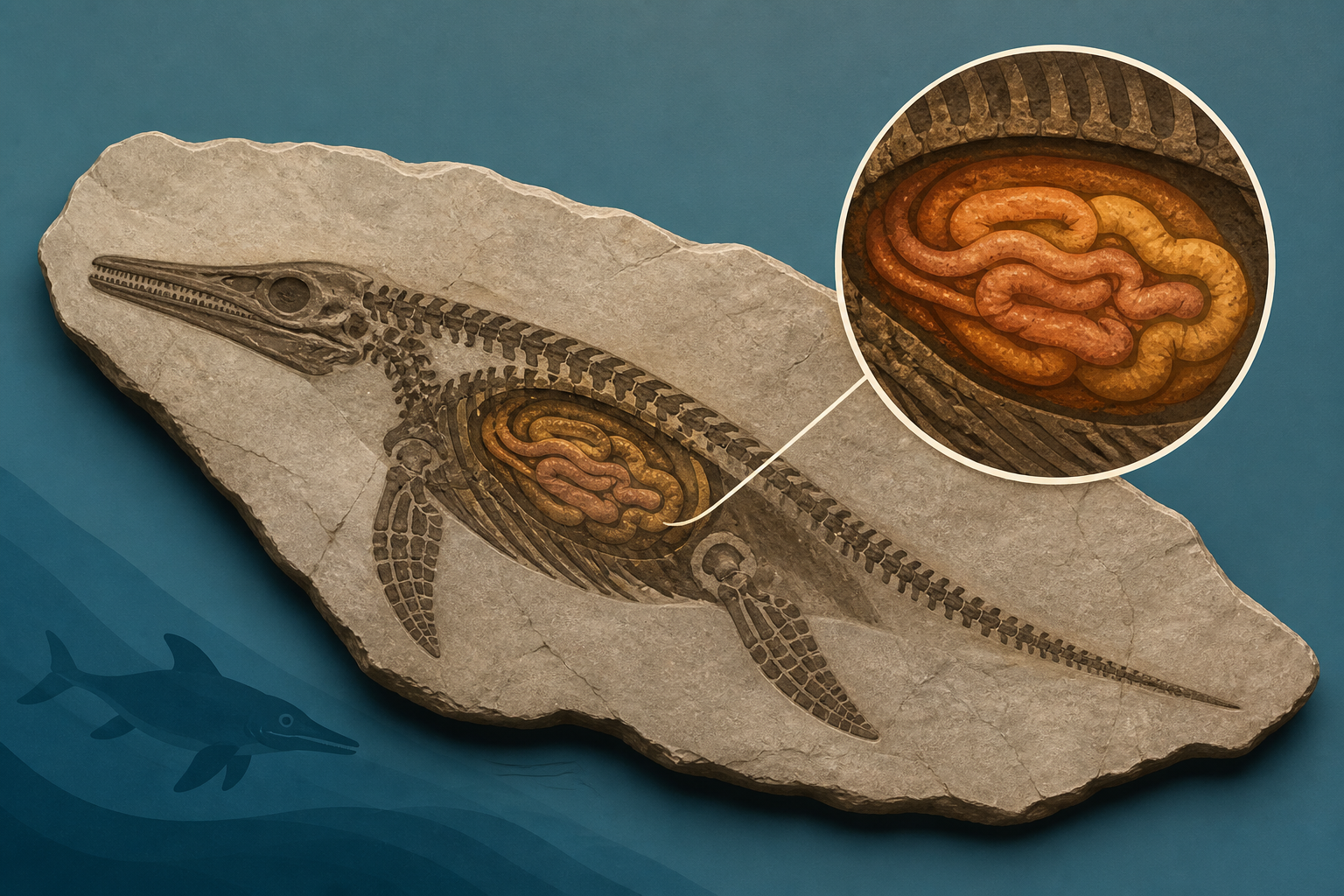
AI Generated Image
Chinese fossil shows internal organs of prehistoric marine reptile
Yahoo • • science
Key Points:
- Scientists discovered a 245-million-year-old fossil of Austronaga minuta, a long-necked marine reptile from the Triassic Period, in Yunnan Province, China, revealing exceptionally preserved internal organs including stomach, liver, and intestines.
- Austronaga was about 2 feet long, had a small head with fang-like teeth for catching fish, a long neck and tail, and used its tail for propulsion and front flippers for steering, indicating agile swimming abilities.
- The fossil shows Austronaga had a simple, single-chambered stomach, unlike the double-chambered stomachs of birds, crocodiles, and some dinosaurs, suggesting this complex digestive feature evolved later in archosaur lineage.
- The liver retained red coloration due to preserved hemoglobin residues, a rare find in a fossil of this age, and the intestines were simple and straight, consistent with a carnivorous diet focused on fish.
- Fish scales found in the gut confirm Austronaga's diet, and while the specimen’s maturity is uncertain, it was likely a small marine reptile inhabiting warm, shallow equatorial seas alongside larger marine predators like nothosaurs.


