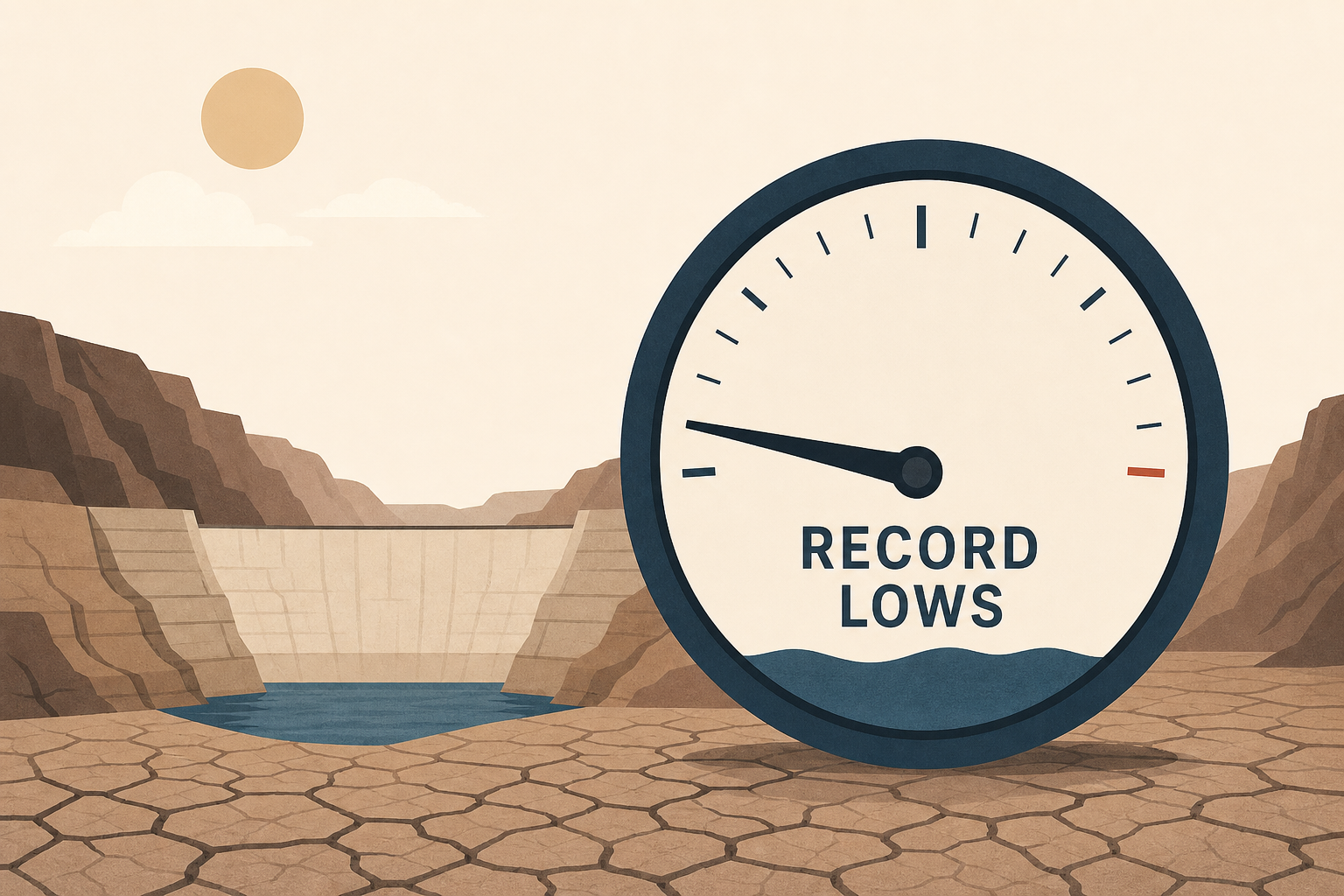
AI Generated Image
Colorado River reservoirs hit record lows as Trump administration threatens major cuts
CBS News • • general
Key Points:
- The Western U.S. faces a severe water crisis as Lake Mead and Lake Powell, the largest reservoirs on the Colorado River, have dropped to record low levels, with seven states unable to agree on water-sharing solutions.
- Upper basin states (Colorado, Wyoming, Utah, New Mexico) have increased water usage despite the drought, while lower basin states (California, Arizona, Nevada) have cut usage by nearly 20% since 2015, highlighting political disagreements.
- The Trump administration is preparing to impose significant water cuts, potentially nearly double the 1.6 million acre-feet voluntarily offered by California, Arizona, and Nevada, which could lead to higher costs and stricter water restrictions.
- Climate change has reduced snowpack and snowmelt feeding the Colorado River, and population growth has worsened demand, threatening hydroelectric power generation if Lake Powell's level drops further.
- Experts urge residents to pressure elected officials to reach a timely agreement, as continued delays risk severe water shortages and economic impacts across the drought-stricken region.


