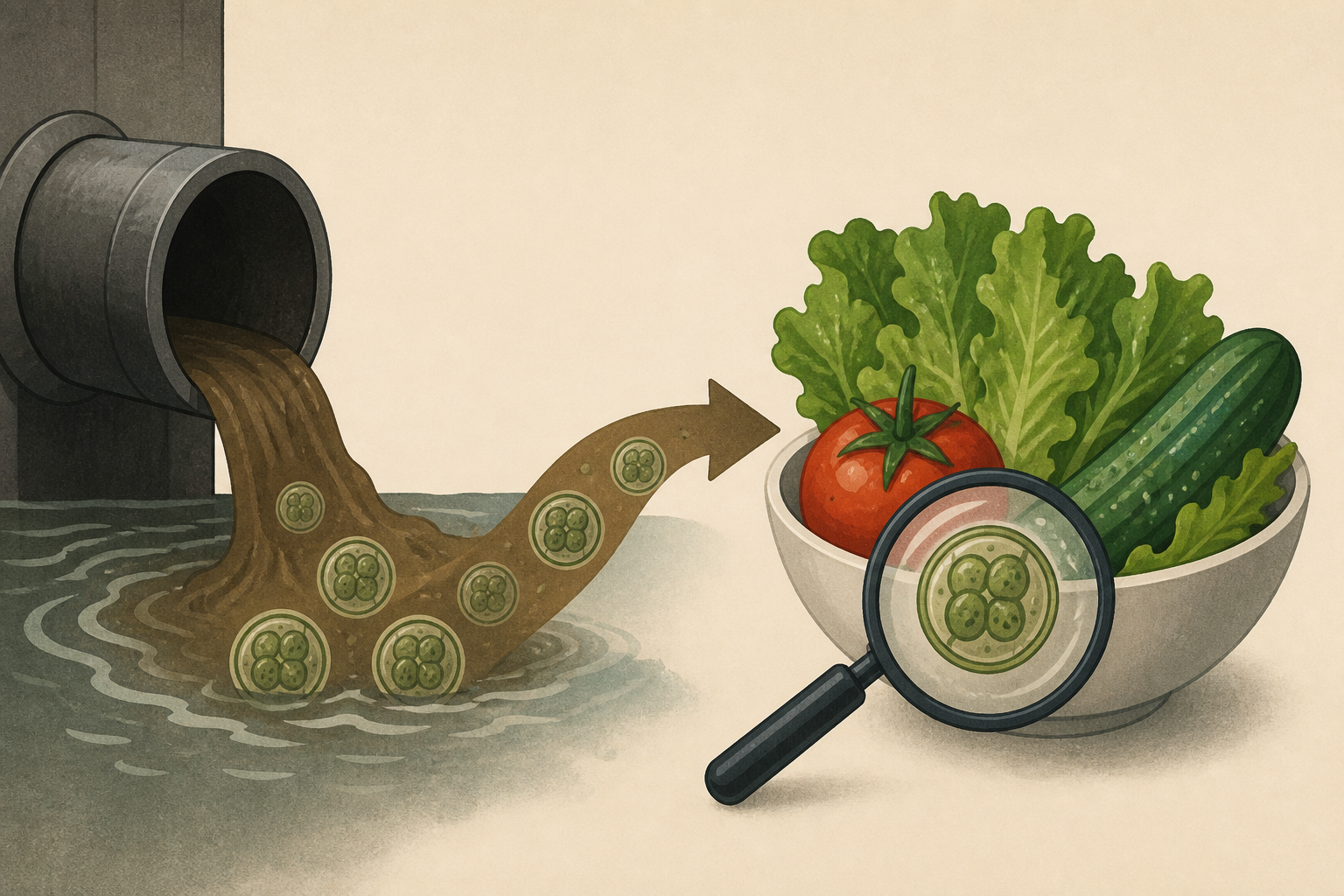
AI Generated Image
Cyclospora spreads through human waste - so how did it get on food?
PBS • • business
Key Points:
- The nationwide cyclospora outbreak in the U.S. is likely caused by sewage contamination in the food supply, with oocysts from infected human feces surviving sewage treatment and contaminating irrigation water and crops.
- Cyclospora oocysts mature in warm environments within about a week, creating a cycle of infection as contaminated food or water is consumed, leading to further shedding of oocysts into sewage systems.
- Current sewage treatment methods, including chlorination, do not fully eliminate cyclospora oocysts, allowing some to survive and enter the environment, potentially contaminating irrigation water used for agriculture.
- Wastewater surveillance can help track cyclospora outbreaks by detecting oocysts in sewage, aiding public health officials in managing outbreaks and improving treatment plant monitoring.
- Increased use of treated sewage for irrigation, combined with climate factors like rising temperatures, may accelerate oocyst maturation and infection risk, highlighting the need for better pathogen monitoring and improved sewage treatment technologies.


