AI Generated Image
Dangerous tapeworm linked to severe liver disease spreads into Washington coyotes, researchers report
Yahoo • • health
Key Points:
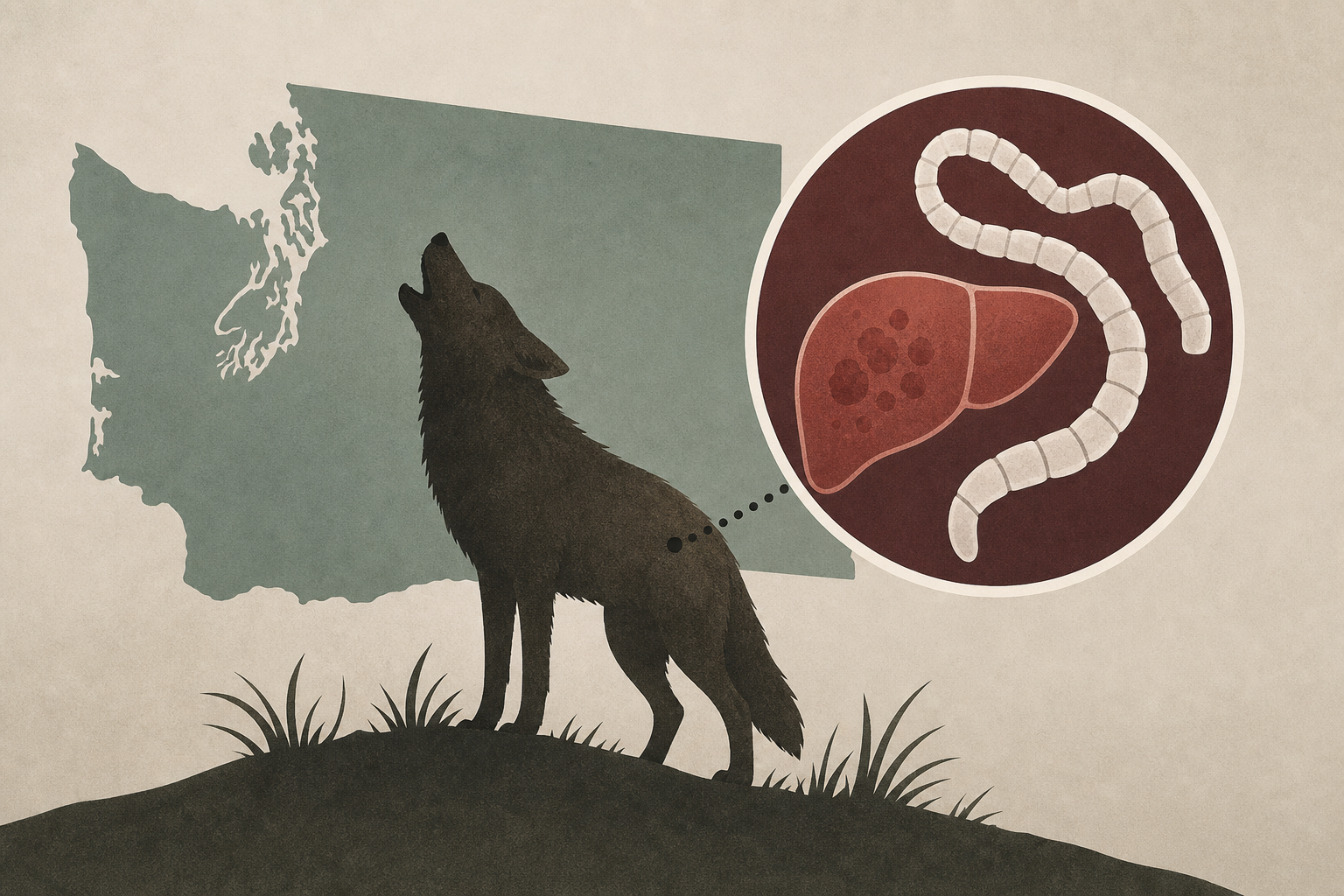
- Coyotes in the Puget Sound area have tested positive for the tapeworm Echinococcus multilocularis, marking the first detection of this parasite in wild animals on the contiguous U.S. West Coast.
- The parasite, which can cause severe liver disease known as alveolar echinococcosis, was found in 37 out of 100 coyotes tested by University of Washington researchers, indicating a significant presence in the region.
- This European strain of the tapeworm has been spreading across North America, with previous cases reported in Canada and the Midwest, and now extending into the Pacific Northwest.
- Humans and domestic dogs can become infected by ingesting parasite eggs from contaminated food or environments, though human cases remain rare and no infections have been reported on the West Coast.
- Experts advise dog owners to prevent pets from preying on rodents and recommend regular parasite screenings and preventive medications to reduce infection risks.


