AI Image
Dead star likely birthed a new planet, in astronomical first
Yahoo Tech • • science
Key Points:
- Astronomers have detected a potential second-generation planet forming around the white dwarf star HS 0209+083, marking the first time such a planet has been observed around a white dwarf rather than a neutron star.
- The white dwarf's atmosphere contains unusually high levels of heavy elements like copper, zinc, and niobium—elements typically produced during a star's death—indicating the planet formed from material originating from the star itself.
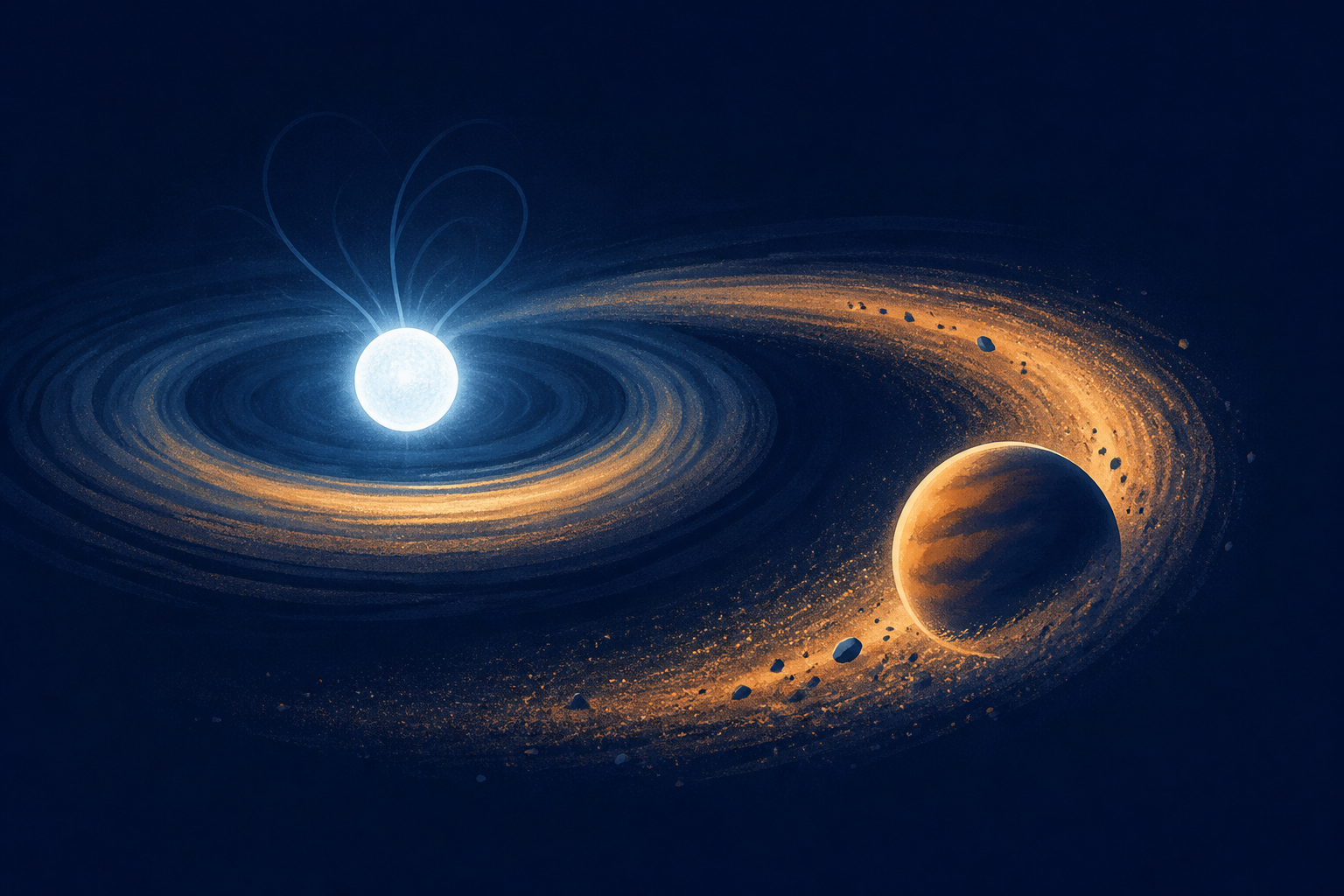
- Data from NASA's TESS satellite revealed a faint brightness signal every 4.4 days, consistent with a Jupiter-sized gas giant in a close, tidally locked orbit whose atmosphere is being stripped by radiation and accreted by the white dwarf.
- Researchers believe this second-generation planet was created from stellar material that was pulled back into orbit, likely due to the presence of a companion star, offering a new pathway for planet formation after a star's death.
- This discovery suggests that dead stars can give rise to new worlds, and it opens the possibility of finding more such planets formed from the remnants of their progenitor stars.


