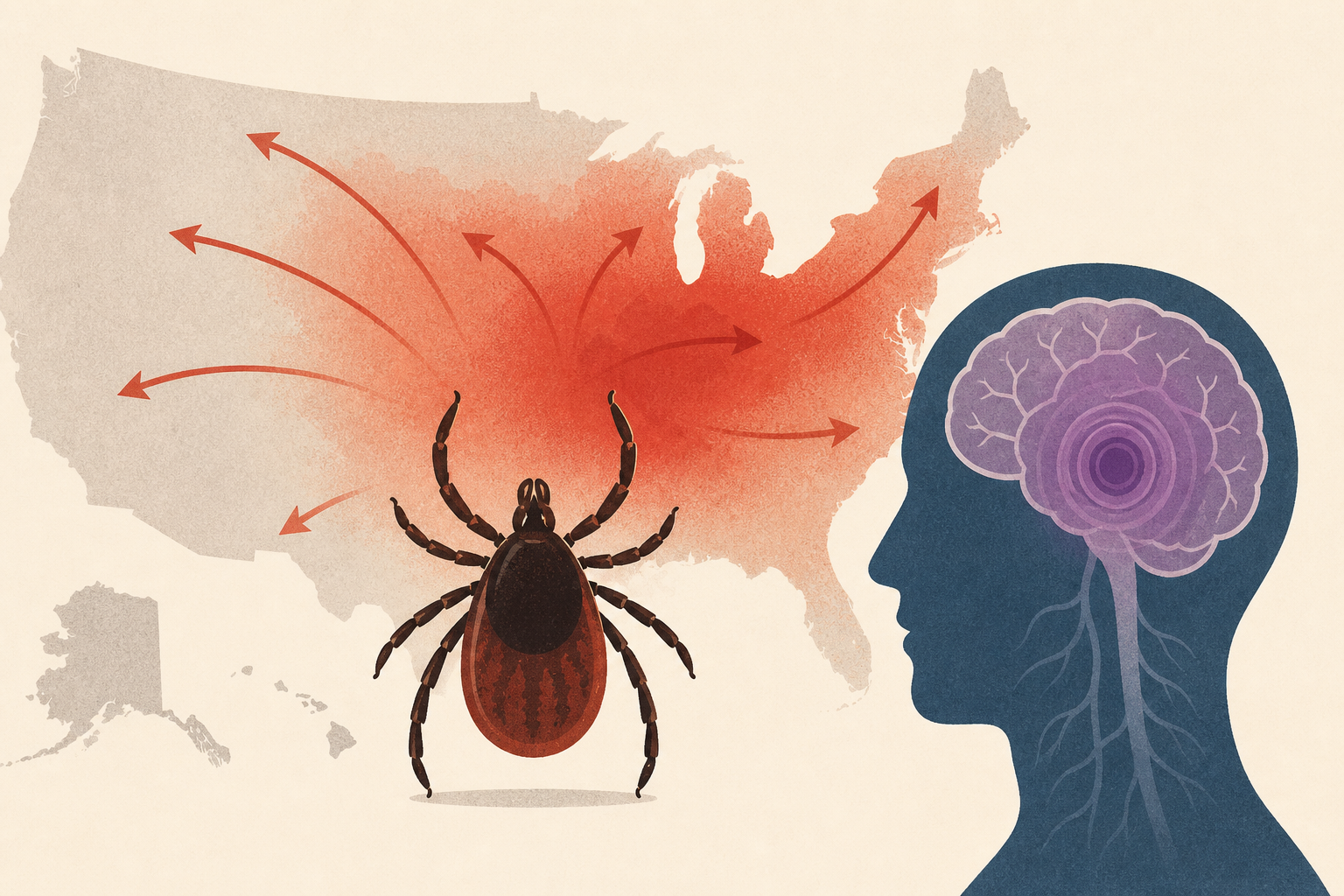
AI Generated Image
Deadly tick-borne disease that can cause brain damage spreading across the US
Yahoo • • health
Key Points:
- Authorities are warning about the rare but serious Powassan virus, a tick-borne disease transmitted by black-legged deer ticks, which can cause severe neurological damage and has a fatality rate of 10-15% in severe cases.
- Powassan virus can be transmitted rapidly, within 15 minutes of a tick bite, unlike Lyme disease which typically requires 36-48 hours of tick attachment, making early prevention critical.
- Since 2012, around 200 cases have been reported in the U.S., with an increase in recent years; one recent case involved a New Hampshire man who is now critically ill with severe neurological impairments.
- There is currently no specific treatment for Powassan virus, and those infected may suffer long-term complications; high-risk groups include older adults, young children, and immunocompromised individuals.
- Health officials advise preventative measures such as using insect repellent, wearing protective clothing, avoiding tick-prone areas, performing thorough tick checks, and modifying yards to reduce tick habitats.


