AI Image
Doctors Share The Surprising Pros And Cons Of Propping Up Your Head To Sleep
AOL.com • • health
Key Points:
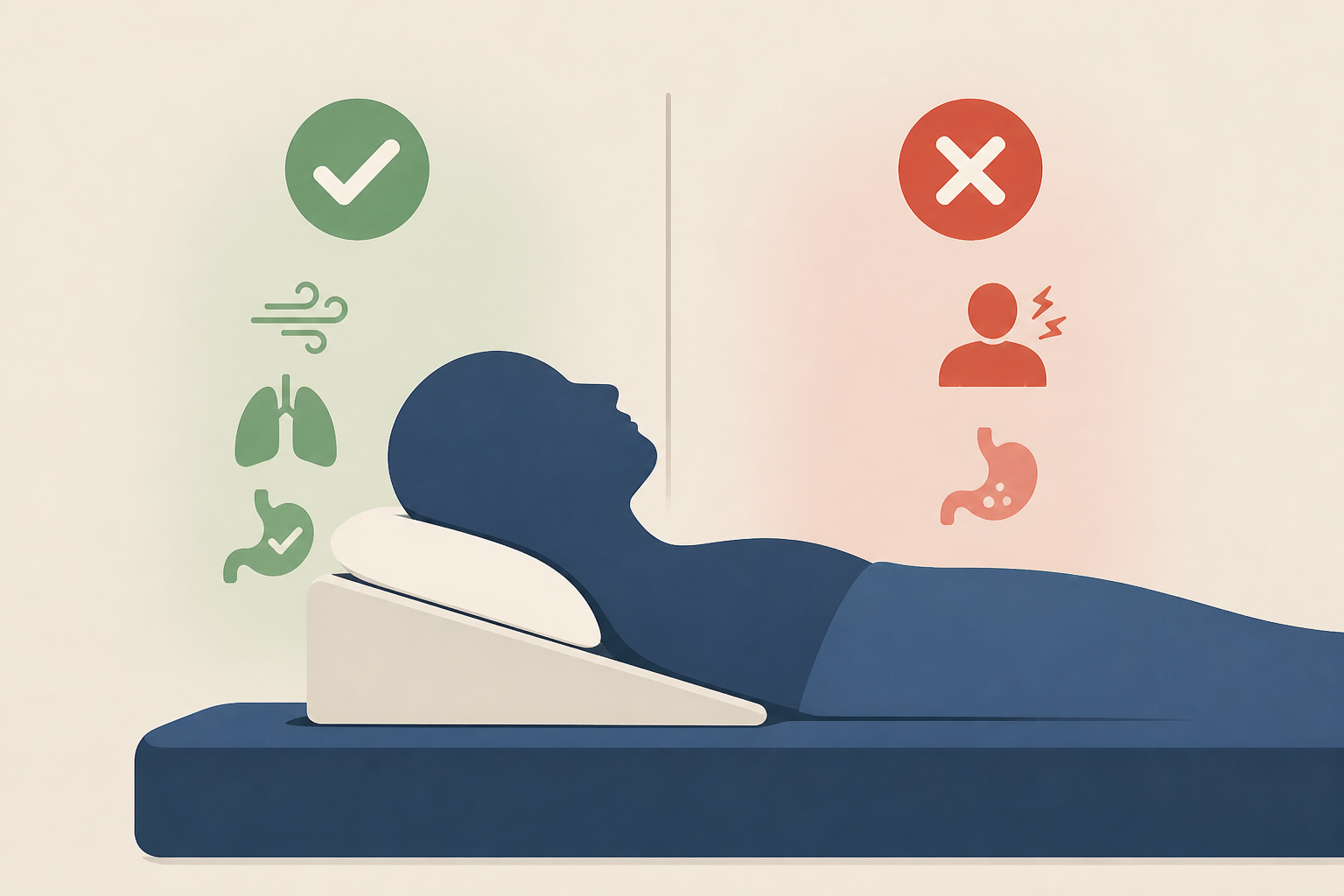
- Propping your head up at night can help alleviate symptoms of gastroesophageal reflux disease (GERD) and improve breathing in conditions like snoring, sleep apnea, asthma, and heart failure by using gravity to prevent acid reflux and keep airways open.
- However, improper elevation, such as stacking pillows under the head instead of elevating the upper body, can cause neck and shoulder pain, muscle strain, headaches, and may worsen breathing problems due to poor neck positioning.
- Experts recommend elevating the entire upper body by 6 to 8 inches using wedge pillows or adjustable beds to maintain a neutral neck position and avoid gaps that leave the neck unsupported, with an incline angle of 10 to 30 degrees being ideal.
- While propping the head up can reduce symptoms, it is not a substitute for medical treatments like CPAP for obstructive sleep apnea, and individuals should consult healthcare providers before making changes, especially if experiencing new or worsening symptoms.
- Elevation should be avoided or reassessed if it causes discomfort, pain, or breathing difficulties, and persistent shortness of breath requires immediate medical evaluation to rule out underlying cardiopulmonary conditions.


