AI Image
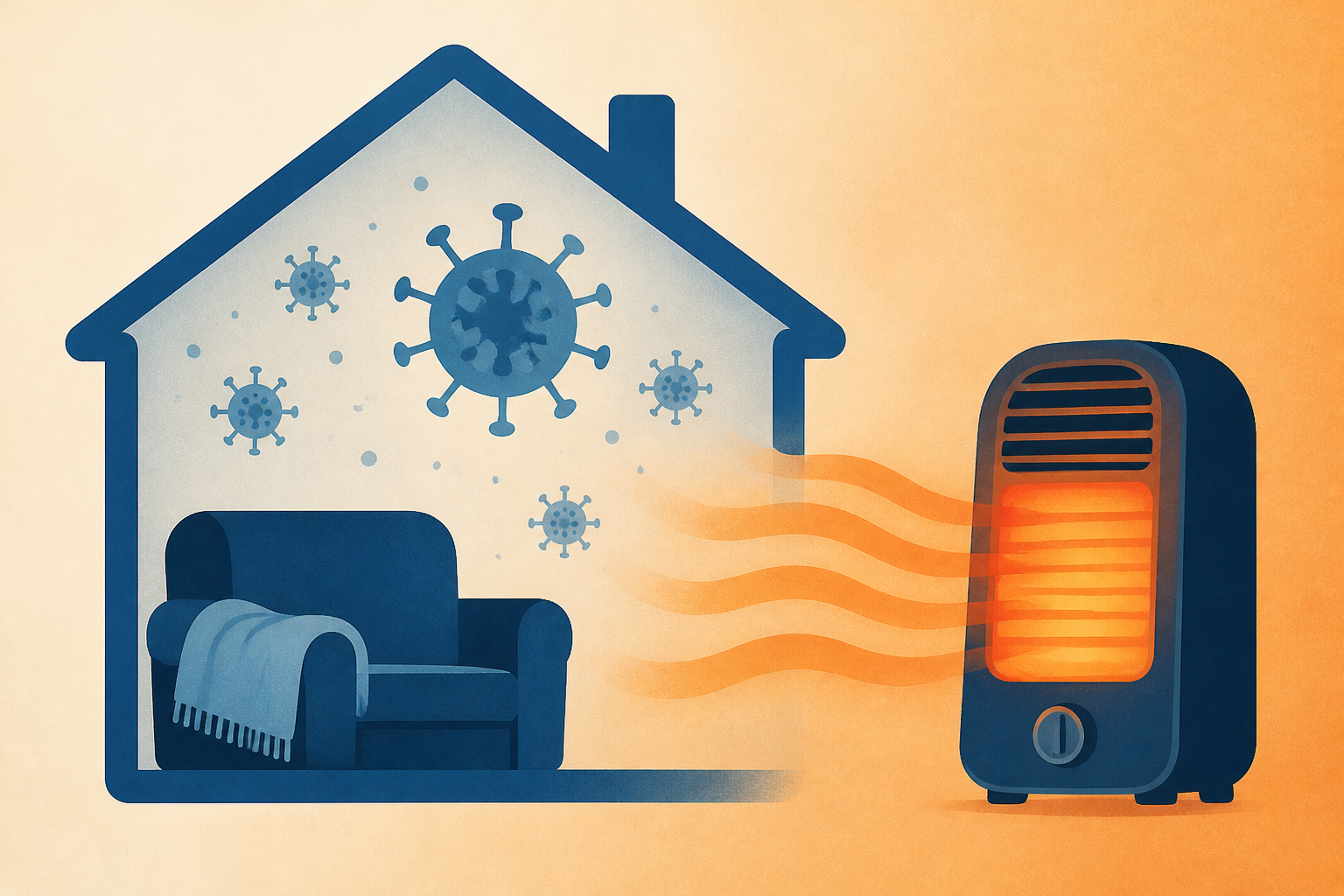
Does everyone in your home get sick once you turn on the heat?
The Weather Channel • • health
Key Points:
- Turning on indoor heating in fall lowers indoor humidity to around 20%, creating dry, desert-like air that increases susceptibility to illness by drying out the mucus lining in the nose and throat, which normally traps viruses.
- Dry air causes virus-carrying droplets to shrink, stay airborne longer, and travel farther, raising infection risk; studies show viruses like SARS-CoV-2 survive longer in dry indoor conditions typical of winter.
- Cold air exposure further weakens nasal defenses by impairing mucous membranes, compounding vulnerability to respiratory viruses during colder months.
- Spending more time indoors with closed windows and close contact during heating season increases exposure to illnesses.
- To reduce risk, maintaining indoor humidity between 40-60% is recommended; using a humidifier and monitoring humidity with a hygrometer can help, but humidifiers must be cleaned regularly to prevent germ buildup.


