Drought drives elevated antibiotic resistance across soils
Nature • • health
Key Points:
- Antibiotic resistance originates and evolves through complex molecular mechanisms, environmental factors, and microbial interactions, posing a global health challenge (Davies & Davies, 2010; Blair et al., 2014; O’Neill, 2016).
- Advances in antibiotic discovery, including culture-independent methods and machine learning, have identified novel antimicrobial peptides and calcium-dependent antibiotics effective against multidrug-resistant pathogens (Lewis, 2020; Santos-Júnior et al., 2024; Hover et al., 2018).
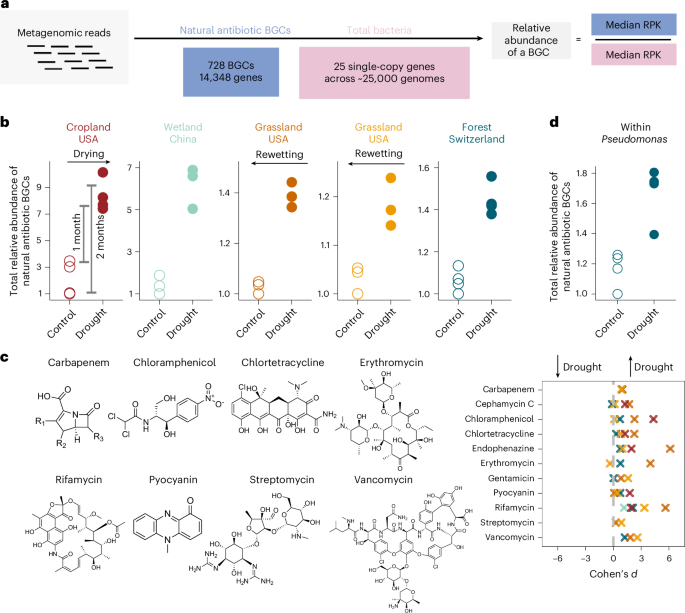
- Environmental changes such as drought significantly impact soil and rhizosphere microbiomes, altering microbial community composition, secondary metabolite production, and antibiotic resistance gene dynamics (Ault, 2020; Mavrodi et al., 2012, 2018; Xu et al., 2021).
- Natural microbial metabolites like phenazines influence bacterial resilience to antibiotics and interspecies interactions, with soil and agricultural environments serving as reservoirs and transmission points for antibiotic resistance genes (Perry et al., 2022; Meirelles & Newman, 2022; Forsberg et al., 2012).
- Global environmental factors, including pollution and climate change, contribute to the dissemination and evolution of antibiotic resistance, underscoring the need for integrated One Health and global health approaches to combat resistance (Zheng et al., 2022; Hernando-Amado et al., 2019; Zambrano, 2023).


