AI Image
Duck-Billed Dinosaur’s Beak was as Complex as Bird’s
Sci.News • • science
Key Points:
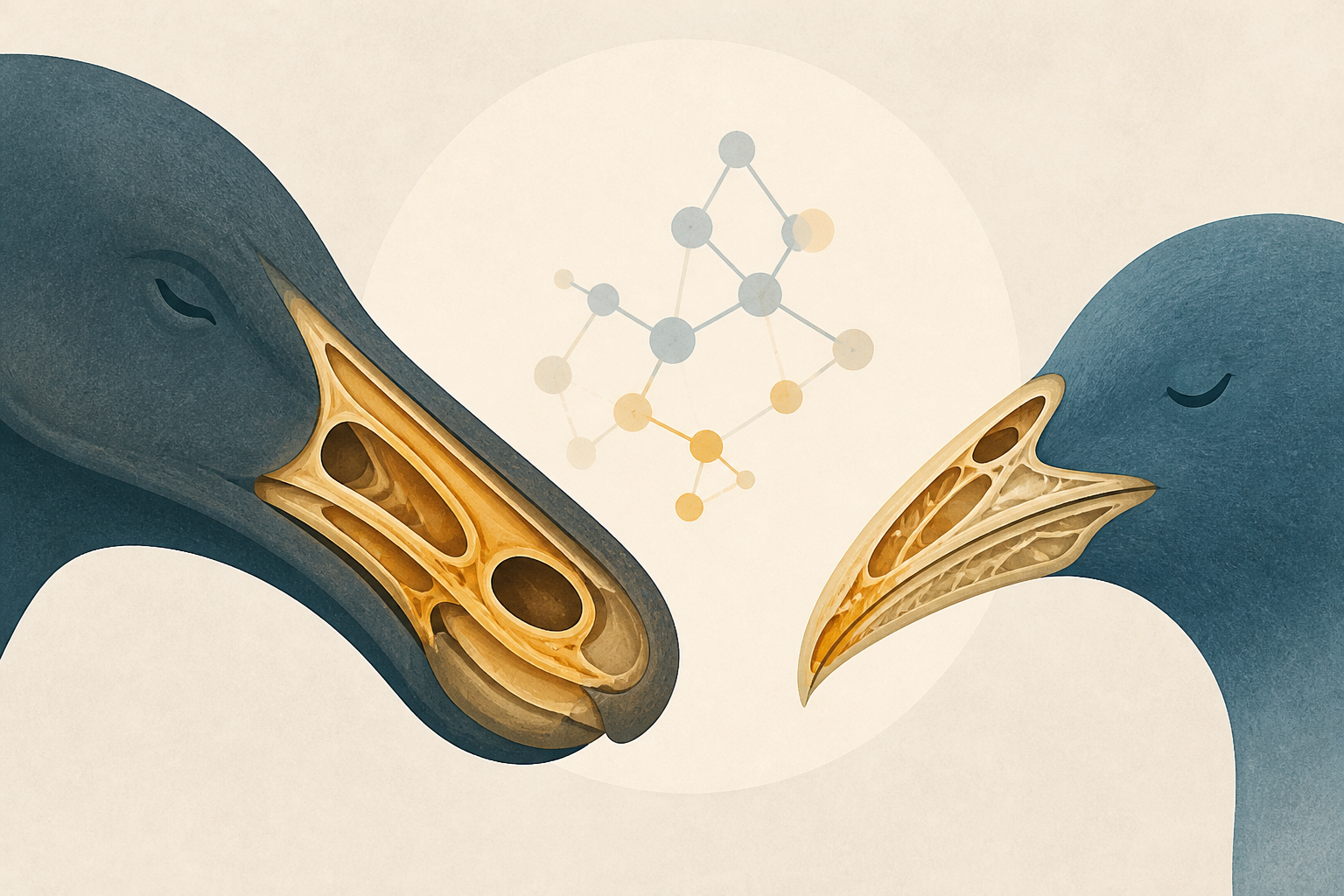
- New research reveals that the dinosaur Tethyshadros insularis, previously thought to have tooth-like spikes on its snout, actually possessed a complex, bird-like beak supported by a dense network of blood vessels and nerves.
- Using micro-computed tomography, scientists found that the spikes were osteological correlates of a highly developed neurovascular system, likely supporting a keratinous rhamphotheca similar to modern bird beaks.
- The beak served multiple functions including cropping abrasive plant material, sensory perception through a proprioceptive organ, and thermoregulation by dissipating heat via blood flow, comparable to mechanisms in birds like toucans.
- This discovery highlights the evolutionary complexity of hadrosauroid beaks as multifunctional organs that contributed to dietary versatility and ecological success, challenging previous assumptions about their physiology.
- The study, published in Royal Society Open Science, emphasizes the significance of the beak-nares complex as a key innovation in the evolutionary history of duck-billed dinosaurs.


