Early Human Ancestor Found in Morocco Dates Back 700,000 Years May Be Major Missing Link
Good News Network••science
Key Points:
- Remains of an early human ancestor dating back 700,000 years were discovered in the Grotte à Hominidés cave near Casablanca, Morocco, potentially representing the period when African and Eurasian hominins diverged from a common ancestor.
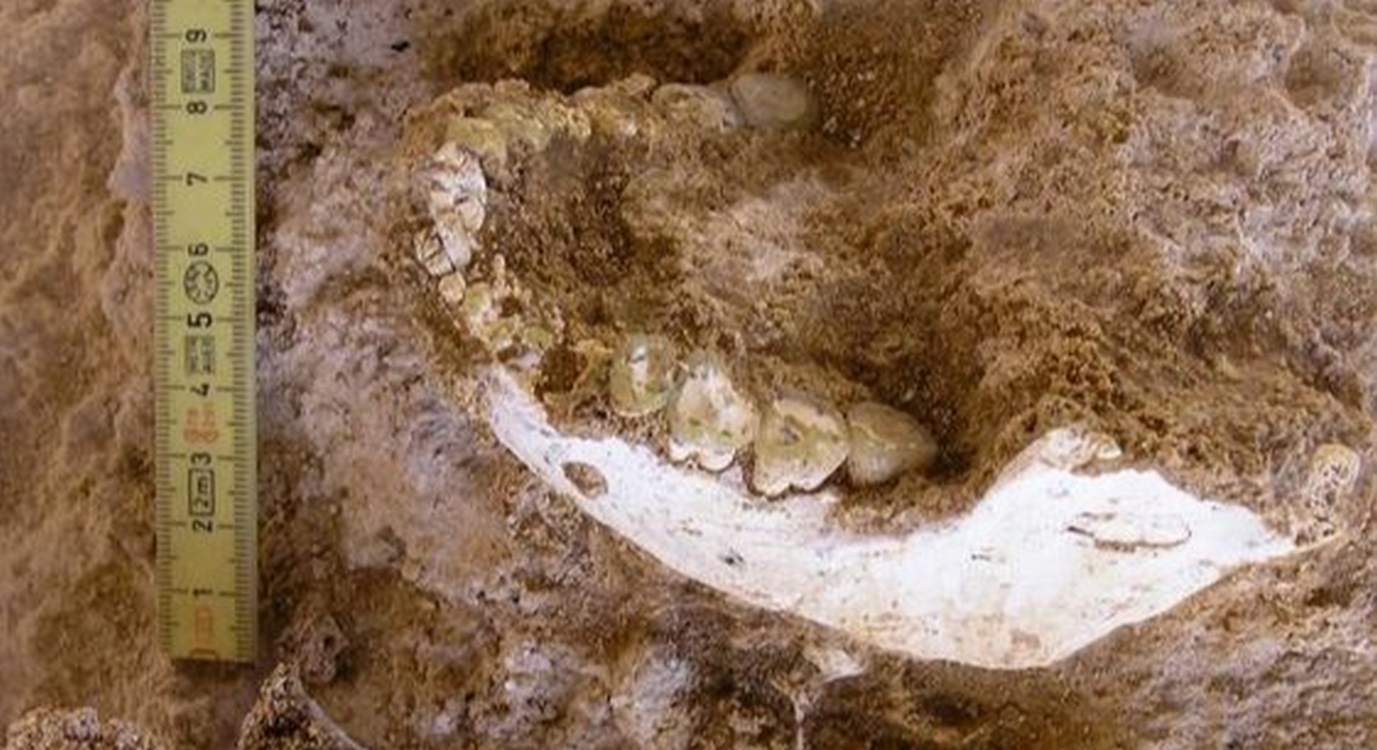
- The fossils include jawbones, teeth, a vertebra, and a femur with predator marks, found in what was once a lush coastal wetland environment, contrasting with today's desert landscape.
- The discovery supports the theory of a deep-African origin for Homo sapiens, reinforcing the idea that African hominins branched off separately from Eurasian lineages like Neanderthals and Denisovans.
- The Moroccan fossils bear similarities to Homo antecessor remains