AI Image
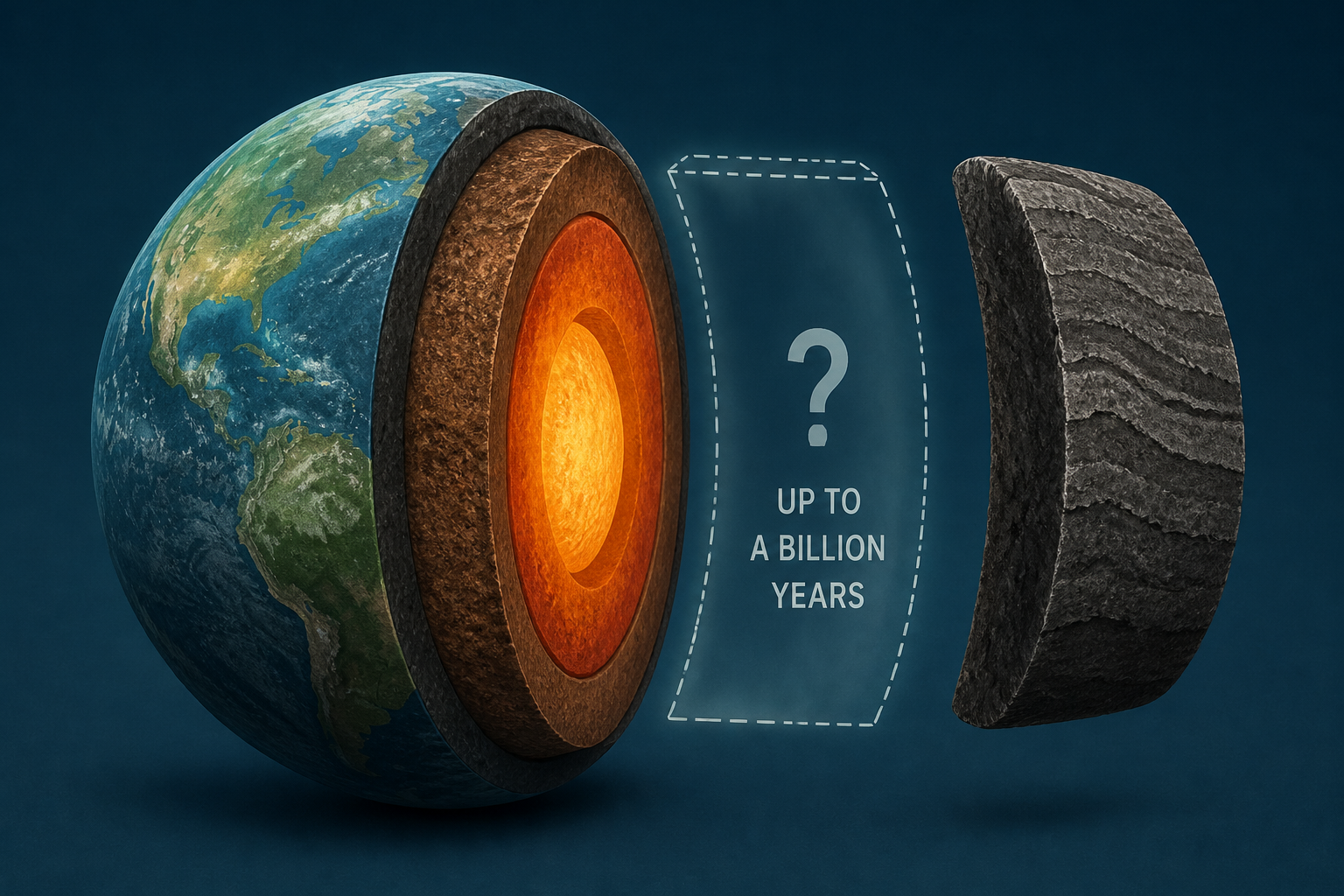
Earth's Rocks Have a Missing Layer Spanning Up to a Billion Years
Yahoo • • science
Key Points:
- The Great Unconformity is a global geological phenomenon where rock layers show a gap of hundreds of millions of years, with younger sedimentary rocks resting directly atop much older crystalline basement rocks, indicating missing chapters in Earth's history.
- New research published in Nature reveals that deep mantle convection caused ancient continental blocks to uplift between about one billion and 540 million years ago, exposing them to erosion by massive ice sheets during the Snowball Earth period, which scoured away surface layers.
- This combination of mantle-driven uplift and glacial erosion explains the extensive removal of rock layers and the subsequent formation of new sedimentary layers, accounting for the Great Unconformity observed in regions like North America, northern Europe, and northern China.
- The study also found that continents like Australia and South America experienced fewer uplift-subsidence cycles, correlating with less evidence of the Great Unconformity there, highlighting the role of deep Earth processes in shaping the geological record and influencing the environment for early complex life.


