AI Image
Earth's Strange New Moonlet Has Revealed Something Astronomers Predicted in 1878
ScienceAlert • • science
Key Points:
- A small asteroid named 2026 QQ8 is currently temporarily captured in Earth's orbit, having arrived in April 2026 and expected to depart by December 7, 2026, providing astronomers with rare observational evidence of a theoretical orbital configuration proposed over 140 years ago.
- QQ8's identity was initially uncertain due to its small size and the challenge of distinguishing natural objects from space debris; however, detailed analysis of its trajectory affected by solar radiation pressure and its reflectance spectrum confirmed it as a natural rocky asteroid, likely 1.3 to 1.9 meters across.
- QQ8's orbit challenges the definition of a "minimoon" because it completes about three-quarters of a revolution around Earth in a co-rotating reference frame, making it a temporarily captured flyby by one measure, but possibly a minimoon by another, highlighting complexities in orbital classification.
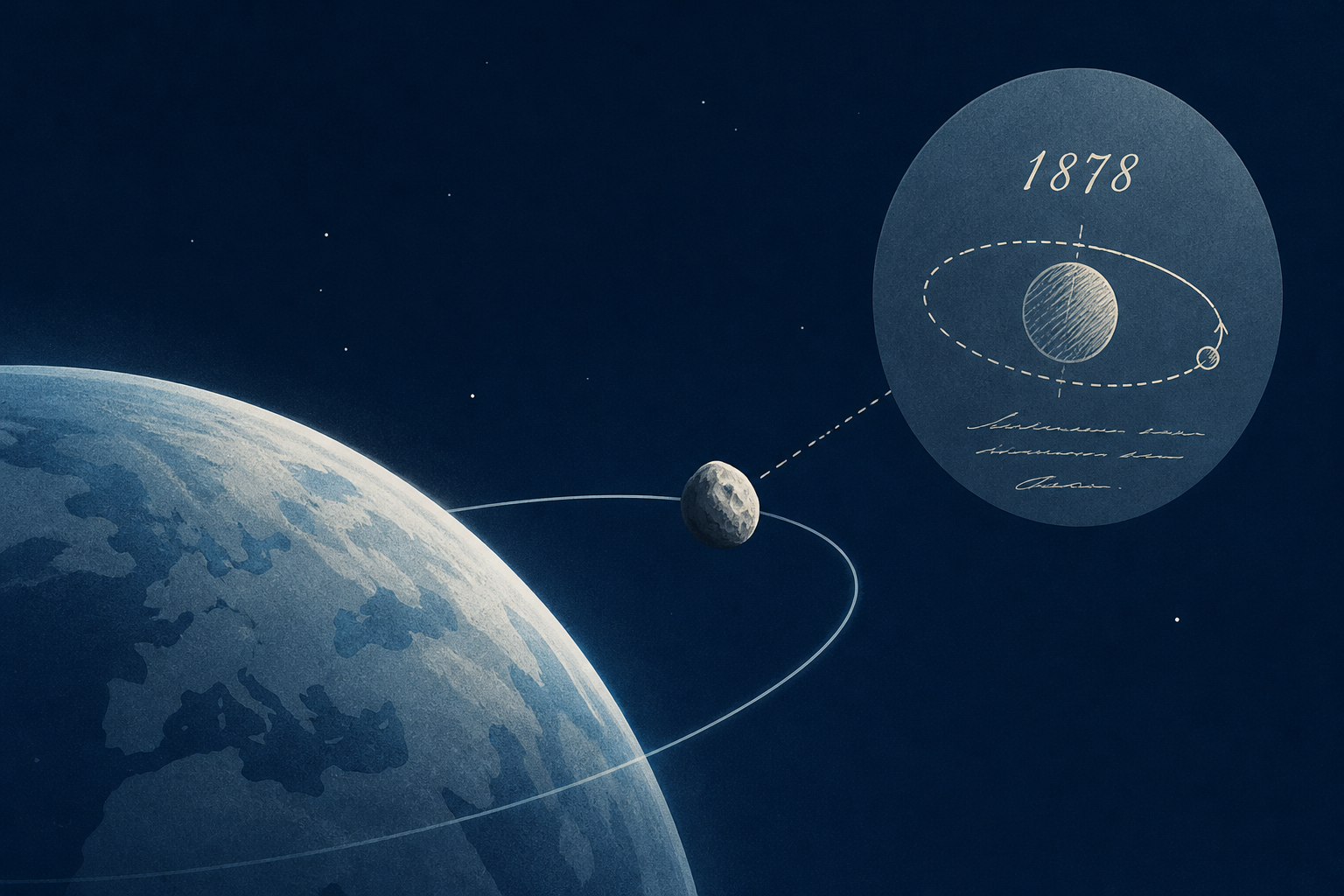
- The asteroid's unusually long 7.5-month Earth capture is among the longest recorded and aligns with a rare orbital pattern called "maximum lunation," where the object lingers near Earth's quadrature points, marking the first observational proof of this orbital phenomenon.
- Researchers speculate QQ8 might be lunar ejecta—a rock blasted off the Moon and later recaptured by Earth—though it could also be a typical asteroid; ongoing and future observations, especially in infrared, aim to clarify its origin as new detection methods improve identification of Earth's temporary natural satellites.


