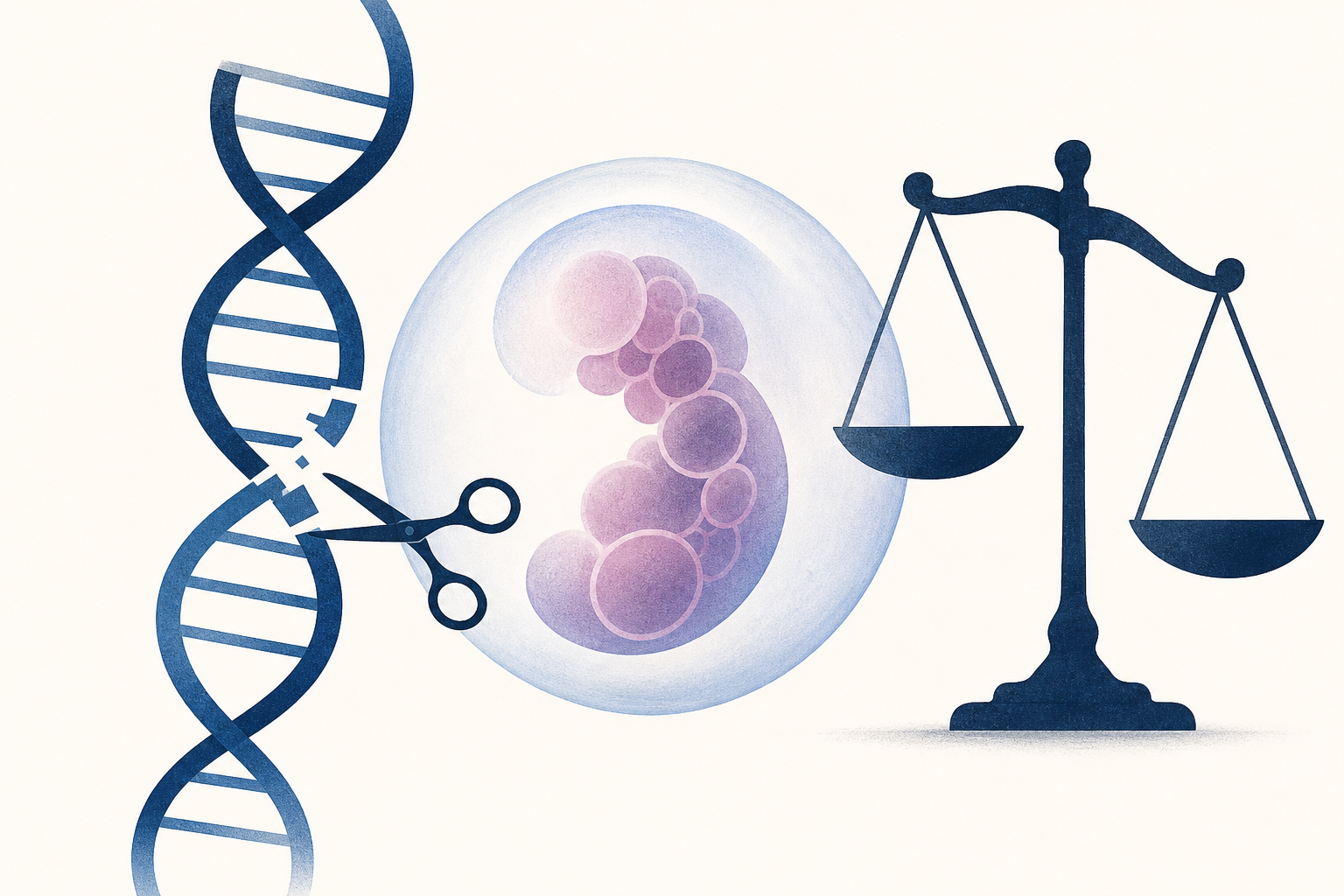
AI Generated Image
‘Edited’ human embryos reveal secrets of our development - and fuel ethical debate
Nature • • general
Key Points:
- Researchers have successfully used base editing, a precise gene-editing technique, to alter DNA in human embryos for the second time this month, focusing on studying human development rather than disease prevention.
- The study revealed that the protein NANOG plays a previously unknown role in human embryo development, differing from findings in mice, highlighting the importance of direct human embryo research.
- Base editing is more precise and less damaging than CRISPR–Cas9, potentially allowing clearer insights into gene functions and offering a safer approach for future gene editing aimed at preventing disease.
- Despite scientific progress, significant safety challenges remain, such as mosaicism where only some embryo cells are edited, raising concerns about unknown effects on resulting fetuses.
- The advancements intensify the urgency for ethical discussions on heritable gene editing, including when it might be appropriate to edit embryos and the implications of passing genetic changes to future generations.


