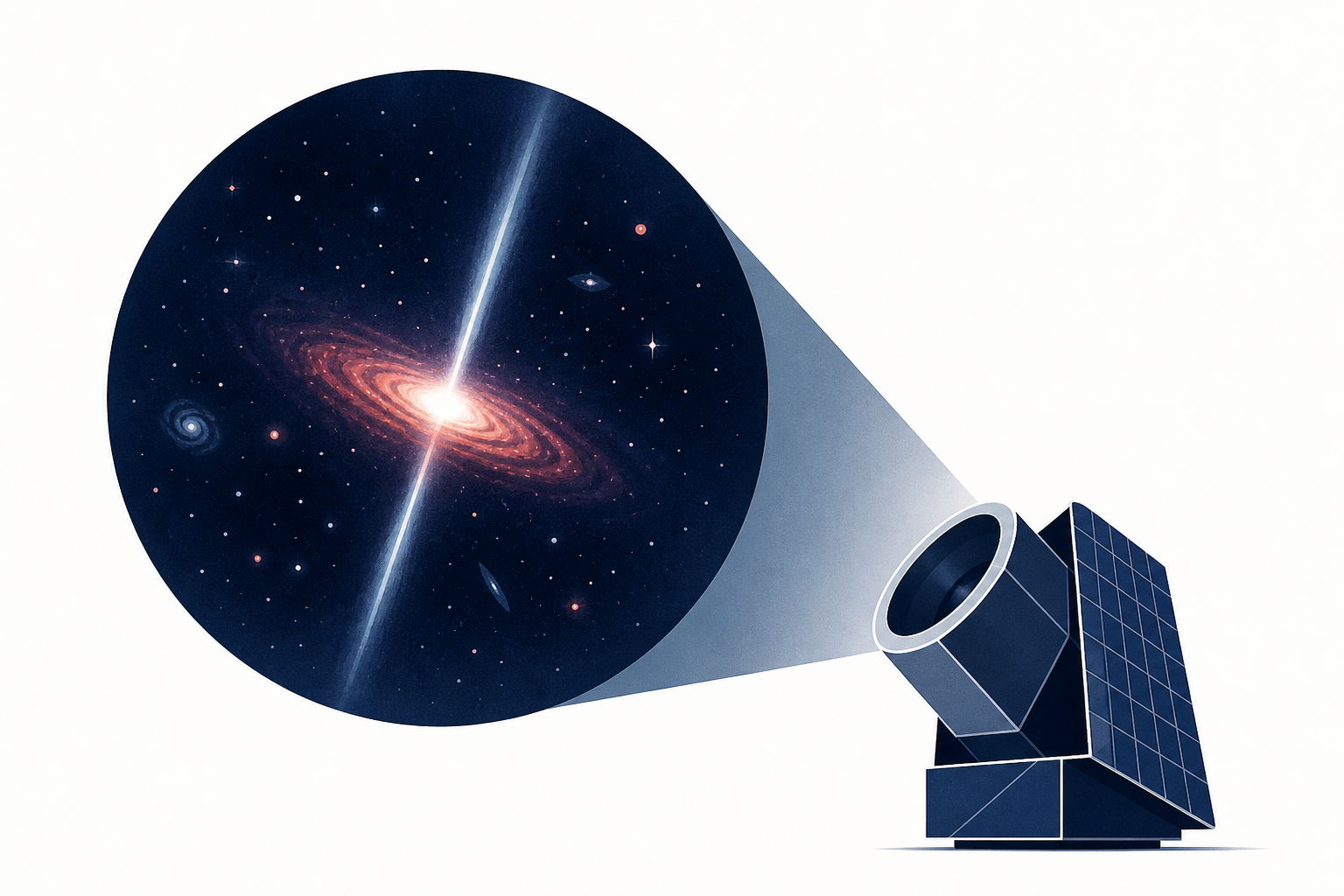
AI Generated Image
Euclid discovers the most ancient quasars in the universe
Phys.org • • general
Key Points:
- The European Space Agency's Euclid space telescope has discovered 31 ancient quasars, including the two earliest ever observed, dating back to when the universe was just 670 million years old, about 5% of its current age.
- These quasars, powered by supermassive black holes, shine with the light of a trillion suns and provide crucial insights into the formation and rapid growth of early galaxies and black holes.
- Euclid's advanced infrared imaging and wide sky coverage have enabled the detection of many more faint and distant quasars than previously possible, significantly increasing the known population of early quasars.
- The discovery includes 12 quasars at redshifts of 7 or above, with the most ancient located over 13 billion light-years away, more than doubling the number of known quasars from this early cosmic epoch.
- These findings shed light on the epoch of reionization, a key transitional period in cosmic history, and are made possible by the collaborative efforts of the Euclid Consortium analyzing vast data sets to identify these rare, distant objects.


