AI Generated Image
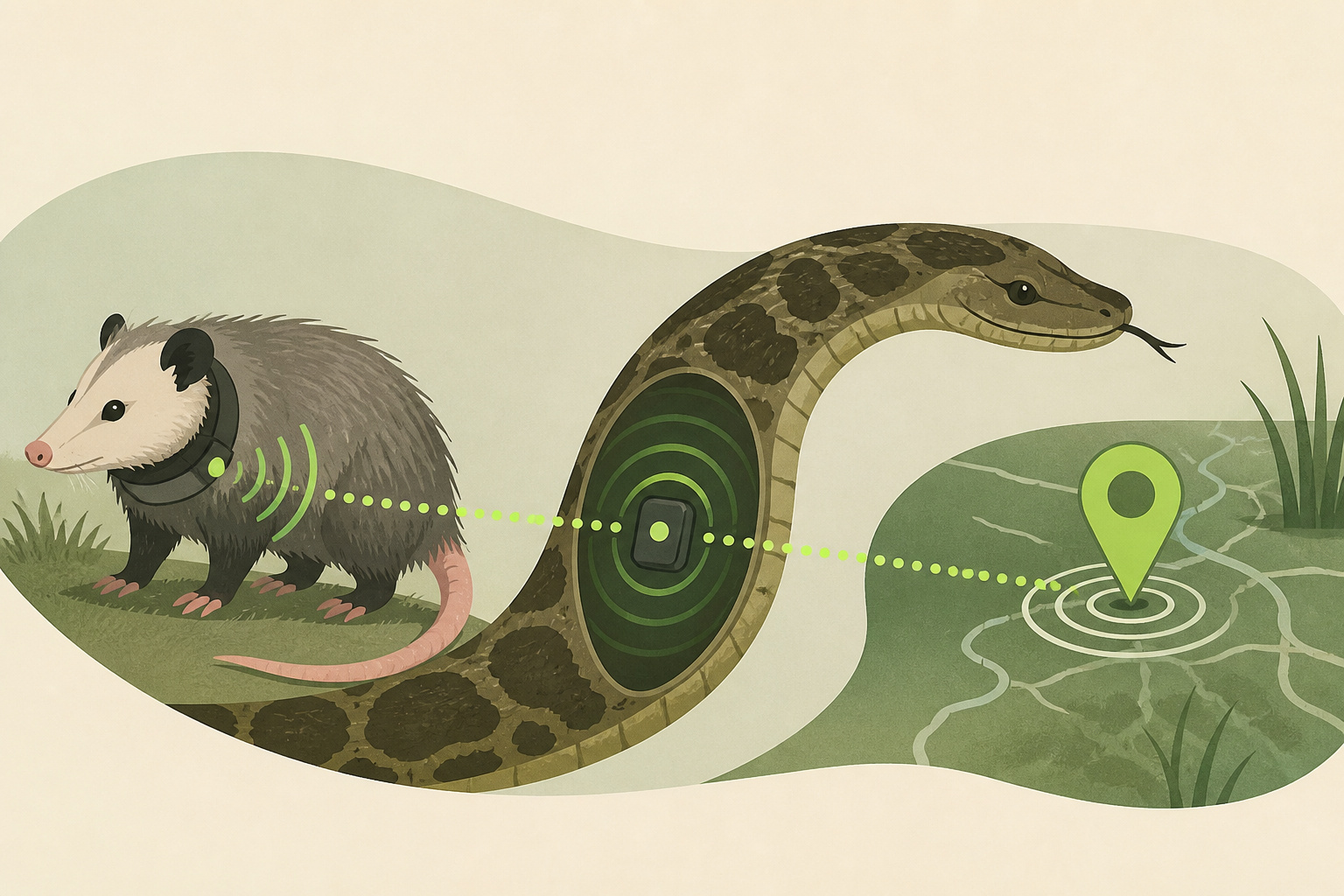
Florida is fighting its Burmese python invasion by putting GPS collars on opossums — when a python swallows one, the tracker keeps transmitting from inside the snake and leads researchers straight to
Space Daily • • science
Key Points:
- In Key Largo, biologists use tracking collars on possums to monitor Burmese pythons, as the collars send mortality alerts when the possum is eaten and then resume movement signals when the python moves.
- The discovery originated from a 2022 study on raccoon and opossum movement, where a collar’s repeated mortality and movement signals revealed a python’s digestive and movement pattern, leading to the capture of large pythons.
- The team has since removed 18 large pythons (all over eight feet) by collaring possums, which are easier to handle and preferred prey, using the mortality alert system to track and locate the snakes.
- Although some ethical concerns arise over collaring possums that are likely to be eaten, researchers emphasize that the deaths would occur naturally and the method targets invasive pythons threatening native wildlife.
- The project has evolved over four years, improving collar technology for longer battery life and simpler tracking, and has become a valuable tool in controlling python populations contributing to severe mammal declines in the Everglades region.


