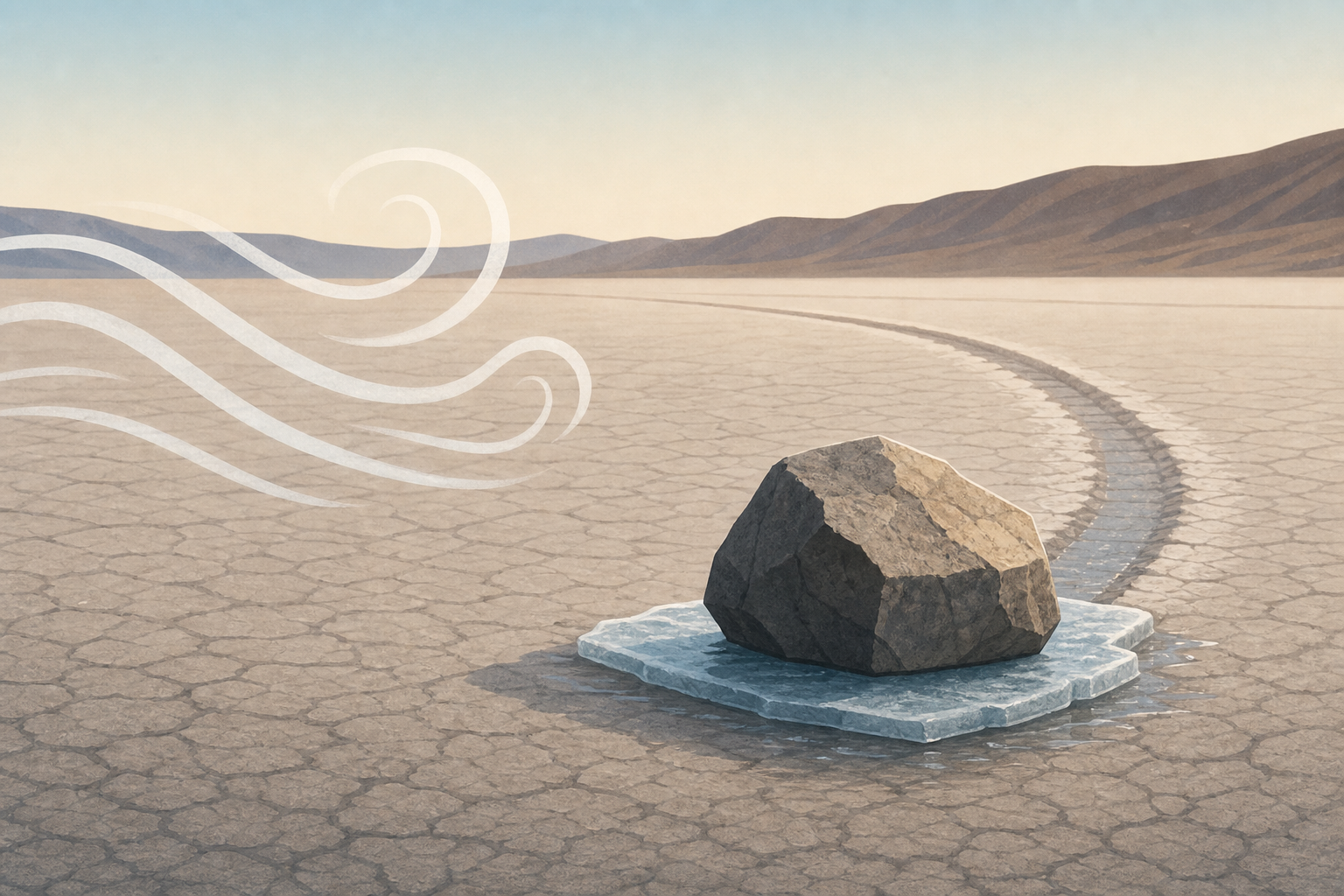
AI Generated Image
For decades the heavy rocks that carve trails across a Death Valley lakebed were never seen moving, until cameras caught them gliding on thin rafts of melting ice pushed by a light wind
Space Daily • • science
Key Points:
- For over sixty years, the mystery of how heavy rocks on Death Valley's Racetrack Playa move across the dry lakebed without human or animal intervention puzzled scientists, with theories ranging from strong winds to thick ice sheets.
- In 2014, researchers provided the first direct observation, showing that thin ice sheets just 3 to 6 millimeters thick form on shallow winter ponds, break into floating panels in the sun, and gently push the rocks along at a slow pace driven by light winds.
- The rocks move episodically, often remaining stationary for years, and their movement is subtle—traveling only a few meters per minute under ice—explaining why no one had witnessed the phenomenon before.
- The study's findings are based on one winter season's data and do not claim to explain all rock trails, but they effectively rule out earlier theories involving hurricane-force winds or thick ice, highlighting the rarity of the precise weather conditions needed for movement.
- This delicate natural process requires a shallow pond, overnight freezing, warming sun, and gentle breeze, causing rocks heavier than bowling balls to glide quietly across the desert floor, often unnoticed by observers.


