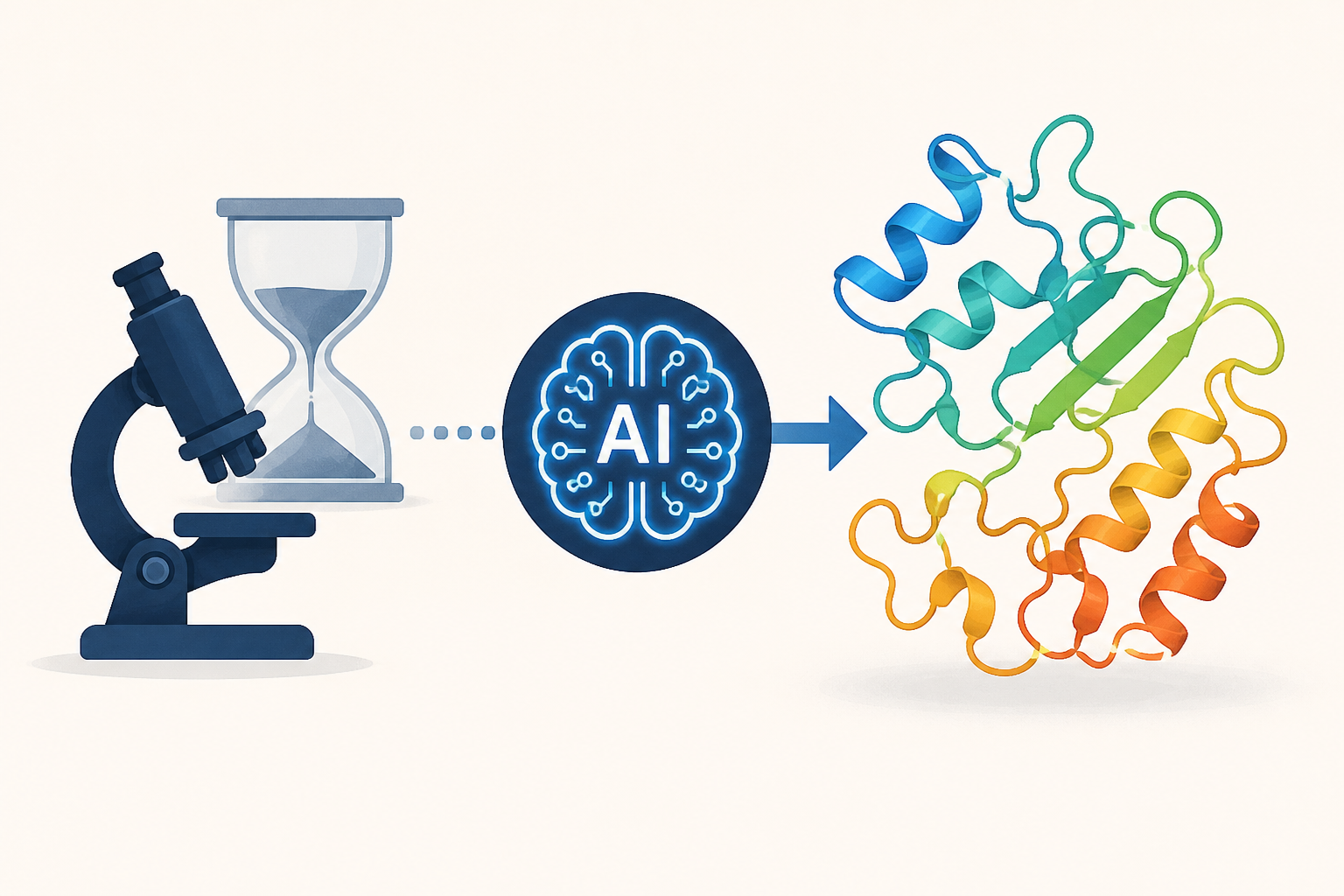
AI Generated Image
For decades, working out the shape of a single protein could cost a scientist years of painstaking lab work — then an AI called AlphaFold learned to do it in minutes and went on to map nearly every pr
Space Daily • • health
Key Points:
- AlphaFold2, developed by DeepMind, revolutionized protein structure prediction in 2020 by achieving unprecedented accuracy, reducing the time required from months or years to minutes using AI-based inference from amino acid sequences alone.
- Since its launch in July 2021, the AlphaFold Protein Structure Database has expanded from 350,000 to over 214 million predicted protein structures, covering nearly all proteins catalogued by science, and remains freely accessible under a CC-BY-4.0 license.
- The database provides confidence scores (pLDDT) for each residue, with about 35% of predictions highly accurate and 45% reliable for many uses; low-confidence regions often correspond to intrinsically disordered protein segments rather than failures.
- AlphaFold2 predicts single static structures, but predicting multiple conformations remains challenging and contested, highlighting ongoing limitations in modeling protein dynamics and interactions.
- The 2024 Nobel Prize recognized advances in computational protein design and prediction, but the release of AlphaFold 3 with restricted code access for commercial reasons signals a shift toward proprietary models, raising questions about the future openness of advanced protein modeling tools.


