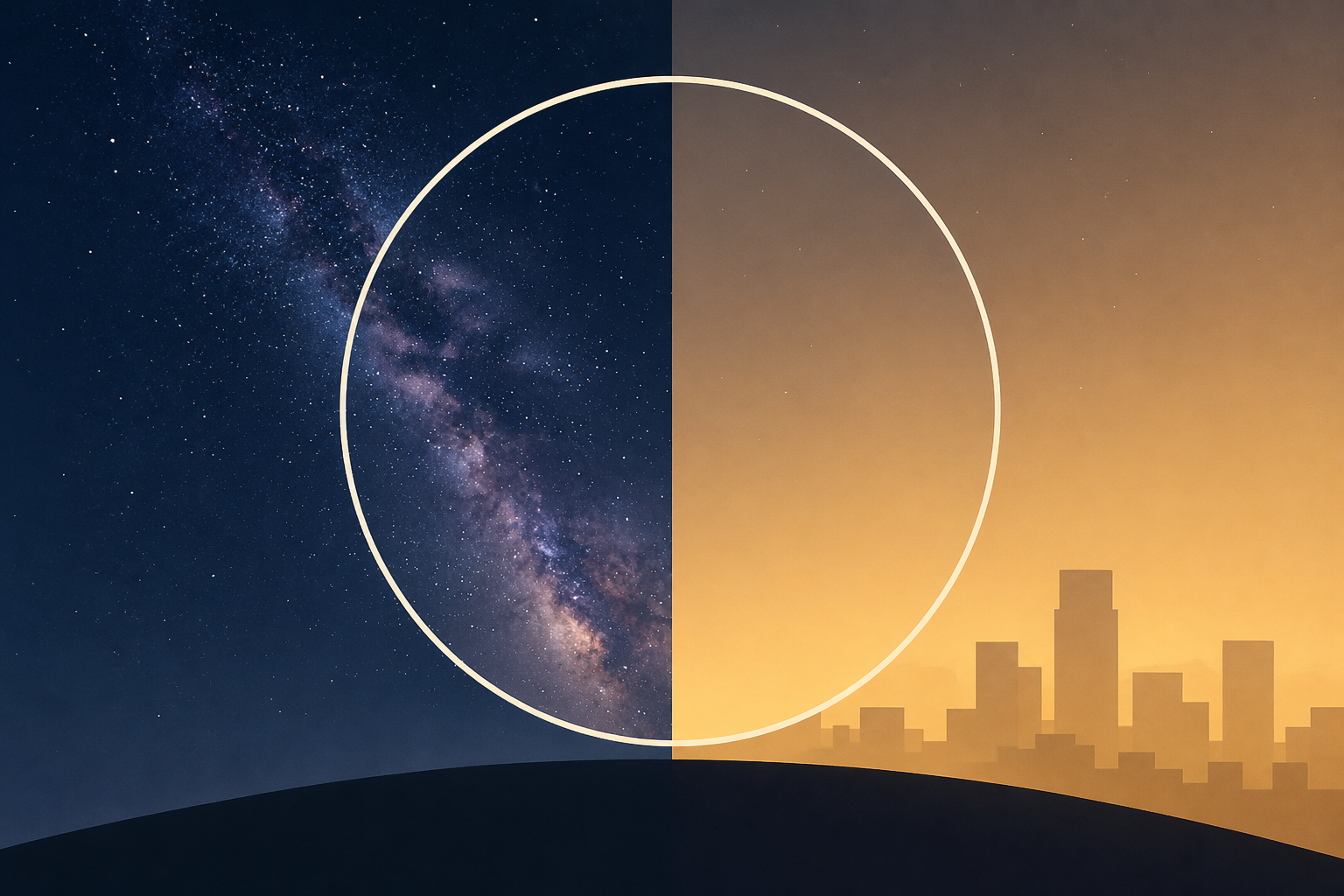
AI Generated Image
For most of human history, anyone standing beneath a clear, moonless sky could see the Milky Way. Electric light began erasing that view little more than a century ago—and today, artificial skyglow hi
Space Daily • • science
Key Points:
- The Milky Way, once visible to most humans under clear, dark skies, is now obscured for over one-third of the global population due to artificial light pollution, with visibility loss reaching nearly 80% in North America and 60% in Europe.
- Artificial skyglow, caused by upward and reflected light scattering in the atmosphere, raises the brightness of the night sky, diminishing the contrast needed to see the Milky Way and other celestial features.
- A 2016 global atlas estimated that 83% of people live under light-polluted skies based on satellite data and ground observations, but citizen science reports from 2011 to 2022 indicate that light pollution continues to worsen annually by 7-10% in sampled areas.
- Advances in LED technology have improved energy efficiency but can exacerbate skyglow due to increased lighting use, poor fixture design, and blue-rich light emissions that scatter more in the atmosphere and impact human vision disproportionately.
- Solutions to restore night sky visibility focus on targeted, low-level, shielded, and warm-colored lighting with controls like timers and dimmers, emphasizing that turning off or redirecting lights can quickly reduce skyglow, unlike many other environmental pollutants.


