AI Generated Image
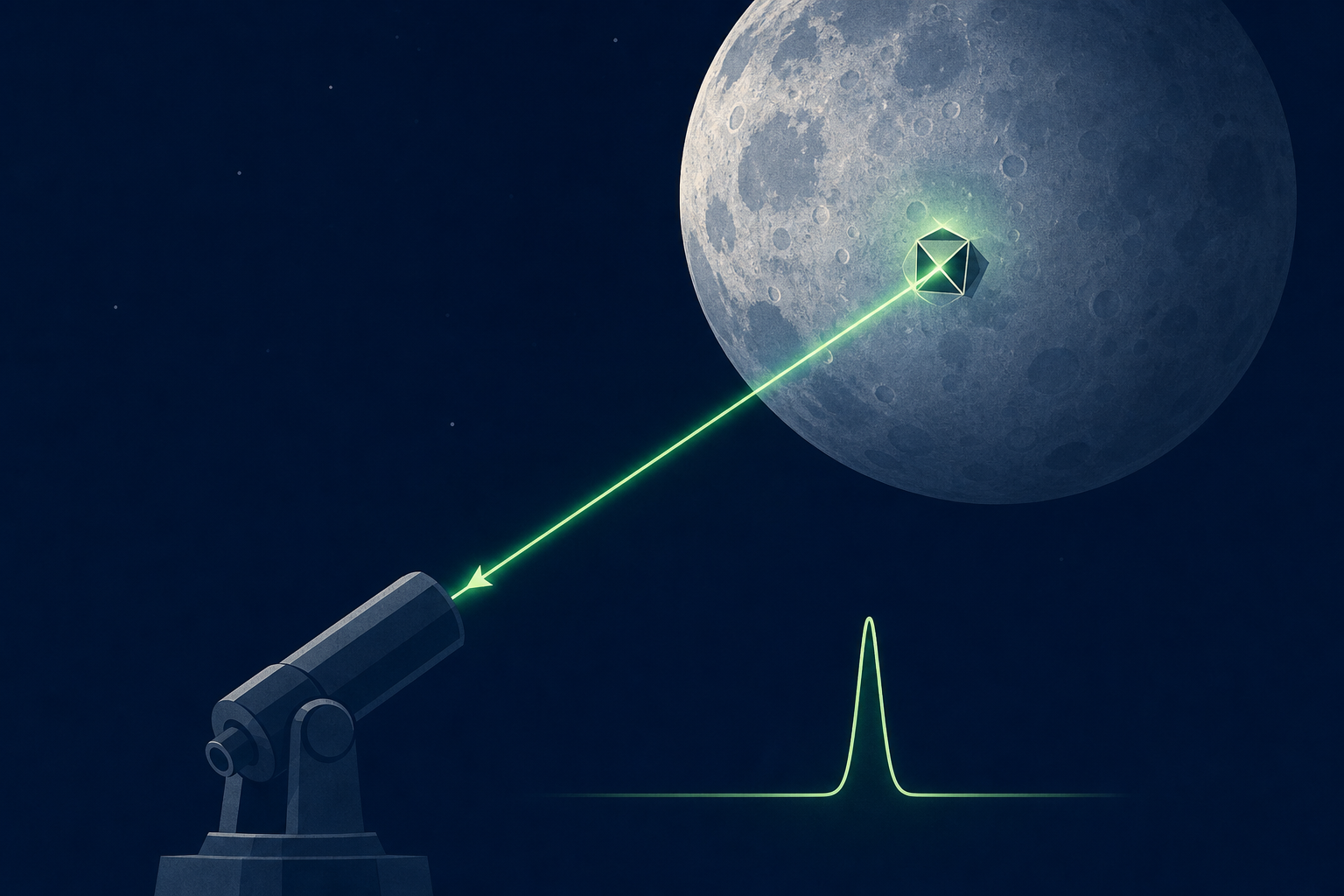
For nearly forty years, scientists aimed lasers at the Moon and got nothing back from the Soviet rover Lunokhod 1 — then in 2010, a pulse bounced straight back from a reflector that had been sitting i
Space Daily • • science
Key Points:
- The Lunokhod 1 Soviet rover, which landed on the Moon in 1970, carried a French-built laser retroreflector designed to measure the Earth-Moon distance by reflecting laser pulses back to Earth, but its exact location was lost, making it unusable for nearly 40 years.
- In 2010, NASA’s Lunar Reconnaissance Orbiter (LRO) imaged the Luna 17 landing site, allowing scientists to pinpoint Lunokhod 1’s position within about 100 meters, enabling the Apache Point Observatory Lunar Laser-ranging Operation (APOLLO) to successfully detect its reflected laser signal.
- The reflector on Lunokhod 1 was found to be in excellent condition, returning a signal stronger than that of Lunokhod 2, and its rediscovery enhanced the lunar laser ranging network by improving measurements of the Moon’s rotation and orientation due to its location near the lunar limb.
- Lunar laser ranging relies on precise timing of laser pulses traveling to and from the Moon to study gravitational physics, the Moon’s orbit, and Earth-Moon dynamics, with multiple reflectors on the lunar surface providing critical data points for these long-term scientific investigations.
- The story of Lunokhod 1’s reflector highlights international collaboration across decades and demonstrates how stable, passive lunar hardware can survive harsh conditions and continue to contribute valuable scientific data long after active missions have ended.


