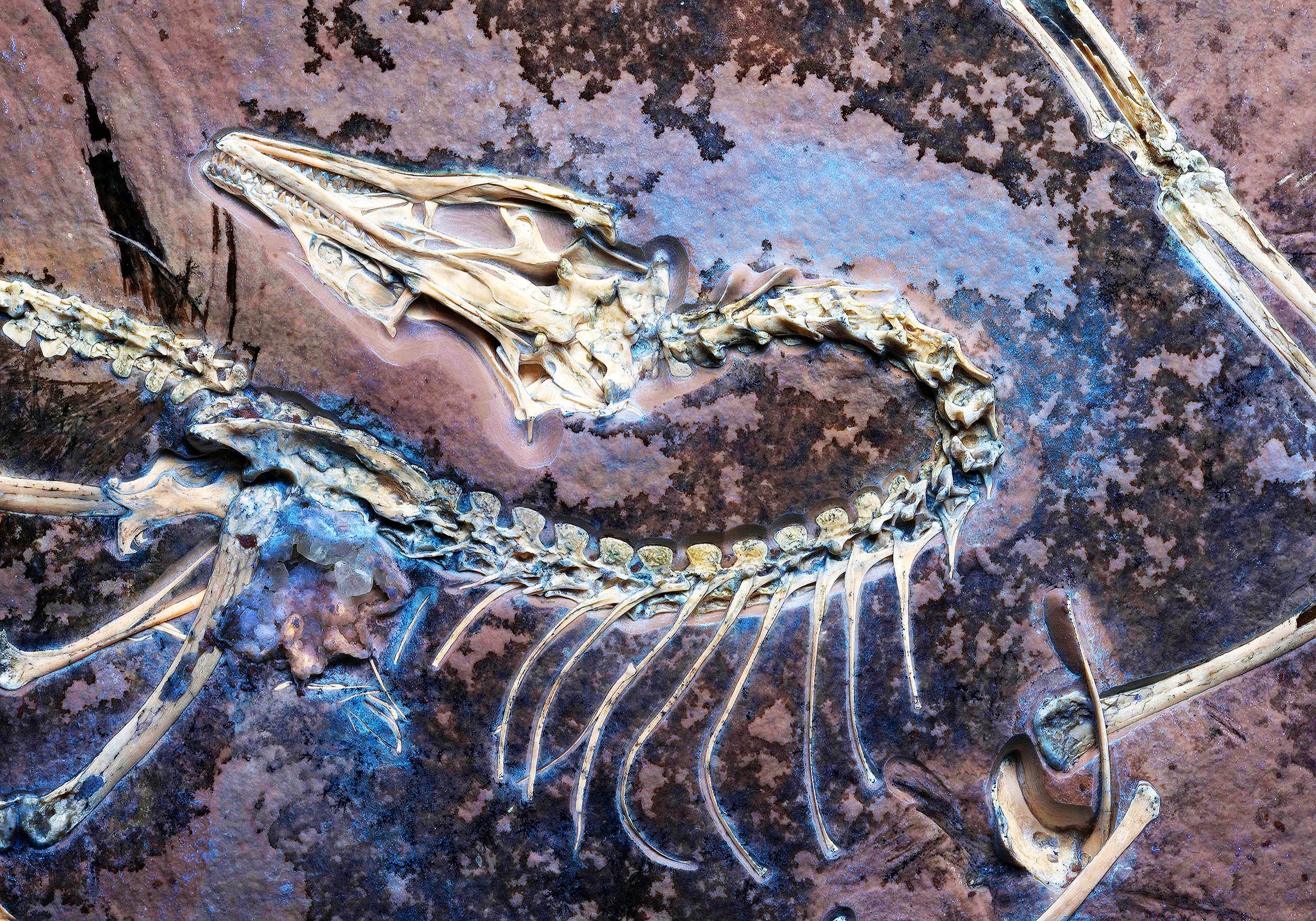
Fossil with preserved soft tissue may prove that Darwin was right
Earth.com • • science
Key Points:
- The "Chicago Archaeopteryx," the smallest and one of the most complete Archaeopteryx fossils ever found, was recently studied at the Field Museum, revealing new insights into bird evolution and flight.
- Advanced preparation techniques, including UV lighting and CT scanning, allowed researchers to preserve delicate soft tissues and bone details, making this the first complete Archaeopteryx to be CT scanned with data publicly available.
- The fossil provided unprecedented anatomical details, such as skull features linked to cranial kinesis and long tertial feathers on the wings, suggesting Archaeopteryx was likely the earliest dinosaur capable of true flight.
- Findings indicate that modern birds evolved adaptations to close wing gaps for efficient flight, and the presence of long tertial feathers in Archaeopteryx supports the hypothesis that flight evolved multiple times in dinosaurs.
- Despite being discovered over 160 years ago, Archaeopteryx continues to offer valuable scientific knowledge, with ongoing research expected to uncover even more about its anatomy and evolutionary significance.


