AI Generated Image
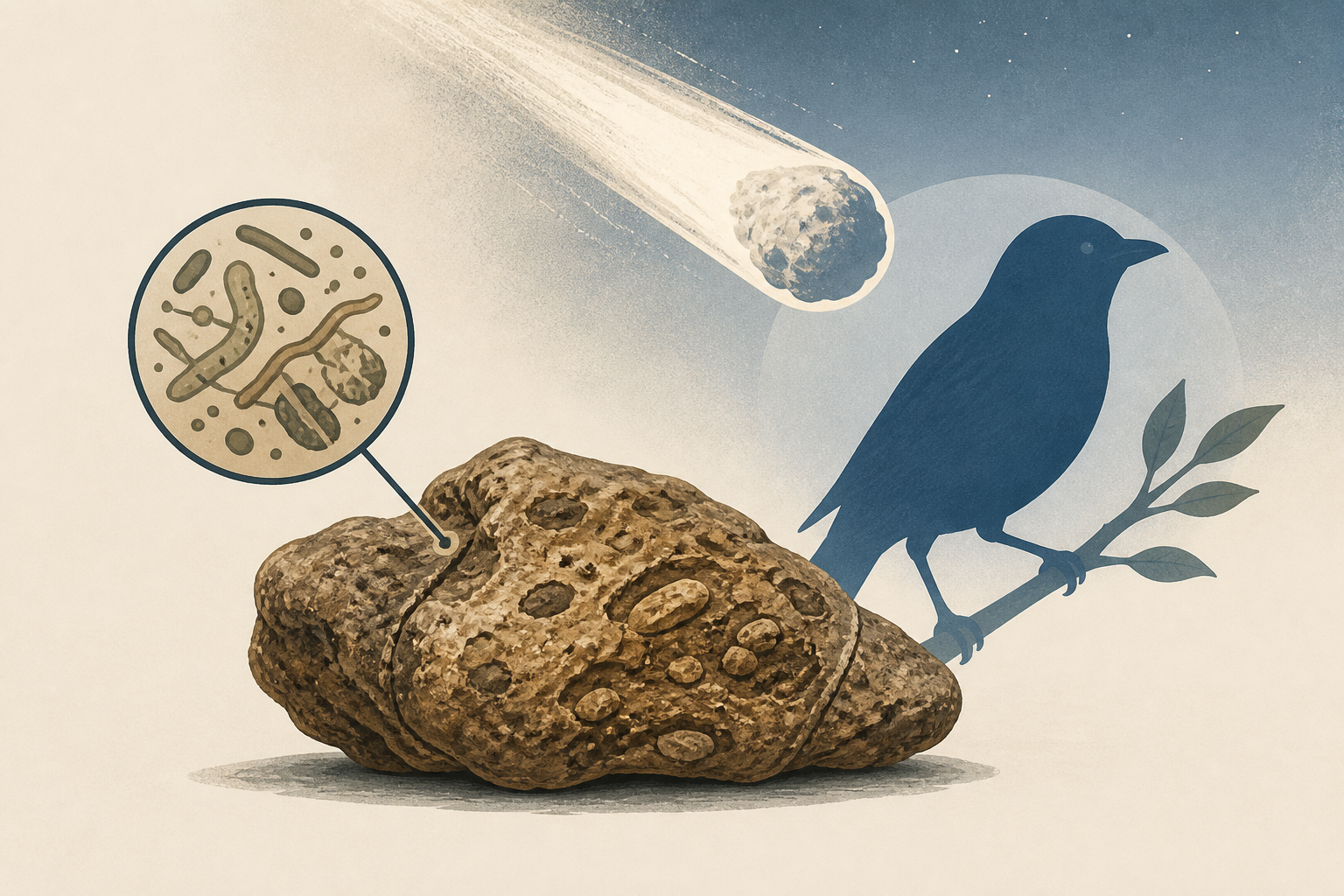
Fossilized poop may reveal why birds survived asteroid strike
CNN • • science
Key Points:
- Scientists discovered tiny feathers preserved in fossilized dinosaur poop (coprolite) from Montana, dating just before the asteroid impact 66 million years ago, providing rare insight into bird species that perished during the mass extinction.
- The feathers belonged to a small, flightless diving bird similar to modern loons, part of the extinct Hesperornithiformes group, which did not survive the post-impact environmental changes.
- Some feathers showed primitive structures with less effective insulation compared to modern birds, suggesting these birds struggled to survive the global cooling and food scarcity caused by the asteroid impact.
- Researchers hypothesize that the survival of modern birds (Neornithes) through the extinction event may be linked to differences in feather structure and insulation, rather than habitat alone, as both Neornithes and Hesperornithiformes lived near water.
- The discovery was made possible by micro-CT scanning of the coprolite, revealing multiple feathers, bones, and stomach contents, highlighting the potential of fossilized feces as valuable sources of paleontological information.


![Google just shared these fun Pixel 11 blueprint wallpapers [Gallery]](https://media-cdn.cashwalklabs.io/https%3A%2F%2Fs3.us-west-2.amazonaws.com%2Fimages.cashwalklabs.io%2F0_admin%2Fnews-ai-images%2F01a0a676-aa5b-745f-afa9-a51d34f7207e.webp?format=webp&w=120&h=80)


