AI Image
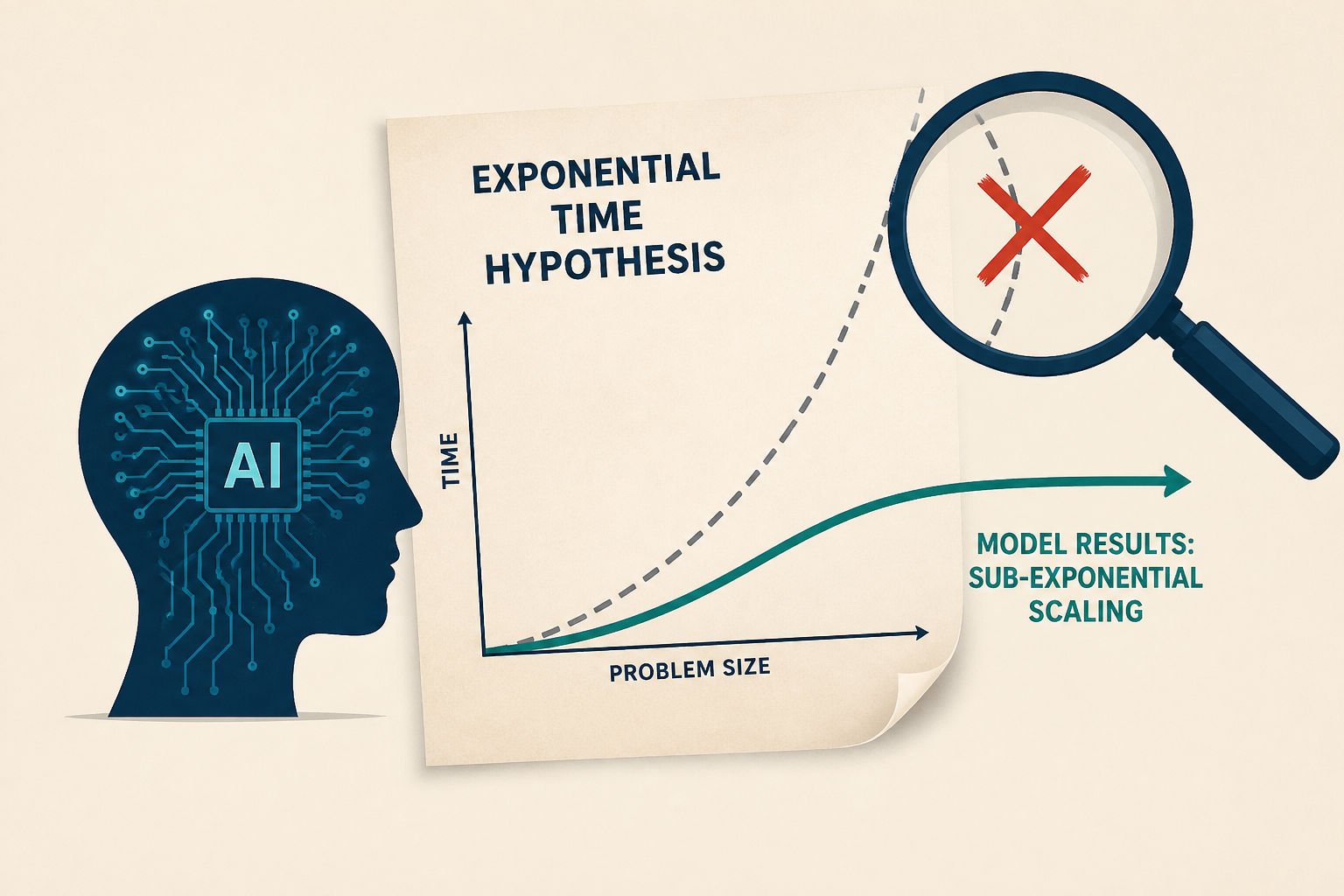
Frontier AI labs say their models refuted the Exponential Time Hypothesis. What does that mean?
TechCrunch • • business
Key Points:
- OpenAI announced solutions to three major math problems, including a surprising refutation of the Exponential Time Hypothesis (ETH), a key assumption in computational complexity theory, sparking mixed reactions from the scientific community.
- Anthropic mathematician Levent Alpöge suggested OpenAI relied on pre-existing work, and Anthropic soon released its own ETH refutation, highlighting ongoing competition and collaboration in AI-driven mathematical research.
- OpenAI adopted a tailored release strategy across disciplines: mathematicians received code on GitHub, computer scientists formed a working group with OpenAI funding a conference, and physicists established a group to decide on result dissemination.
- MIT professor Ryan Williams, organizing the computer science response, emphasized the need for community collaboration to understand the novel and complex parts of OpenAI’s proofs, while acknowledging the potential paradigm shift in complexity theory.
- If OpenAI’s claims hold, the refutation of ETH could challenge long-held beliefs about problem difficulty, impact cryptographic security, and prompt a reevaluation of foundational assumptions in computer science, although experts remain cautious about the finality of these results.


