AI Image
Genetic study shows seafarers from Easter Island settled Hawaii
Honolulu Star-Advertiser • • science
Key Points:
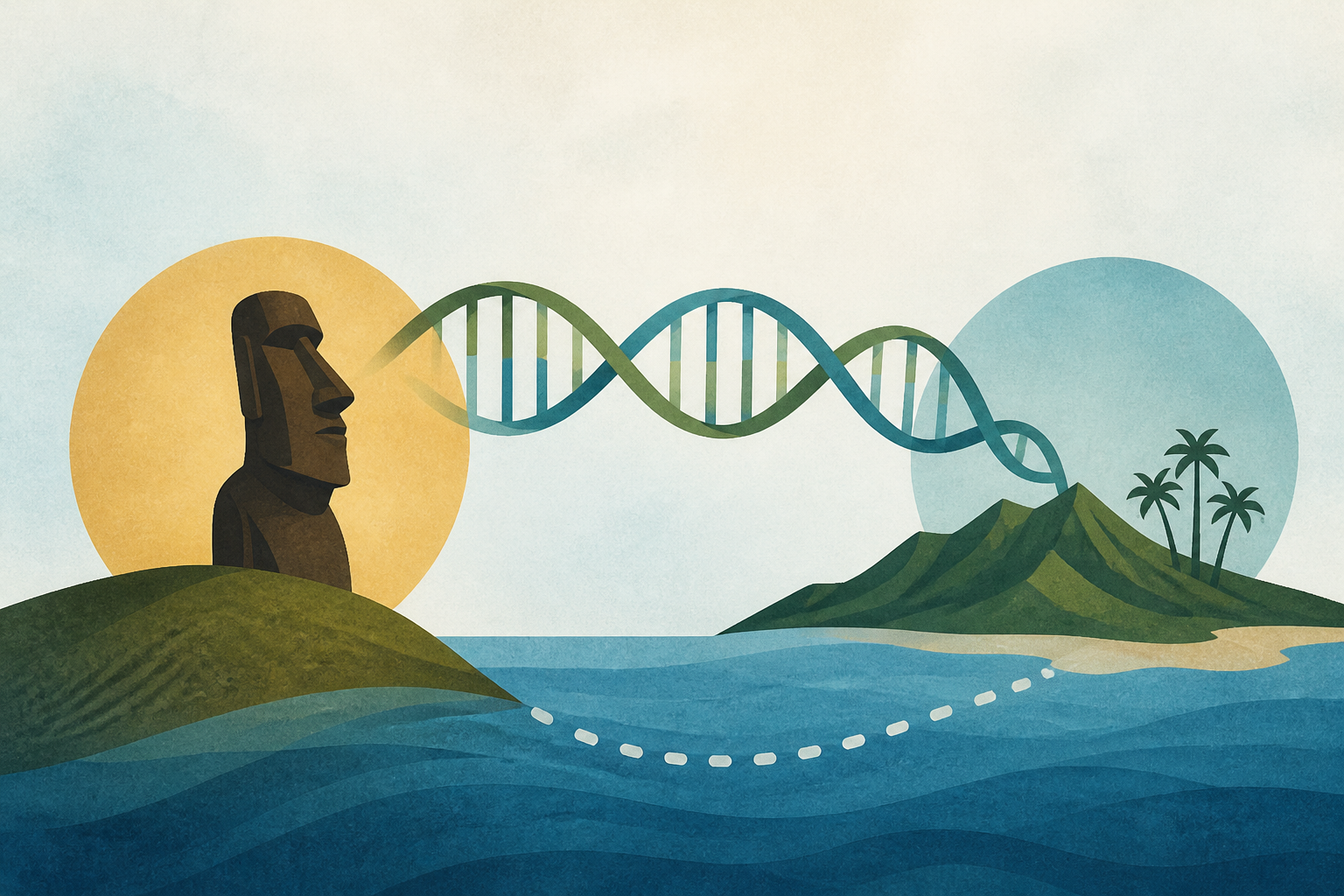
- New genetic research reveals that Native Hawaiians are most closely related to the people of Easter Island (Rapa Nui), confirming that Polynesians voyaged over 4,400 miles across the Pacific to settle Hawaii centuries ago.
- The study, analyzing whole genomes from over 1,000 Polynesian individuals, suggests that settlers arrived in Easter Island in the 1200s from Mangareva island and subsequently voyaged to Hawaii within the same century.
- Researchers identified a voyaging population named Holomoana Nui, meaning "great ocean voyaging," who carried essential plants and animals during their incredible sea journeys, highlighting Polynesians as some of the greatest explorers in human history.
- Genetic bottlenecks or "founder effects" from these migrations have concentrated rare disease-associated genetic variants in Polynesian populations, prompting calls for genetic screenings similar to those used in other founder populations like the Amish and Ashkenazi Jews.
- The findings not only reshape understanding of Polynesian migration and exploration but also have important implications for health and disease risk management among Native Hawaiians and other Polynesians.


