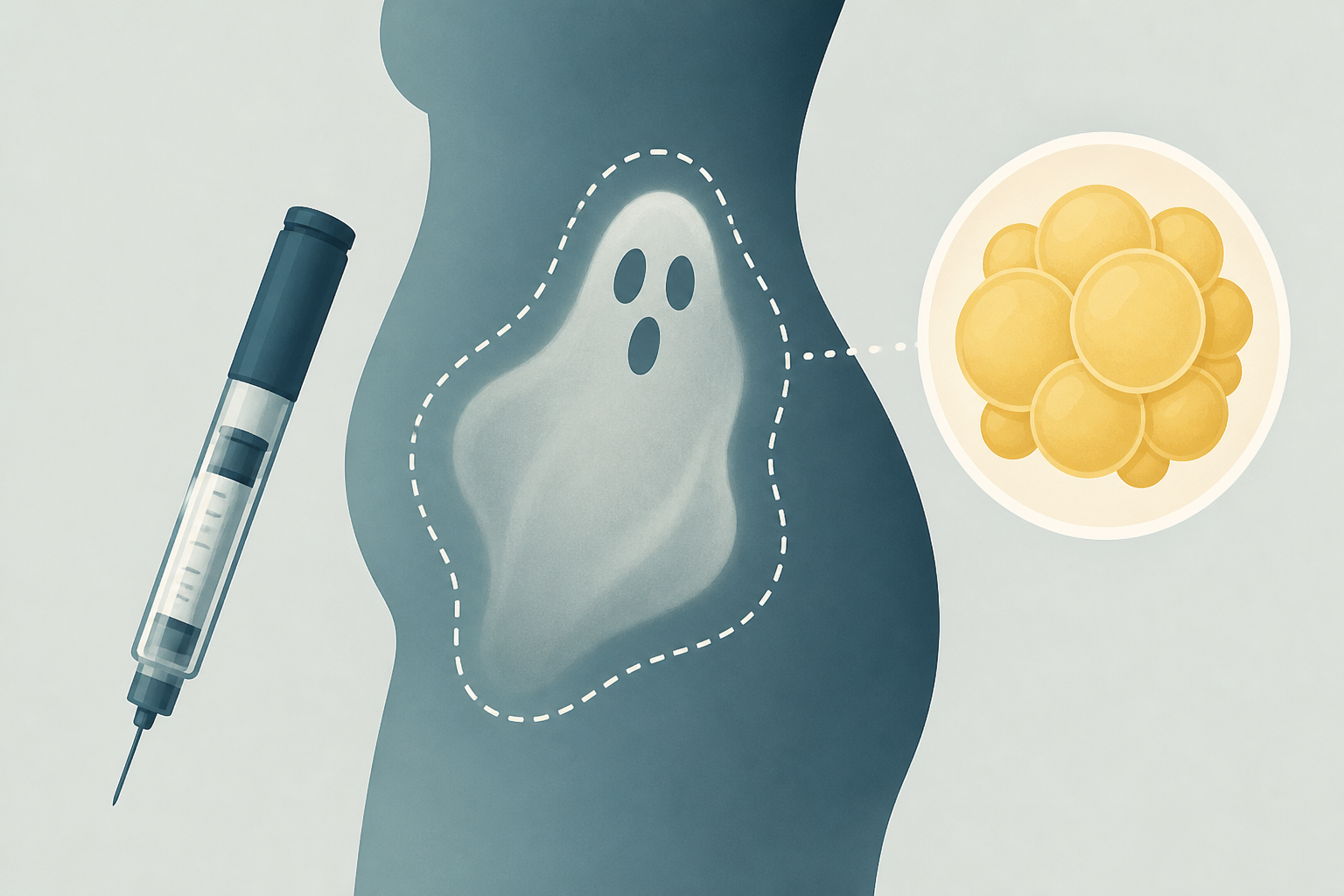
AI Generated Image
‘Ghost fat’ is a surprising side effect of injectable weight-loss drugs
NewsNation • • health
Key Points:
- The rise in the use of injectable weight-loss drugs has led to increased reports of a psychological side effect called "ghost fat" or "phantom fat," where patients perceive themselves as larger despite significant weight loss.
- This phenomenon, similar to phantom limb syndrome, occurs not only with GLP-1 drugs but also after rapid weight loss from bariatric surgery, with some patients experiencing it for 18 to 30 months.
- Dr. Terry Dubrow notes that weight loss from GLP-1 drugs involves a different muscle-to-fat loss ratio compared to traditional dieting, which may contribute to the brain's delayed adjustment to the new body shape.
- Individuals with "ghost fat" may unconsciously continue behaviors suited to their former larger size, such as choosing bigger clothes or navigating spaces as if they were still heavier.
- Psychologist Dr. Sheethal Reddy explains that body image is a mental construct, and over time, the brain typically adjusts to the physical changes, causing the symptoms of "ghost fat" to fade.


